
DbcultAccessing Vault...
Director's Spotlight
Senior Film Conservator
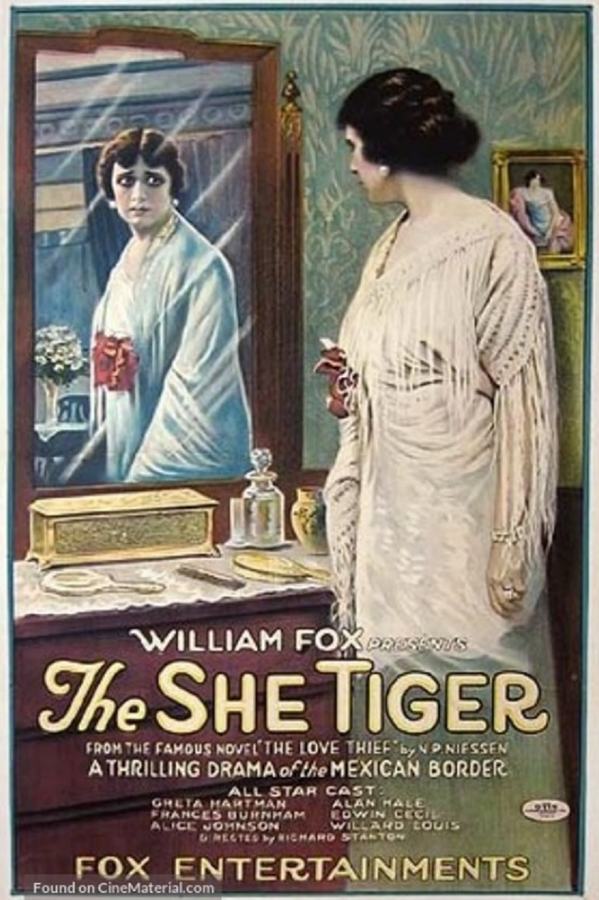
Director's Spotlight: United States
A Deep Dive into the 1916 Vision of Richard Stanton
The 1916 release of The Love Thief marked a significant moment for the stylistic boundaries pushed by Richard Stanton during the production. In the context of United States's rich cinematic history, it invites us to question our own perceptions of cult narratives.
In The Love Thief, Richard Stanton pushes the boundaries of conventional narrative. The film's unique approach to its subject matter has sparked endless debates and interpretations among cinephiles and critics alike.
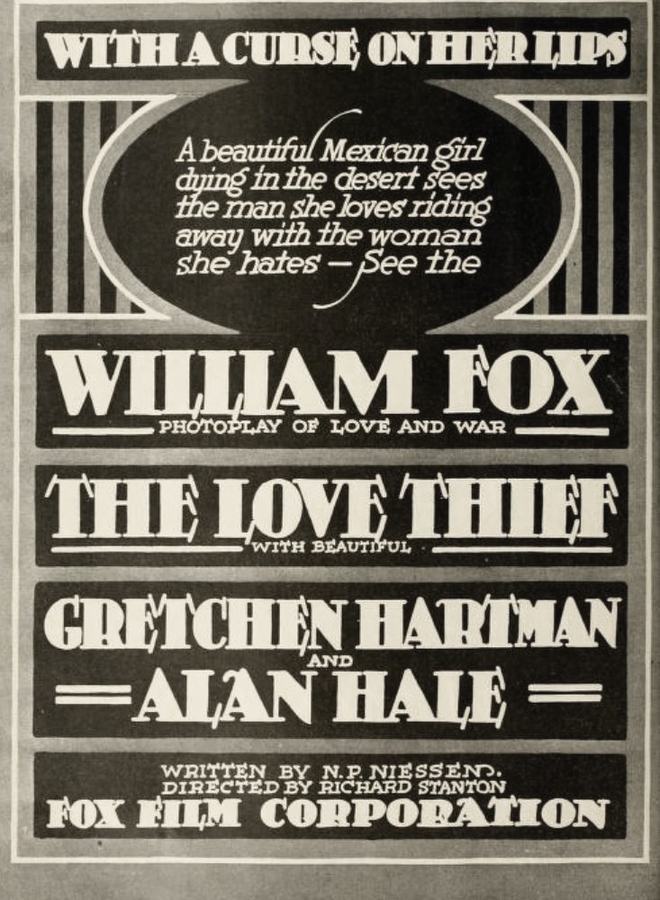
To fully appreciate The Love Thief, one must consider the cinematic climate of 1916. During this period, United States was undergoing significant artistic shifts, and Richard Stanton was at the forefront of this cult movement, often challenging established norms.
| Cinematography | Noir-Inspired |
| Soundtrack | Diegetic |
| Editing | Elliptical |
| Art Direction | Expressionist |
Visualizing the convergence of Richard Stanton's style and the core cult narrative.
The senorita, Juanita, loves gallant Capt. Arthur Boyce, on duty near the border. He does not love her, but she contrives to make his fiancée, Clare Nelson, think that he does. The result is that Clare breaks off the engagement. Juanita's passion turns to hatred when she finds she cannot compel Boyce to love her. In a fit of rage, she arranges a scheme by which the officer is accused of having murdered a woman. In the trial that follows, Boyce is convicted. Meantime, a hand of Mexicans led by Juanita and Costa, a Mexican in love with Clare, raids an American town. In the place are Clare and her uncle, Nelson, who has been secretly furnishing the Mexicans with munitions. Costa takes Clare prisoner. Juanita finds the girl with her uncle and Costa in a rude shack. She sees a way to get revenge on Clare. She will force her to marry Lopez, one of the bandits in her employ. While she is thinking over this plan, Arthur Boyce is brought into the hut. He had been exonerated of wrong, when the real murderer, stirred by the pangs of conscience, confessed. Resuming his command, he rushed to the rescue of the captured party, only to be defeated by the Mexicans and taken prisoner himself. Clare and Boyce are left with Lopez in the shack. By a skillful piece of maneuvering, the girl outwits the guard, and she and Boyce escape from the building. Rescue is fast arriving from a nearby American army post. The bandits are pursuing Clare and Boyce, and Juanita rides frantically in the vanguard. But she is too late. A stray shot brings her from her horse, and she dies with a curse on her lips for the woman who won the love she could not have.
Decades after its release, The Love Thief remains a vital piece of the cinematic puzzle. Its influence can be seen in countless modern works, solidifying Richard Stanton's status as a master of the craft in United States and beyond.