
DbcultAccessing Vault...
Director's Spotlight
Senior Film Conservator
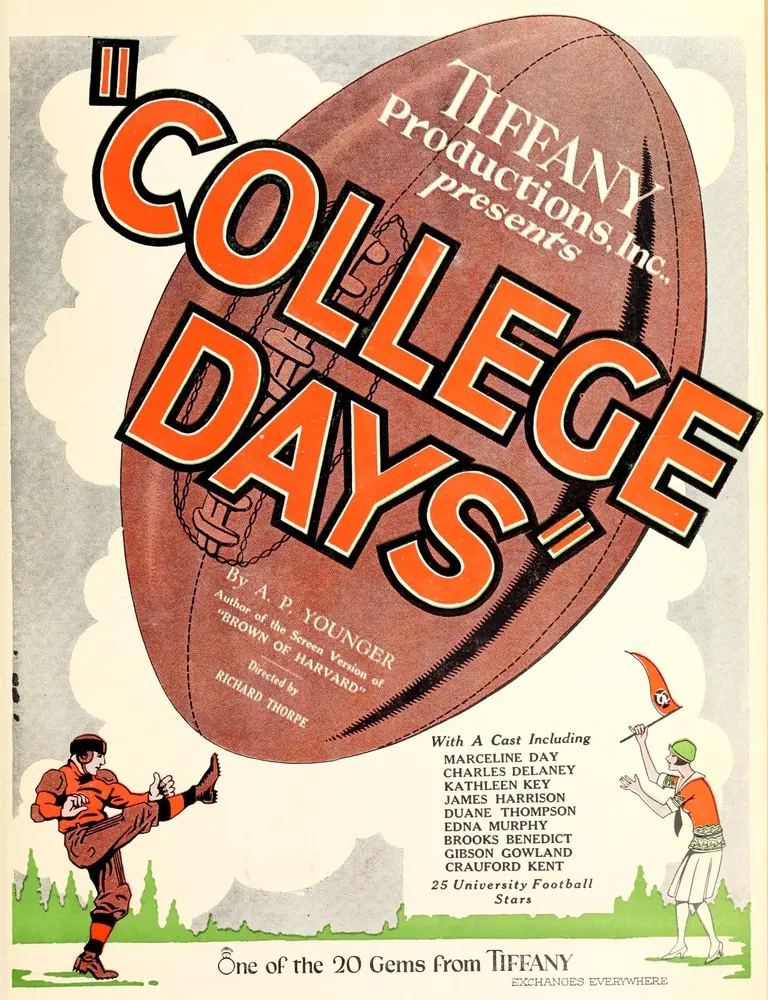
Director's Spotlight: United States
A Deep Dive into the 1926 Vision of Richard Thorpe
To understand the modern evolution of United States film, one must first look at College Days and the meticulous attention to detail that Richard Thorpe applied to every frame. Reflecting the political and social shifts of the 1926s, it showcases the power of Romance as a tool for social commentary.
In College Days, Richard Thorpe pushes the boundaries of conventional narrative. The film's unique approach to its subject matter has sparked endless debates and interpretations among cinephiles and critics alike.
The visual language of College Days is defined by its use of shadows and framing, a hallmark of Richard Thorpe's style. By utilizing a 1926-era palette, the film creates an immersive experience that perfectly complements its Romance themes.
| Cinematography | Static |
| Soundtrack | Orchestral |
| Editing | Invisible |
| Art Direction | Kitsch |
Visualizing the convergence of Richard Thorpe's style and the core Romance narrative.
Jim Gordon, the son of a proud and loving father, enters the University of California as a student. There he meets Mary Ward, a campus coed who captures his heart on the first day. He becomes close friends with Larry Powell, his roommate, but incurs the wrath of Kenneth Slade, who is unable to take a practical joke. Jim and Larry attend a campus dance with Bessie and Phyllis, two vamps, and through a series of romantic complications Jim tries to convince Mary of his love for her. Later, Louise successfully waylays Jim on his way from the training field and the sight of them disillusions Mary; trying to repair matters in a classroom, Jim is reprimanded, is physically punished by Professor Maynard, and is expelled. Later he is reinstated by the dean and plans to join the football squad against Stanford, but the day of the game finds him again in disgrace because he has gone to a roadhouse to protect Mary from her jazzy companions, and then to assist her after an accident. At the last minute, he is called into the game, and his team wins.
Decades after its release, College Days remains a vital piece of the cinematic puzzle. Its influence can be seen in countless modern works, solidifying Richard Thorpe's status as a master of the craft in United States and beyond.