
DbcultAccessing Vault...
Director's Spotlight
Senior Film Conservator
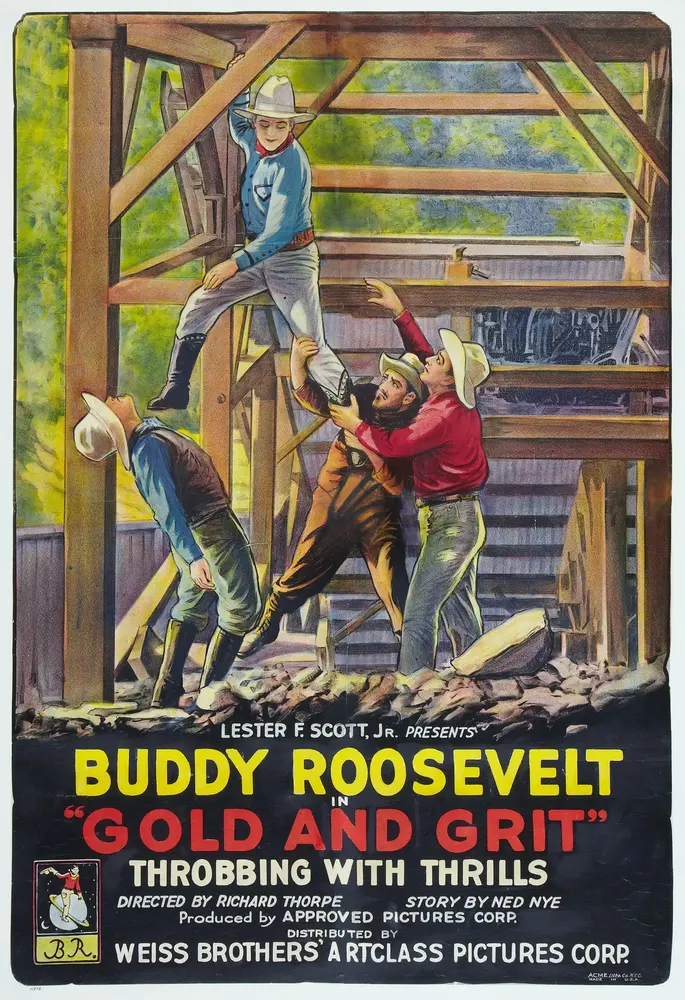
Director's Spotlight: United States
A Deep Dive into the 1925 Vision of Richard Thorpe
Deciphering the layers of Gold and Grit (1925) reveals the complex thematic architecture established by Richard Thorpe. Utilizing a 1925-specific aesthetic that remains timeless, it stands as the definitive 1925 statement on Drama identity.
In Gold and Grit, Richard Thorpe pushes the boundaries of conventional narrative. The film's unique approach to its subject matter has sparked endless debates and interpretations among cinephiles and critics alike.
To fully appreciate Gold and Grit, one must consider the cinematic climate of 1925. During this period, United States was undergoing significant artistic shifts, and Richard Thorpe was at the forefront of this Drama movement, often challenging established norms.
| Cinematography | Deep Focus |
| Soundtrack | Minimalist |
| Editing | Slow-Burn |
| Art Direction | Brutalist |
Visualizing the convergence of Richard Thorpe's style and the core Drama narrative.
After he stops a runaway stage, Buddy is given the job of replacing its driver, who was just killed in an attempted holdup. When he gets to Mineral City, Buddy is recognized by Blaabs, a stranded Shakespearian actor, who recalls that Buddy was once accused of robbery. Blaabs remains silent, and he and Buddy are soon sharing a cabin near the goldfields. During a storm, Helen Mason and Jack Crawford, the son of the owner of the Golden Eagle Mine, take refuge with Buddy at his cabin. By cheating at cards, Jack forces Helen to accept his proposal of marriage. Buddy then produces proof that Jack is guilty of the crime of which he himself has been wrongly accused. About to strike Buddy with a knife, Jack is struck down by a bolt of lightning. When the elder Crawford is later charged with fraudulent ownership of the mine, he arranges for some of his men to remove most of the gold. Buddy captures the men and returns the stolen ore. Crawford attempts to blow up the mine and is killed in the resulting explosion. Buddy and Helen make plans to be married.
Decades after its release, Gold and Grit remains a vital piece of the cinematic puzzle. Its influence can be seen in countless modern works, solidifying Richard Thorpe's status as a master of the craft in United States and beyond.