
DbcultAccessing Vault...
Director's Spotlight
Senior Film Conservator
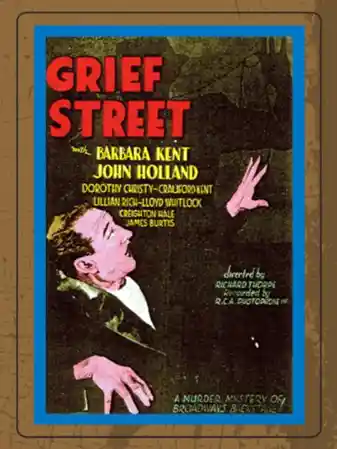
Director's Spotlight: United States
A Deep Dive into the 1931 Vision of Richard Thorpe
As a cultural artifact of the 1931s, Grief Street provides the visionary mind of its creator, Richard Thorpe. With its avant-garde structure and atmospheric tension, it redefined what audiences could expect from a Mystery experience.
In Grief Street, Richard Thorpe pushes the boundaries of conventional narrative. The film's unique approach to its subject matter has sparked endless debates and interpretations among cinephiles and critics alike.
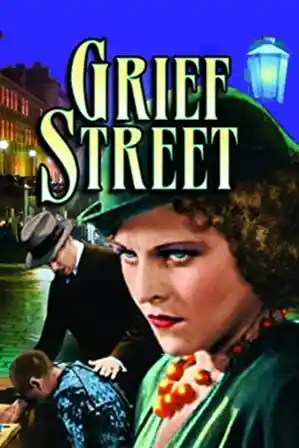
In this work, Richard Thorpe explores the intersection of Mystery and United States cultural identity. The meticulous attention to detail suggests a deep-seated commitment to pushing the boundaries of the medium, ensuring that Grief Street remains a relevant topic of study for Mystery enthusiasts.
| Cinematography | Noir-Inspired |
| Soundtrack | Orchestral |
| Editing | Slow-Burn |
| Art Direction | Brutalist |
Visualizing the convergence of Richard Thorpe's style and the core Mystery narrative.
Alvin Merle, a womanizing Broadway matinée idol, is found strangled in his dressing room. The door is locked from the inside and there is no possible other way into the room. Merle is having an affair with his leading lady, while his wife, actress Ethel Wynn, appearing in another play in a theater around the corner, is doing the same with Frank Murray, the stage manager on Merle's play. Newspaper reporter Jim Ryan is investigating the case and meets Jean Royce, a young actress who had been fired from the play while in rehearsals. Everybody, including Michael, the old actor now relegated to being just a stage-doorman, has a motive. The explanation for the murder lies within the script of the play.
Decades after its release, Grief Street remains a vital piece of the cinematic puzzle. Its influence can be seen in countless modern works, solidifying Richard Thorpe's status as a master of the craft in United States and beyond.