
DbcultAccessing Vault...
Film History
Senior Film Conservator
We have been lied to about the origins of cult cinema. The prevailing wisdom suggests that the 'midnight' mindset was born in the neon-soaked gutters of the 1960s or the grainy grindhouses of the 70s. This is a historical fallacy. The real DNA of the transgressive outlier—the character who survives only by shedding their skin—was forged in the nitrate fumes of the 1910s and 20s. Long before we had the fluid identities of David Cronenberg or the social chameleons of Patricia Highsmith, silent cinema was obsessed with the idea that the 'self' is a lie, a costume, or a convenient blank space. This era didn't just produce films; it produced blueprints for the existential outlaw. We see it in the flickering shadows of forgotten westerns and the jagged rhythms of urban melodramas. These weren't just stories; they were survival guides for a world that demanded a mask.
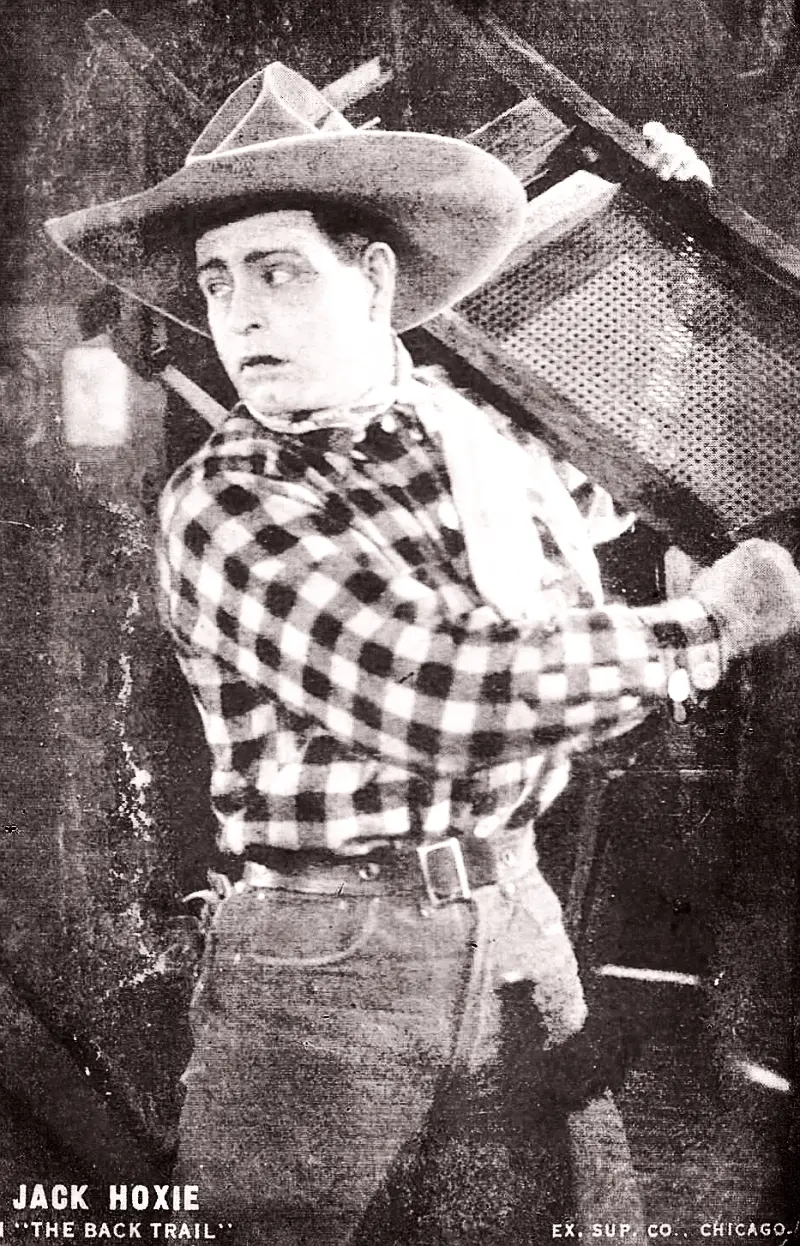
In 1924’s The Back Trail, we encounter a cowboy who is more ghost than man. His war injuries haven't just scarred his body; they’ve wiped his slate clean. This isn't the romanticized amnesia of modern soap operas. It is a terrifying, empty space that a predatory gang immediately seeks to fill with lies. They trick him into believing he is a wanted criminal, manipulating him into dismantling his own family's legacy. This is where the cult of the 'wronged man' begins. The protagonist is not a hero of action, but a victim of perception. The visual choice to keep the cowboy’s expression largely static—a hollow vessel—is far more chilling than the over-the-top gesticulation often associated with the era. It forces the audience to project their own fears of identity loss onto the screen. This film suggests that without memory, we are merely clay for the corrupt. It’s a bleak, cynical take on the American frontier that predates the psychological grit of 1950s noir by decades.
Compare this to the way modern cinema handles mental trauma. Today, we get tear-jerking monologues and soft-focus flashbacks. The Back Trail offers none of that. It offers a man being used as a blunt instrument against his own sister. It’s a cruel, mechanical plot that mirrors the industrialization of the early 20th century. The individual is a cog, and if that cog breaks, the system will simply rewire it for a different, more nefarious purpose. I would argue that this film is a more honest depiction of post-war shell shock than almost anything produced in the immediate wake of the World Wars. It doesn't ask for your pity; it demands you witness the erasure of a soul.
The 1920s were a decade of frantic upward mobility and the crushing fear of falling back into the mud. Clancy in Wall Street (1930) might masquerade as a comedy, but its core is pure class-war anxiety. A plumber accidentally buys stocks, hits it big, and immediately begins performing the role of an aristocrat. The 'cult' appeal here isn't in the success, but in the friction. The scenes where Clancy’s rough, calloused hands attempt to navigate the delicate glassware of high society are loaded with a tension that isn't entirely funny. It’s the performance of a man who knows he is an impostor. This is the same energy we see in The Woman on the Index (1919). Sylvia Martin isn't just a woman running from an abusive father; she is a woman running from her own history. When her crook husband kills himself to avoid capture, she is left as a cipher. She must navigate a world that has already cataloged her as 'damaged goods.'
These films understood that the 'American Dream' was essentially a long-form grift. Whether it’s a plumber in a penthouse or a runaway bride in a mansion, the message is clear: the only way to belong is to pretend. This cynicism is the bedrock of the cult movie. We root for the impostor because we recognize that the 'authentic' society they are infiltrating is equally fake, just better funded.
If you want to find the roots of cinematic transgression, look no further than 1924’s Oh, Teacher! and 1930’s The Grand Parade. In the former, a pretty teacher is fired for being a 'vamp'—the ultimate 1920s moral panic. Her replacement? A fat man in drag. This isn't just a cheap gag; it’s a subversion of the male gaze. The children’s resentment and the ensuing chaos turn the classroom into a theater of the absurd. It’s a middle finger to the moral boards of the time, suggesting that the 'purity' they demand is just another kind of costume, and a ridiculous one at that.
"In the world of the silent screen, a change of clothes wasn't a plot point; it was a total biological restructuring. To put on a wig was to kill the old self and birth a monster."
The Grand Parade takes this performative rot into the world of minstrelsy and burlesque. An alcoholic minstrel hits rock bottom while entangled with a 'no-good' burlesque dancer. The recuperation is framed through more performance—joining the troupe, getting married, the cycle of the stage. The film captures the grime behind the greasepaint. It shows the performer not as a star, but as a laborer of the soul. The 'cult' power here lies in the refusal to sanitize the lifestyle. It’s a world of cheap gin, loud costumes, and the constant threat of being booed off the stage. This is the ancestor of every 'backstage' cult film, from Showgirls to The Rocky Horror Picture Show. It understands that the stage is the only place where the misfit can be honest about their own fakery.
One of the most debatable opinions I hold is that the 1920s 'flapper' films were the first true body horror movies. Take Shameful Behavior? (1926). Daphne Carrol returns from Paris not just as a different person, but as a 'polished' version of her former self. The use of the word 'polished' is key—it implies a sanding down of the original material. She is a manufactured object designed to win a man’s affection. This isn't a romance; it’s a tactical operation. Her sister’s brother-in-law is the target, and her personality is the weapon. The film’s tension comes from the audience knowing that the 'real' Daphne is buried under layers of Parisian silk and rehearsed wit.
Similarly, Daughter of the Night (1920) blends the aristocrat with the revolutionary. A French aristocrat falls for a Russian nightclub singer and finds himself sinking into the underground. Here, the identity shift is political. To survive in the Russian underground, one must shed the skin of the elite. These films present a terrifying reality: identity is entirely contingent on your surroundings. If you change the room, you change the person. This is a radical, almost nihilistic view of the human condition that modern cinema often tries to soften with 'character arcs.' In the silent era, there were no arcs—only collisions.
The reason many of these films were either banned, censored, or allowed to rot in vaults is that they were inherently dangerous. They taught the audience how to lie. 1917’s The Hand That Rocks the Cradle is the ultimate example. A woman runs a birth control information bureau in defiance of the law. She exposes the hypocrisy of a system where the wealthy have access to 'secrets' that are withheld from the poor. The film was a lightning rod for controversy because it suggested that the law itself was a performance—a masquerade of morality designed to keep the lower classes in check. When she is arrested and wins over her doctor, it’s not just a victory for birth control; it’s a victory for the 'unveiling' of systemic lies.
This is why I find most modern 'socially conscious' cinema to be cowardly. We are treated to films that pat us on the back for holding the 'correct' opinions. Silent era exploitation and social hygiene films, however, were actually out there in the streets, breaking bans and speaking to the 'unwanted.' They utilized the visual language of the forbidden to deliver truths that were deemed too radioactive for the polite public. They understood that to change the world, you first had to show how the world was rigged. They didn't just tell stories; they provided the tools for subversion.
We need to stop treating silent film as a museum piece and start treating it as a crime scene. The fingerprints of every modern cult obsession are all over these reels. The amnesiac cowboy of The Back Trail is the grandfather of the shell-shocked drifter. The 'polished' flapper of Shameful Behavior? is the mother of the modern plastic-surgery-obsessed protagonist. The plumber in Clancy in Wall Street is the ancestor of every 'fake it 'til you make it' anti-hero currently gracing our screens.
Cult cinema isn't about what is 'good' or 'bad.' It’s about what is *sticky*. It’s about the images that refuse to leave the brain because they tap into a primal fear or a forbidden desire. The silent era, with its lack of spoken dialogue, forced directors to rely on pure, unadulterated iconography. They created a visual shorthand for the human experience that was raw, unpolished, and deeply unsettling. If we want to understand the current state of the cult mindset, we have to go back to the beginning. We have to look at the masks, the masquerades, and the identity thefts of the nitrate era. Only then can we see our own faces reflected in the flickering, silver-nitrate dark.