
DbcultAccessing Vault...
Film History
Senior Film Conservator
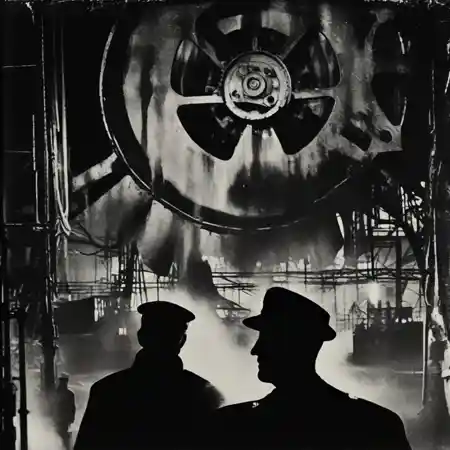
We often treat the fear of technology as a post-atomic phenomenon, a byproduct of the silicon age or the cold steel of 1970s body horror. But the cult of the mechanical nightmare didn't start with a computer chip. It started in the grease-slicked pits of the 1910s and 20s, where the camera first learned to look at a machine and see a predator. This wasn't just 'science fiction' in its infancy; it was a visceral reaction to the industrialization of the human soul. When we look back at the silent era, we aren't looking at primitive relics. We are looking at the first time humanity realized it had built something that could, and would, eat it alive. The films of this era didn't just document factories; they framed the industrial landscape as a site of moral collapse and physical erasure.
Take the 1926 Soviet short Chyortovo koleso (The Devil’s Wheel). Directed by the FEKS group (Grigori Kozintsev and Leonid Trauberg), this isn't just a story about a sailor overstaying his leave at a funfair. It is a frantic, jagged exploration of how the mechanics of pleasure are indistinguishable from the mechanics of doom. The 'wheel' of the title—a literal roller coaster and ferris wheel—becomes a centrifugal force that flings the protagonist, Ivan, out of the orderly world of the Navy and into a lightless underworld of crime. The camera doesn't just watch the ride; it mimics the disorientation. We see the blur of the fairground lights through rapid-fire editing that predates the frantic pacing of modern thrillers by decades. The machine here is the catalyst for a total identity wipe.
In one specific sequence, the spinning of the wheel is intercut with the frantic faces of the crowd, turning a moment of recreation into a dizzying descent. It is a clear ancestor to the 'thrill-ride-gone-wrong' trope, but with a much darker, existential weight. The 'Devil's Wheel' isn't just a carnival attraction; it is the relentless spin of fate in a world that has replaced God with a motor. The sailor’s late return isn't a simple mistake; it’s a mechanical failure of his own internal clock, synchronized to the wrong rhythm. This film proves that the cult aesthetic of the 'death machine' was perfected long before we had CGI to make it look pretty.
While the funfair offered a mechanical mask for chaos, the industrial workplace provided a more literal cage. The 1927 documentary-drama hybrid Mieres del Camino offers a stark look at the steelworks of Asturias. Nominally a celebration of Spanish industry, the film’s visual language tells a different, more cynical story. When Pepina, the daughter of a wealthy landowner, visits the factory and falls for Pinón, a steelworker, the heat of the furnace is framed not as progress, but as a barrier. The factory is a monster that demands youth as fuel. The way the molten steel is captured—glowing with a lethal, white-hot intensity—creates a visual hierarchy where the humans are merely silhouettes against a backdrop of violent production.
The great lie of early industrial cinema was the promise of efficiency; the truth was always the crushing weight of the gear.
Compare this to the 1916 film Powder. Here, the industry is the literal manufacture of death. Judson Brand is a powder manufacturer, and the film focuses on the cold, transactional nature of selling explosives to warring nations. The scenes inside the plant are not 'stunning'—they are oppressive. The film uses the industrial setting to mirror the moral vacuum of its characters. When the envoy from Gravonia, Baron Von Halstyn, walks through the facility, the machinery isn't just background noise; it is the physical manifestation of his cold-bloodedness. The 'cult' appeal here lies in the film’s refusal to sanitize the business of war. It treats the factory as a cathedral of nihilism. The machinery doesn't just make powder; it makes ghosts.
If Chyortovo koleso showed us the machine as a trap, Ralph Steiner’s H2O (1929) showed us how the mechanical gaze could strip nature of its humanity. This short film is often praised for its beauty, but that’s a superficial reading. H2O is a cold, clinical dissection of water, turning it into something that looks like mercury or molten lead. By using extreme close-ups and high-contrast lighting, Steiner transforms the most basic element of life into a series of mechanical patterns. It is an act of visual violence. The water stops being something you can drink or swim in; it becomes a series of metallic reflections that look like the surface of an alien machine.
This is where the 'cult of the machine' meets pure abstraction. In the silent era, the camera itself was the ultimate machine, and films like H2O proved it could reshape reality into something unrecognizable. This is the same impulse that drives modern body horror—the idea that the physical world can be reconfigured into something 'other.' When we watch the ripples in Steiner’s film, we aren't seeing nature; we are seeing the camera’s ability to turn nature into a blueprint. It’s an icy, detached perspective that prefigures the 'digital' look of contemporary horror, where everything is too clean, too sharp, and fundamentally wrong.
Even in the realm of animation, the machine was a source of dread. In Felix Goes West (1924), the train is a relentless, unthinking force. Felix the Cat is chased by a bear, but the environment itself—the tracks, the locomotives, the sheer speed of the westward expansion—is the true antagonist. The humor comes from the way the machine ignores human (or feline) logic. It is a recurring theme in the 'cult of the loser-hero': the individual trying to navigate a world that has been standardized for the benefit of the engine. The slapstick of the 1920s wasn't just about falling down; it was about the humiliation of being outpaced by a piston.

Here is where I break from the traditional film history 'respect' for these works. First, I would argue that Chyortovo koleso is a far more effective piece of noir than almost anything produced in the 1940s. While 40s noir relied on shadows and cynical dialogue, the Soviet silent era used the camera as a weapon of class consciousness and existential dread. The sailor in The Devil’s Wheel isn't just a victim of a 'femme fatale'; he is a victim of a societal centrifuge. The fairground is the ultimate trap because it promises an escape that is actually a deeper form of enslavement. We’ve softened the edges of this film over time, calling it 'experimental,' but it’s actually a brutal critique of the lie of urban leisure.
Second, I contend that the 'educational' framing of films like Mieres del Camino is a form of industrial gaslighting. These films were often funded or supported by the very entities they depicted, using the 'majesty' of the machine to hide the reality of the laborers. The cult fascination we have today with 'industrial ruins' or 'rust-belt aesthetics' is a direct descendant of this visual manipulation. We are trained to look at the furnace and see 'art' rather than seeing the fire that consumed the worker's life. The silent era didn't just invent the visual language of the machine; it invented the way we romanticize our own obsolescence.
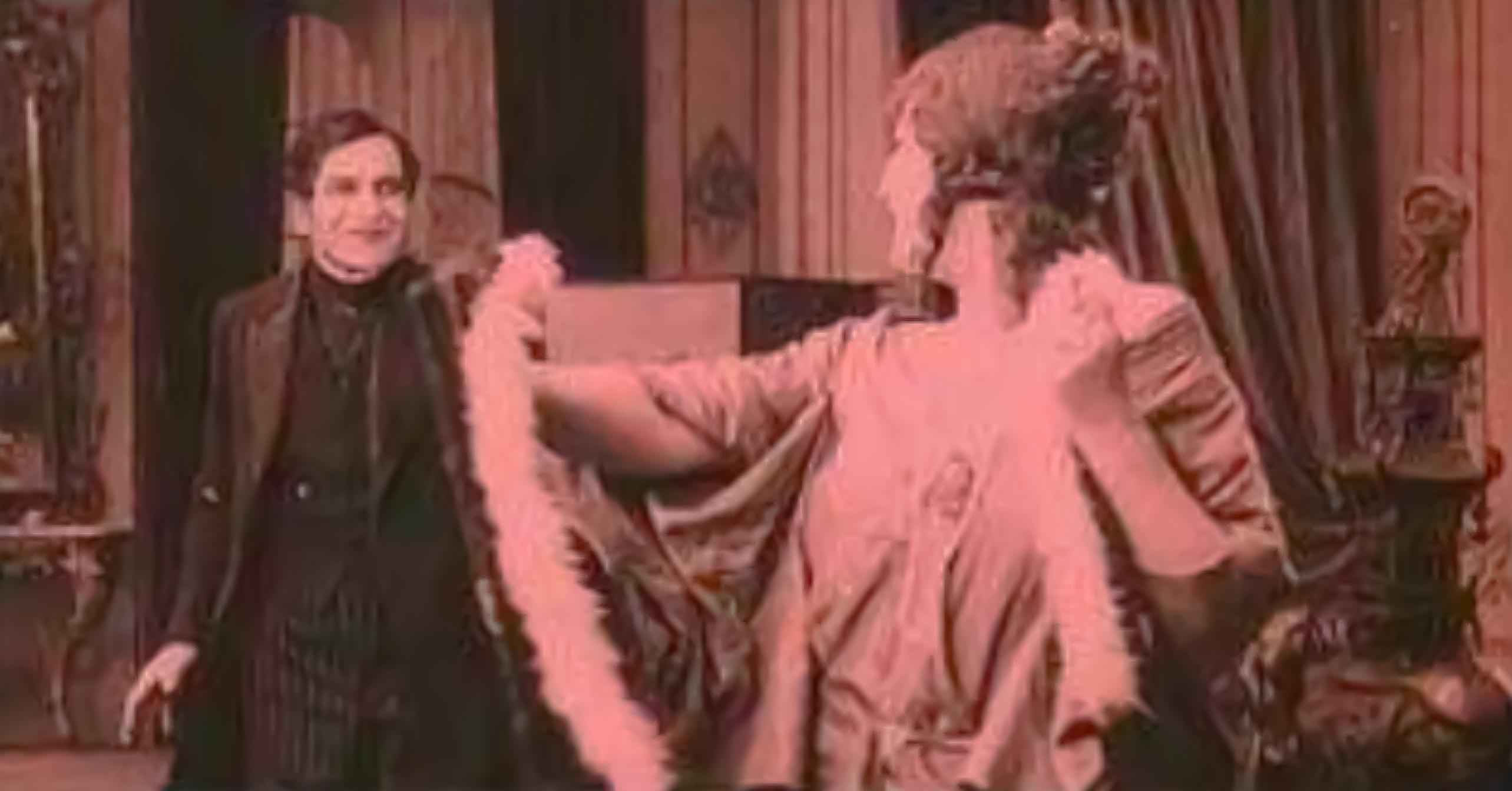
If you want to understand why we are so obsessed with AI or the singularity today, look at La dixième symphonie (The Tenth Symphony, 1918). While it’s a story about a composer, the way Abel Gance shoots the obsession with creation is purely mechanical. The 'symphony' is a machine that the composer, Enrid Damor, cannot control. It consumes his relationships and his sanity. The obsession with the 'perfect output' is the same drive that leads to the sterile, frightening world of modern tech-fetishism. Damor is the first programmer, trying to write a code (the music) that will live forever, only to find that the process destroys the living.
The silent era's industrial films are not 'charming' precursors to modern cinema. They are the site of an original sin. They documented the moment we traded the organic for the mechanical and found that the machine had no intention of being a fair partner. From the spinning lights of Chyortovo koleso to the white-hot steel of Mieres del Camino, the message is the same: the gears are turning, and you are just the lubricant. We don't watch these films to see how far we've come; we watch them to see how long we've been trapped in the same engine.