
DbcultAccessing Vault...
Director's Spotlight
Senior Film Conservator
Director's Spotlight: United States
A Deep Dive into the 1925 Vision of Richard Thorpe
The artistic breakthrough represented by Quicker'n Lightnin' in 1925 highlights the philosophical inquiries that Richard Thorpe embeds within the narrative. Framed by the hauntingly beautiful landscapes of the production, it leaves an indelible mark on the soul of the viewer.
In Quicker'n Lightnin', Richard Thorpe pushes the boundaries of conventional narrative. The film's unique approach to its subject matter has sparked endless debates and interpretations among cinephiles and critics alike.
The visual language of Quicker'n Lightnin' is defined by its use of shadows and framing, a hallmark of Richard Thorpe's style. By utilizing a 1925-era palette, the film creates an immersive experience that perfectly complements its Western themes.
| Cinematography | Handheld |
| Soundtrack | Experimental |
| Editing | Elliptical |
| Art Direction | Expressionist |
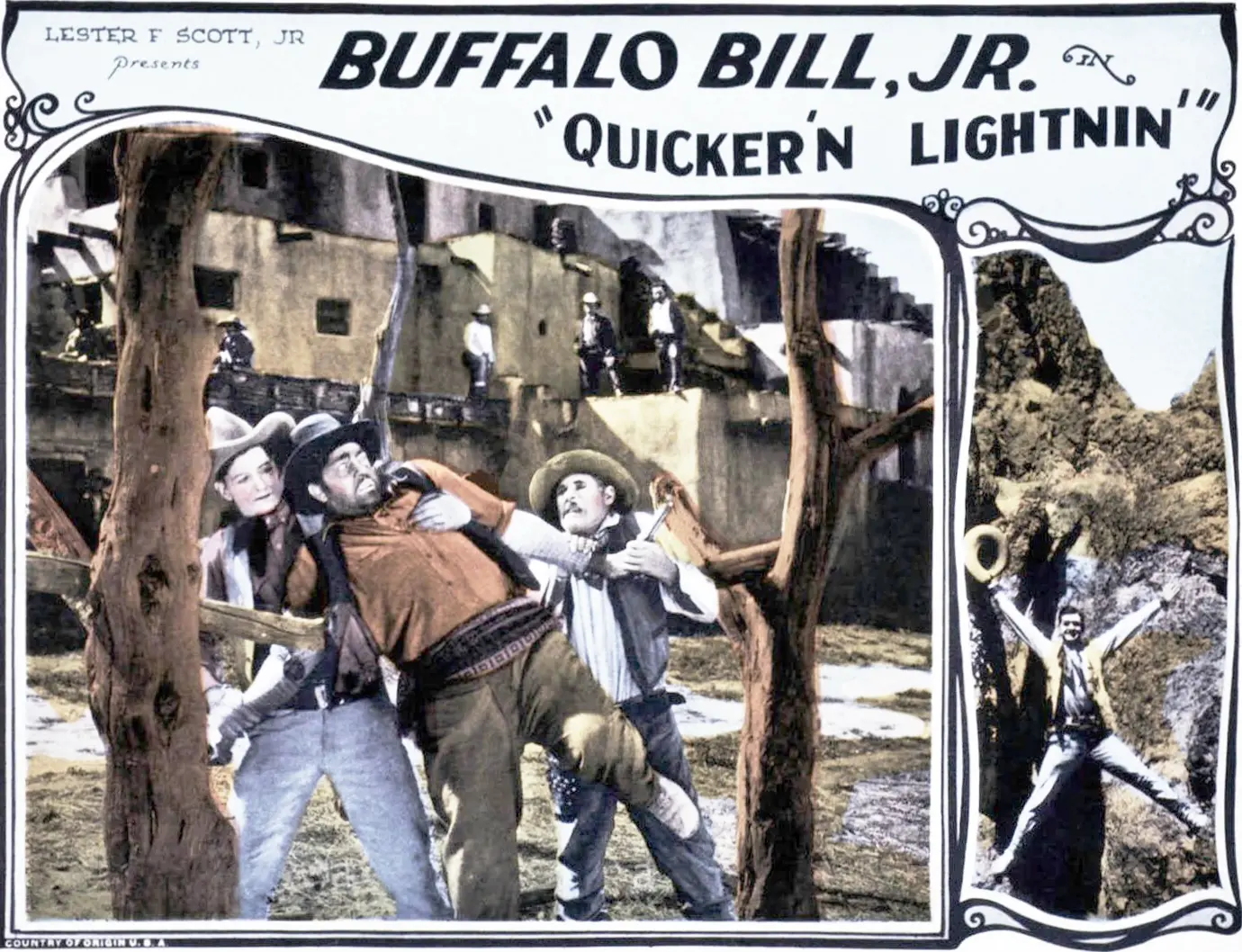
Visualizing the convergence of Richard Thorpe's style and the core Western narrative.
A cowboy named Quicker'n Lightnin' searches for his sweetheart, Helen Harlow, after she is abducted by Mowii, a notorious renegade. Morella, a Native American girl, informs Lightnin' and his friend, Al McNutt, that Mowii has taken Helen to his hideout in a deserted Pueblo village. Along the way, they learn that Morella's father has been murdered. Mowii and his gang capture the group, but Lightnin' escapes and instructs Morella's lover, Truxillo, to send the sheriff with a posse. Following a heated battle, most of the gang members are captured. Lightnin' comes to the rescue as Mowii's mother, known as the Squaw, is about to sacrifice Helen to the sun god. He grabs the arrow and impales Mowii's arm, then ties him up until the sheriff arrives. Afterward, Lightnin' takes Helen home.
Decades after its release, Quicker'n Lightnin' remains a vital piece of the cinematic puzzle. Its influence can be seen in countless modern works, solidifying Richard Thorpe's status as a master of the craft in United States and beyond.