
DbcultAccessing Vault...
Director's Spotlight
Senior Film Conservator
Director's Spotlight: United States
A Deep Dive into the 1927 Vision of Robert De Lacey
As we revisit the 1927 masterpiece The Flying U Ranch, we are struck by the atmospheric immersion that Robert De Lacey achieves throughout The Flying U Ranch. Exploring the nuances of the human condition with Drama flair, it solidifies Robert De Lacey's reputation as a master of the craft.
In The Flying U Ranch, Robert De Lacey pushes the boundaries of conventional narrative. The film's unique approach to its subject matter has sparked endless debates and interpretations among cinephiles and critics alike.
In this work, Robert De Lacey explores the intersection of Drama and United States cultural identity. The meticulous attention to detail suggests a deep-seated commitment to pushing the boundaries of the medium, ensuring that The Flying U Ranch remains a relevant topic of study for Drama enthusiasts.
| Cinematography | High-Contrast |
| Soundtrack | Minimalist |
| Editing | Disjunctive |
| Art Direction | Baroque |
Visualizing the convergence of Robert De Lacey's style and the core Drama narrative.
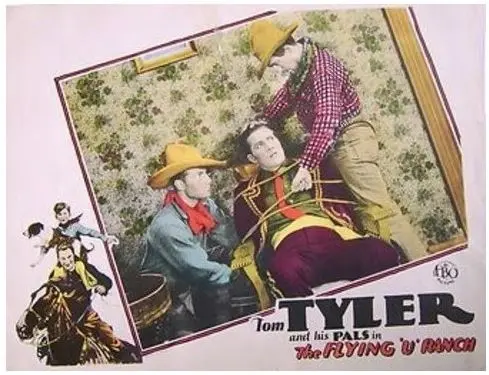
Migual Garcia, a somewhat arrogant Spaniard, alienates pretty much all of the residents of the Flying U Ranch except the owner's young son, Chip Bennett. Dunk Whitaker, who owns a neighboring ranch, has secretly been rustling Flying U cattle and steals a contract guaranteeing the Flying U's rights to a particular waterhole. Not only that, he decides that he wants Bennett's pretty niece, Sally, for himself. Just when things look their darkest, it turns out that Miguel is not quite what he seems to be.
Decades after its release, The Flying U Ranch remains a vital piece of the cinematic puzzle. Its influence can be seen in countless modern works, solidifying Robert De Lacey's status as a master of the craft in United States and beyond.