
DbcultAccessing Vault...
Director's Spotlight
Senior Film Conservator
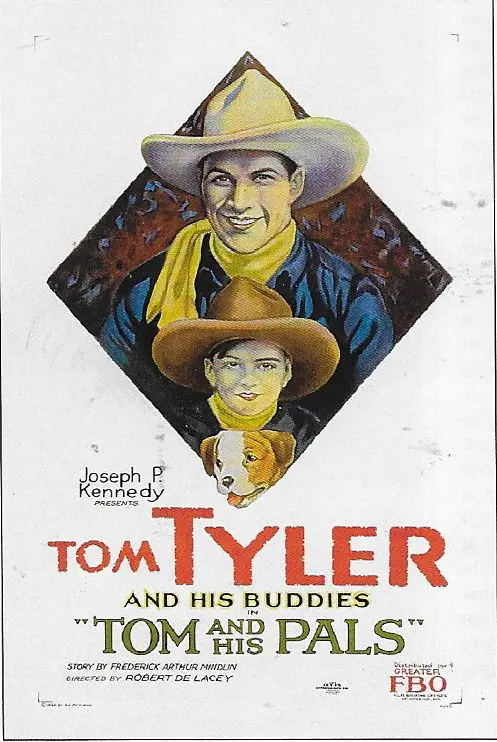
Director's Spotlight: United States
A Deep Dive into the 1926 Vision of Robert De Lacey
Peeling back the layers of Robert De Lacey's Tom and His Pals exposes the technical innovation that Robert De Lacey introduced to the Western format. Driven by an uncompromising commitment to Western excellence, it stands as the definitive 1926 statement on Western identity.
In Tom and His Pals, Robert De Lacey pushes the boundaries of conventional narrative. The film's unique approach to its subject matter has sparked endless debates and interpretations among cinephiles and critics alike.
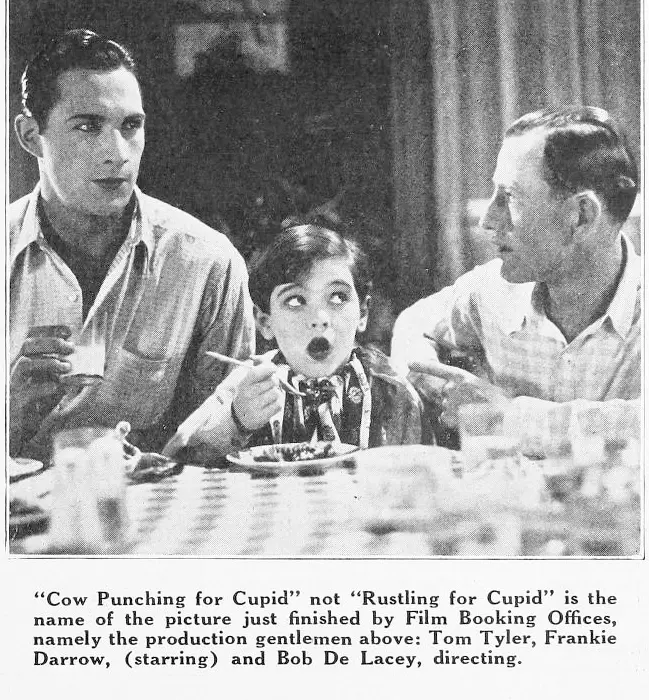
To fully appreciate Tom and His Pals, one must consider the cinematic climate of 1926. During this period, United States was undergoing significant artistic shifts, and Robert De Lacey was at the forefront of this Western movement, often challenging established norms.
| Cinematography | Deep Focus |
| Soundtrack | Synth-Heavy |
| Editing | Rhythmic |
| Art Direction | Naturalist |
Visualizing the convergence of Robert De Lacey's style and the core Western narrative.
Tom Duffy, whose father is the half-owner of the Flying-U Ranch, spends half his time reading movie magazines and the other half with Mary Smith. Mary and her kid-brother, Frankie, are heirs to the other half of the Flying U, and wards of Tom's Father. Tom's interest in movie magazines is Pandora Golden, the movie vamp. Tom is thrilled when he learns that Pandora's next film will be shot on the ranch. Pandora's co-star, Courtney, learns of Mary's inheritance, and he conspires with Pandora to lure Tom away while he talks Mary into eloping. The latter, seeing Tom in Pandora's arms, gets angry and tells Courtney she will elope with him. Meanwhile, a child actress with the movie company, is rescued from a raging bull by Tom, and Tom learns that Pandora is the child's mother. She tells him of the scheme to make Mary marry Courtney, and Tom hits the saddle and takes out after Courtney the Cad.
Decades after its release, Tom and His Pals remains a vital piece of the cinematic puzzle. Its influence can be seen in countless modern works, solidifying Robert De Lacey's status as a master of the craft in United States and beyond.