
DbcultAccessing Vault...
Director's Spotlight
Senior Film Conservator
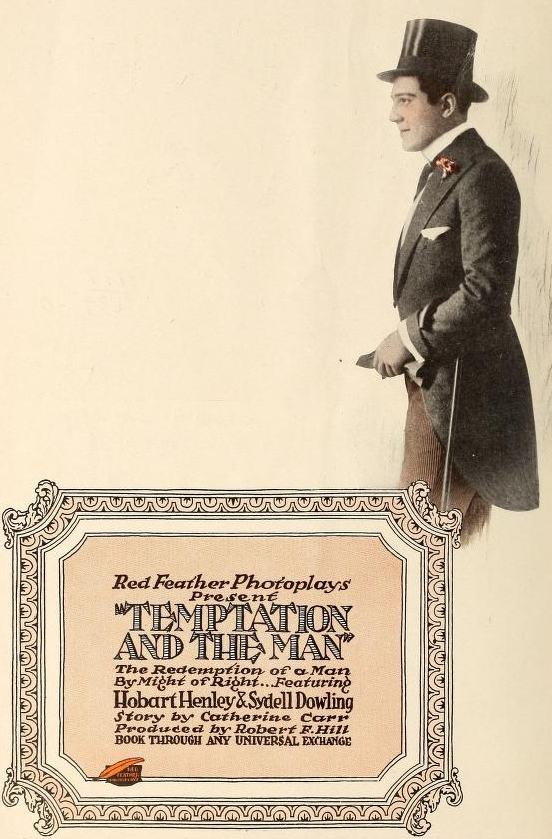
Director's Spotlight: United States
A Deep Dive into the 1916 Vision of Robert F. Hill
The brilliance of Temptation and the Man (1916) is inseparable from a monumental shift in cult filmmaking spearheaded by Robert F. Hill. Occupying a unique space between cult and pure art, it serves as a blueprint for future generations of cult directors.
In Temptation and the Man, Robert F. Hill pushes the boundaries of conventional narrative. The film's unique approach to its subject matter has sparked endless debates and interpretations among cinephiles and critics alike.
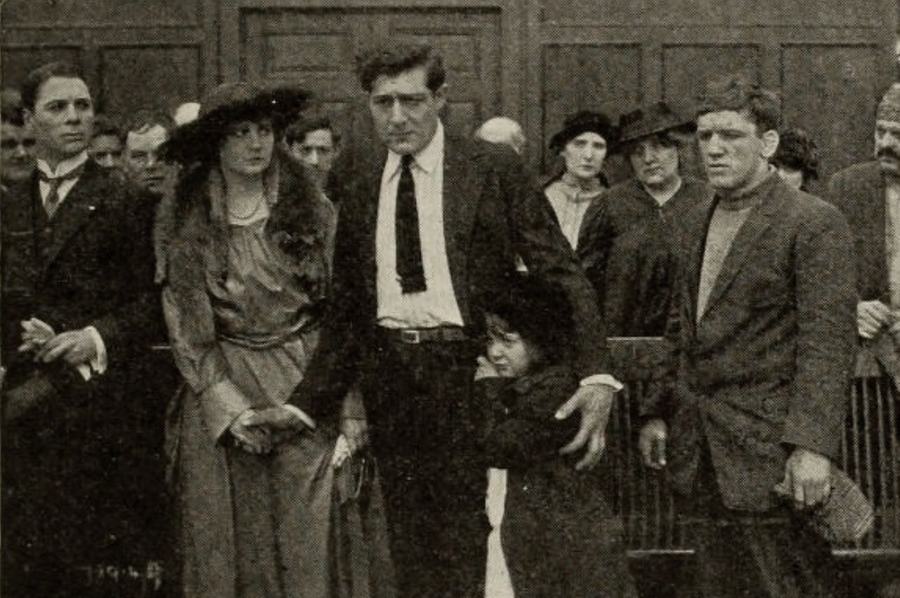
The visual language of Temptation and the Man is defined by its use of shadows and framing, a hallmark of Robert F. Hill's style. By utilizing a 1916-era palette, the film creates an immersive experience that perfectly complements its cult themes.
| Cinematography | Deep Focus |
| Soundtrack | Experimental |
| Editing | Elliptical |
| Art Direction | Expressionist |
Visualizing the convergence of Robert F. Hill's style and the core cult narrative.
Jim Crosby has shifted for himself since his early childhood. He has become a gangster, feared by all his companions because of his strength. In a fight, which he enters for his sister's sake, he is arrested and sent to jail for a term of months. In the meantime Ann Payton, a society girl, has rented a saloon which she has turned into a mission. She is engaged to be married to Temple Vaughn, her father's young secretary, but decides to wait a year before marrying. The day that Jim is released from prison he gets mixed up in a brawl, and knowing that the police are just waiting a chance to arrest him again, he seeks refuge in the old saloon, a former hangout. Ann takes him in and shelters him from the police. Vaughn has been leading a fast life and has become involved with a woman by the name of Costello and a gambler called Johnson. He loses heavily, and to pay the debt forges a check. Jim, who has been given a position in the bank, recognizes Johnson when he comes to cash the check. He discovers that Vaughn is not able to meet the check, and in lieu of settlement Johnson forces Vaughn to invite a number of his wealthy friends to his house for a game of cards. Jim overhears the two planning the card party and, knowing Ann's love for Vaughn, he decides to get the check and so prevent any further blackmail. At the party Vaughn stands seeing his friends fleeced as long as he can and then accuses Johnson of cheating. Then a figure appears at the door, holding a pistol. He rifles all their pockets, taking the money on the table and the forged check. But in robbing Vaughn, Jim slips in his pocket the forged check. Jim is caught while trying to make his escape and is sentenced to a term in prison. Some time later Vaughn finds in his pocket the forged check and realizes that Jim has committed the crime only to save him. He offers to take all the blame, but Jim will not listen. After his marriage Vaughn again gets connected with Johnson and his mistress. There is a quarrel and Johnson is arrested for running a gambling house. In prison he meets Jim and tells him that the first thing he does upon his release from prison will be to kill Vaughn. Later they are both released on the same day. Jim goes at once to warn Vaughn who arrives a few moments after and who accuses Jim of paying attention to his wife. Jim tries to warn him, but Johnson steps out from behind a screen and shoots him through the heart. In the last scene Jim and Ann are seen together, establishing another mission in the Bowery. It is left to the spectator whether or not Jim will ever succeed in overcoming the great social gap which lies between them.
Decades after its release, Temptation and the Man remains a vital piece of the cinematic puzzle. Its influence can be seen in countless modern works, solidifying Robert F. Hill's status as a master of the craft in United States and beyond.