
DbcultAccessing Vault...
Director's Spotlight
Senior Film Conservator
Director's Spotlight: United States
A Deep Dive into the 1917 Vision of Rupert Julian
Peeling back the layers of Rupert Julian's The Gift Girl exposes the collaborative alchemy between Rupert Julian and the 1917 creative team. Anchored by a narrative that is both personal and universal, it reinforces the idea that cinema is a medium of infinite possibilities.
In The Gift Girl, Rupert Julian pushes the boundaries of conventional narrative. The film's unique approach to its subject matter has sparked endless debates and interpretations among cinephiles and critics alike.
In this work, Rupert Julian explores the intersection of cult and United States cultural identity. The meticulous attention to detail suggests a deep-seated commitment to pushing the boundaries of the medium, ensuring that The Gift Girl remains a relevant topic of study for cult enthusiasts.
| Cinematography | High-Contrast |
| Soundtrack | Minimalist |
| Editing | Slow-Burn |
| Art Direction | Brutalist |
Visualizing the convergence of Rupert Julian's style and the core cult narrative.
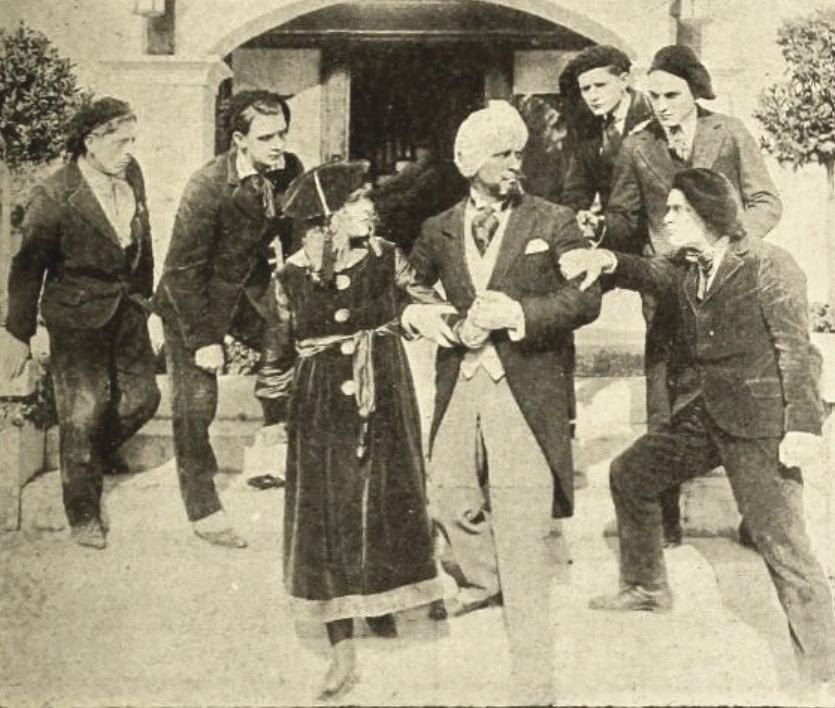
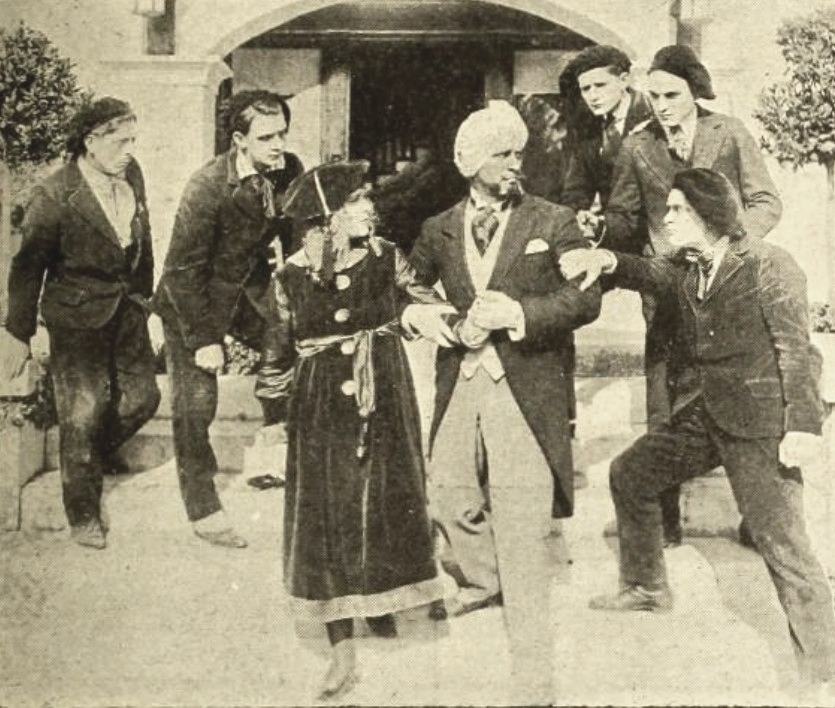
While Major Abercrombie and wife were hurrying through a Persian forest, in order that Mrs. Abercrombie might reach an English settlement to bear her child, a tent was hurriedly pitched, and there a little girl was born. The mother surrendered her life and Major Abercrombie went mad with grief. He ran into the forest and was killed by lions. Usun Hassan, while passing with his huntsmen, discovered the tent and sent Malec, his secretary, to investigate. Malec found the dead body of Mrs. Abercrombie and heard the faint cry of her baby. The body of the woman was buried and the babe was carried to Hassan's harem. There she grew to become a beautiful girl, with Malec acting as her tutor. They called her Rokaia. Hassan having decided she should marry a merchant whom she loathed, Rokaia readily listened to Malec's proposal that she go with him to France. Having provided her with clothes, money and tickets, Malec was detected while helping the girl escape. Malec hid himself away to save his head, while Rokaia proceeded to France. Arriving at Marseilles the girl was robbed of her purse, thus becoming easy prey for a young gallant who made her acquaintance and started to take her to his apartments. Rokaia was struck by an automobile and her admirer found safety in flight. The motor was owned by Marquis De Tonquin, who helped Rokaia into the tonneau and drove her to his home. There she was found to be little hurt. The Marquis about this time received a letter from the Parisian college where his son, Marcel, was being educated, stating that the boy was incorrigible. Believing that there must be a "woman in the case," the Marquis prevailed upon Rokaia to go to Paris as his son's companion. Marcel did not look upon the girl as his father would have him, but secured separate lodgings for her, where he lived, and treated her with utmost respect. The day Rokaia arrived in Paris she halted before a Persian bird-vendor and asked the directions to Marcel's lodgings. It so happened that Malec had just arrived from Persia and lived at the Asiatic lodgings where the bird-vendor stopped. He heard the man's gossip about the girl who spoke in his own tongue and bought his birds. Malec believed he was on the trail of the girl be sought, and went to the address the bird-vendor gave him, and there found Rokaia. Through hypnotic influence he controlled the girl so far as to cause her to go away with him. Marcel was informed by his fellow students, when he returned, after a brief absence from his lodgings, that Rokaia had just departed, and the note she left for him confirmed the story. When a drayman called for Rokaia's trunk, Marcel learned her address, and leading a party of students, went to her rescue. The happy ending was attained when Marcel and Rokaia were married.
Decades after its release, The Gift Girl remains a vital piece of the cinematic puzzle. Its influence can be seen in countless modern works, solidifying Rupert Julian's status as a master of the craft in United States and beyond.