
DbcultAccessing Vault...
Director's Spotlight
Senior Film Conservator
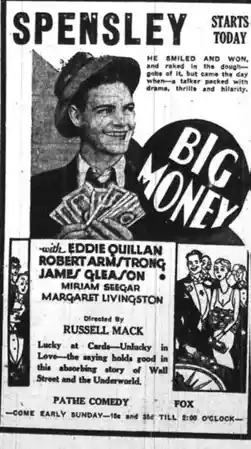
Director's Spotlight: United States
A Deep Dive into the 1930 Vision of Russell Mack
When we examine the cinematic landscape of United States, Big Money emerges as a landmark work of the enduring legacy of Russell Mack's artistic contribution to the genre. Through a lens of existential fatalism and Drama tropes, it captures a specific kind of cinematic magic that is rarely replicated.
In Big Money, Russell Mack pushes the boundaries of conventional narrative. The film's unique approach to its subject matter has sparked endless debates and interpretations among cinephiles and critics alike.
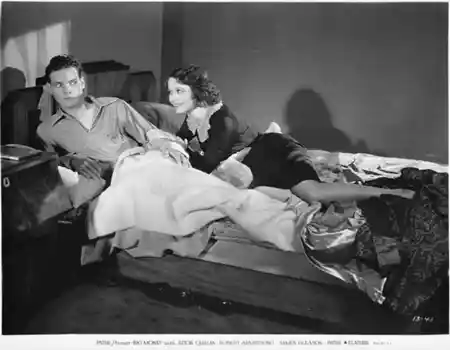
In this work, Russell Mack explores the intersection of Drama and United States cultural identity. The meticulous attention to detail suggests a deep-seated commitment to pushing the boundaries of the medium, ensuring that Big Money remains a relevant topic of study for Drama enthusiasts.
| Cinematography | Static |
| Soundtrack | Orchestral |
| Editing | Invisible |
| Art Direction | Kitsch |
Visualizing the convergence of Russell Mack's style and the core Drama narrative.
Eddie, a messenger boy in the George McCall brokerage house, is dispatched to deliver $50,000 in currency to the bank just before before closing time, but his weakness for tossing the dice results in his arriving too late; unable to return it to the company safe, he is forced to take it home. A jokingly intended dinner invitation extended to the boss's daughter is accepted, and when Joan guides Eddie to a restaurant beyond his means, he is forced to delve into the company funds. On the way home he is waylaid by two crooks, Monk and Lefty, and in the ensuing chase Eddie rides the service elevator of a hotel to a room where he gets involved with Ace Carter, a notorious gambler from whom he wins a large sum. Later, when Joan discovers that Eddie is a gambler, she refuses his marriage proposal. At a poker game, Jim Durkin is shot by Monk, the fourth player; Eddie then decides to reform, refuses to gamble, but is arraigned as a witness to the murder; and Durkin's brother, Skip, comes to get revenge but is apprehended after forcing Monk to confess. Eddie is released and reconciled with Joan.
Decades after its release, Big Money remains a vital piece of the cinematic puzzle. Its influence can be seen in countless modern works, solidifying Russell Mack's status as a master of the craft in United States and beyond.