
DbcultAccessing Vault...
Director's Spotlight
Senior Film Conservator
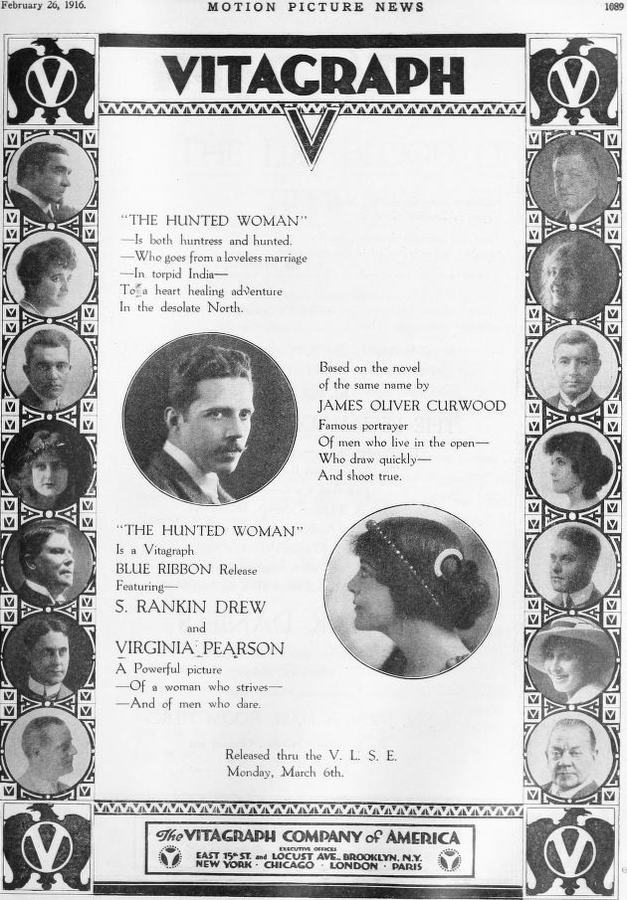
Director's Spotlight: United States
A Deep Dive into the 1916 Vision of S. Rankin Drew
To understand the modern evolution of United States film, one must first look at The Hunted Woman and the collaborative alchemy between S. Rankin Drew and the 1916 creative team. Subverting the expectations of the typical 1916 audience, it remains a vital reference point for anyone studying the evolution of S. Rankin Drew.
In The Hunted Woman, S. Rankin Drew pushes the boundaries of conventional narrative. The film's unique approach to its subject matter has sparked endless debates and interpretations among cinephiles and critics alike.
To fully appreciate The Hunted Woman, one must consider the cinematic climate of 1916. During this period, United States was undergoing significant artistic shifts, and S. Rankin Drew was at the forefront of this cult movement, often challenging established norms.
| Cinematography | Handheld |
| Soundtrack | Minimalist |
| Editing | Disjunctive |
| Art Direction | Baroque |
Visualizing the convergence of S. Rankin Drew's style and the core cult narrative.
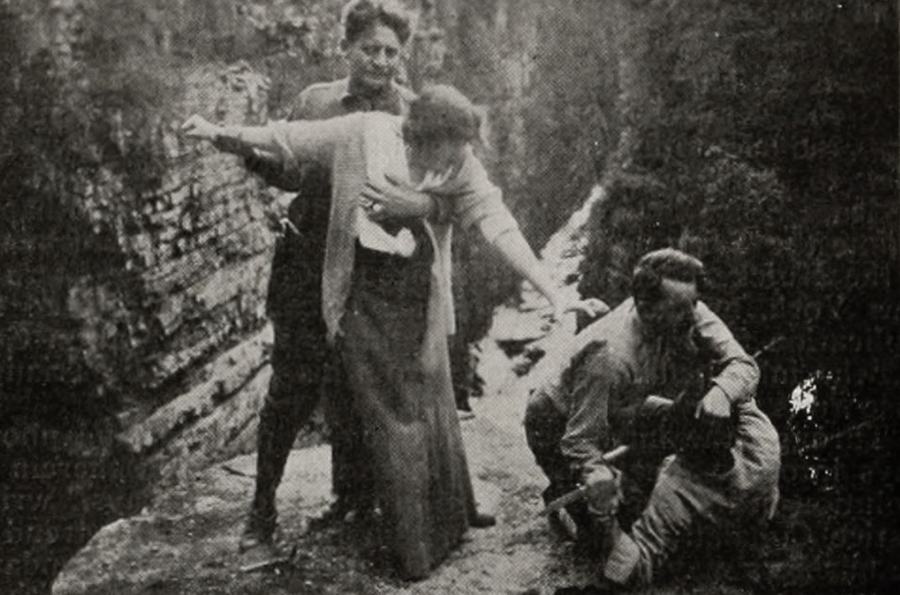
Sir Daniel Grey, dying in India, begs his daughter, Joanne, to marry the man of his choice, Mortimer Fitzhugh, and she finally consents, although disliking the man. The marriage ceremony is performed at Sir Daniel's deathbed, and at its conclusion, all present receive a shock when a former mistress of Mortimer's confronts them. Joanne, horrified at the woman's story, refuses to live with her husband and runs away to America. There she receives news of her husband's death while hunting in the wilds of British Columbia, and her relief is great. But two years later she hears that her husband is alive, and the old fear returns. Determined to prove for herself the truth, Joanne leaves for the railroad construction camp high up in the mountains of British Columbia. She is maliciously directed to Bill Quade's place, thus falling into the clutches of the worst men in the camp. He conceives a violent love for Joanne and tries to force his caresses upon her, but is prevented by John Aldrous, a young novelist and explorer and his companion, Donald McDonald, typical old mountaineer. Bill swears he will have the girl, and John places her under the protection of his friends, Paul Blackton and his wife. She and Aldrous fall in love, but her former marriage is a barrier to their happiness. While watching blasting operations Joanne and Aldrous wander into the cavern which is to act as the air chamber for the explosion of several tons of dynamite and are trapped there by a landslide. Expecting death momentarily, they are saved by the fact that the exploding wires were broken by the landslide and they are rescued. Meanwhile, Quade and his gang have been on the trail of Aldrous and Joanne, and after some exciting adventures, one of the crooks turns out to be Joanne's first husband. In a struggle with John he is killed, freeing Joanne forever and when John has recovered from his experience, he and Joanne are reunited in permanent happiness and love.
Decades after its release, The Hunted Woman remains a vital piece of the cinematic puzzle. Its influence can be seen in countless modern works, solidifying S. Rankin Drew's status as a master of the craft in United States and beyond.