
DbcultAccessing Vault...
Director's Spotlight
Senior Film Conservator
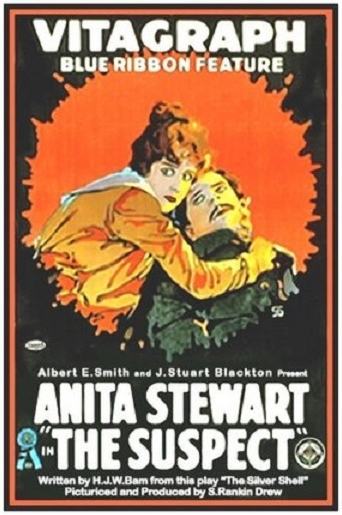
Director's Spotlight: United States
A Deep Dive into the 1916 Vision of S. Rankin Drew
To understand the modern evolution of United States film, one must first look at The Suspect and the collaborative alchemy between S. Rankin Drew and the 1916 creative team. Subverting the expectations of the typical 1916 audience, it remains a vital reference point for anyone studying the evolution of S. Rankin Drew.
In The Suspect, S. Rankin Drew pushes the boundaries of conventional narrative. The film's unique approach to its subject matter has sparked endless debates and interpretations among cinephiles and critics alike.
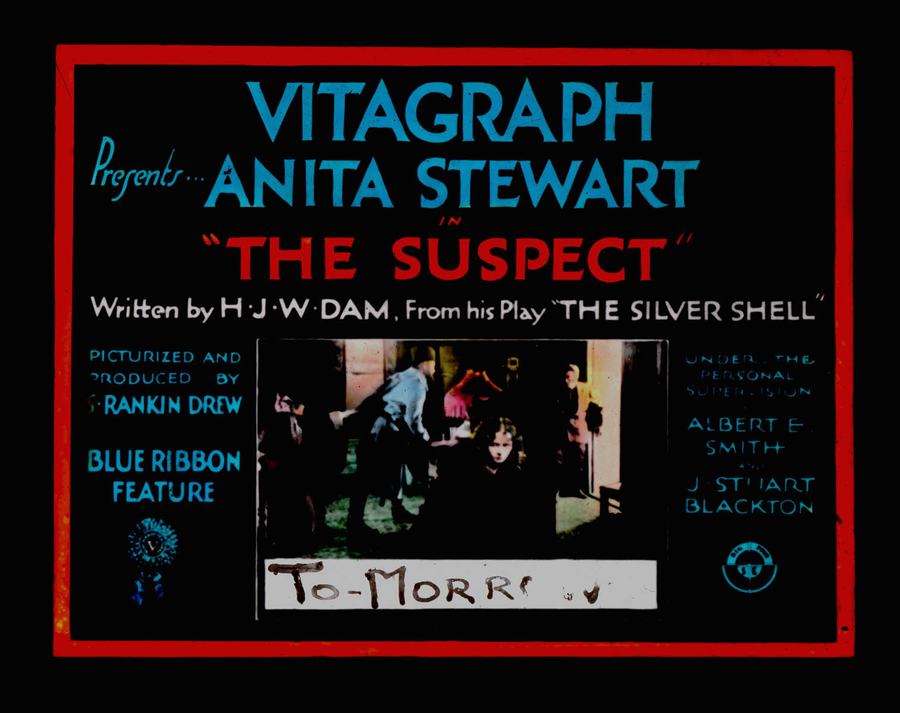
The visual language of The Suspect is defined by its use of shadows and framing, a hallmark of S. Rankin Drew's style. By utilizing a 1916-era palette, the film creates an immersive experience that perfectly complements its cult themes.
| Cinematography | Handheld |
| Soundtrack | Minimalist |
| Editing | Disjunctive |
| Art Direction | Baroque |
Visualizing the convergence of S. Rankin Drew's style and the core cult narrative.
Mouroff's aim is bad; the bomb which he threw at Karatoff, the butcher, explodes harmlessly many feet away. Karatoff's son Paul, puts spurs to his horse, and chases the nihilist. The latter is elusive, but Paul trails him and enters a house after him. Once inside, Valdor, another nihilist, stuns Paul with a blow from his club and carries him to his apartment. Valdor would willingly let him die from loss of blood, but Sophie commands him to heal the wound. This, at first, puzzles Valdor, coming as it does from Sophie Karrinini, leader of the nihilists and one who has ample reasons to hate Karatoff and his kin, but in an undertone, she explains. The sight of Paul Karatoff rouses to her mind vivid recollections of the scene, years before, when Paul's father compelled her to stand helplessly by, while her father was tortured to death, and her mother had died from the effects of the gruesome sight. Now what is the one little life of Paul Karatoff? She can find better ways to strike at the butcher's heart, by allowing him to live. Paul returns to consciousness, and Sophie gives him her most tender care. She listens, apparently horrified, to his tale of the attempt on his father's life. Soon, he is well enough to be moved, and is returned in safety to his father, cherishing in his heart, a love for Sophie. He asks her to be his bride. This being the first step in her plan, she readily consents. Karatoff's son the husband of a nihilist. But then their child is born, and with the boon of motherhood comes the realization that she loves Paul more than the cause. Having heard rumors of his wife's affiliation with the nihilists, Paul confronts her with the evidence and she confesses. He leaves to expose her, but is waylaid and stunned by Valdor, who throws his apparently lifeless form into the ice of the river. Mouroff, on the way to the market, finds the body, and seeing signs of life, takes it home with him. When Paul awakes, his memory is gone and Mouroff brings him up as a nihilist. Valdor returns to Sophie and tells her that the police have killed her husband. Five years later while traveling in England under an assumed name, Sophie meets Sir Richard Stanhope, an English nobleman, and they become interested in each other. Karatoff captures a nihilist messenger from whom he learns of a meeting of the band, and being unknown to the members, he takes the place of the messenger. He meets Richard, to whom he is known, and explains the reason for his assumed name. Mouroff receives the call to the meeting and takes Paul along. At the meeting Mouroff recognizes and denounces Karatoff and the true identities of all are established. While Karatoff is greeting his son, a shot is fired, intended for Karatoff, but it kills Paul. The police rush into the place and arrest all present, including Richard who had just appeared on the scene. Little Jack, Sophie's son, is now a Prince. His pleas for his mother's freedom are finally granted by his grandfather, Karatoff, with whom he returns to Russia to fulfill the duties of his heritage. Sophie now leaves her nihilistic tendencies behind, as she travels, in peace, at last, to England with Richard.
Decades after its release, The Suspect remains a vital piece of the cinematic puzzle. Its influence can be seen in countless modern works, solidifying S. Rankin Drew's status as a master of the craft in United States and beyond.