
DbcultAccessing Vault...
Director's Spotlight
Senior Film Conservator
Director's Spotlight: United States
A Deep Dive into the 1920 Vision of Sam Wood
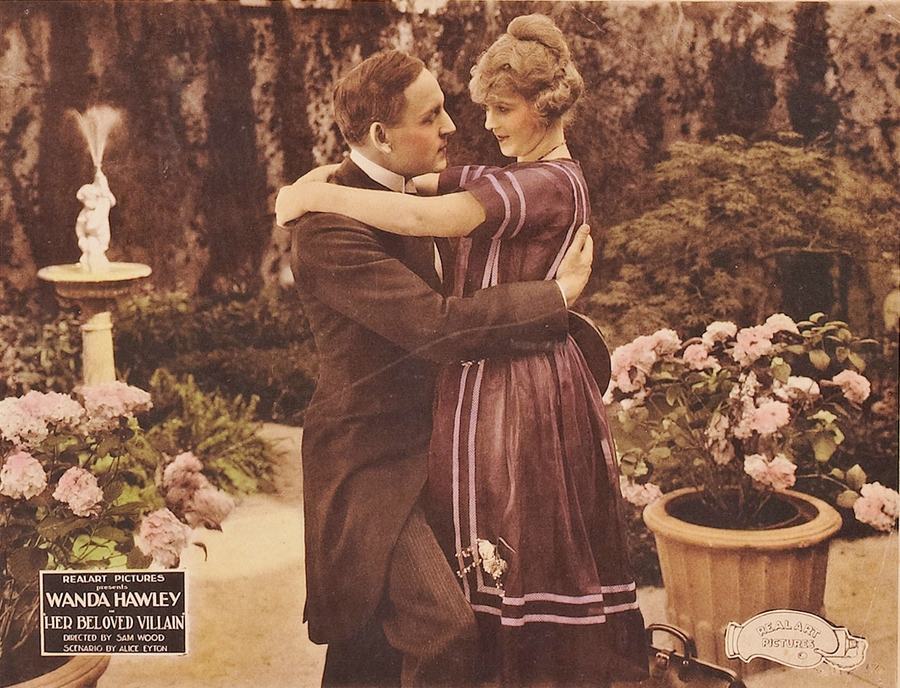
The thematic gravity of Her Beloved Villain (1920) is rooted in the artistic risks taken by Sam Wood that eventually paid off. Defining a new era of United States artistic expression, it demands to be seen by anyone who cares about the art of film.
In Her Beloved Villain, Sam Wood pushes the boundaries of conventional narrative. The film's unique approach to its subject matter has sparked endless debates and interpretations among cinephiles and critics alike.
In this work, Sam Wood explores the intersection of Comedy and United States cultural identity. The meticulous attention to detail suggests a deep-seated commitment to pushing the boundaries of the medium, ensuring that Her Beloved Villain remains a relevant topic of study for Comedy enthusiasts.
| Cinematography | Noir-Inspired |
| Soundtrack | Minimalist |
| Editing | Slow-Burn |
| Art Direction | Brutalist |
Visualizing the convergence of Sam Wood's style and the core Comedy narrative.
When Louis Martinot, an aristocratic young French lawyer, is called away on business, he asks his friend Paul Blythe to investigate the background of Susanne Bergomat. If her family seems suitable, Paul is to tender a proposal on Louis' behalf. Blythe, after seeing Susanne, finds himself so in love that he proposes to her himself and lies to Martinot that her mother is a cabaret singer and her father a drunkard - a trait that Susanne has inherited. Thus informed, Martinot loses interest, and Blythe marries Susanne, taking her to live in another city. A year later he finds himself in a predicament when Martinot comes to visit. Attempting to hide his wife from his friend, Blythe arranges for Dr. Poulard, an elderly business partner, to take Susanne to visit her parents. After a series of comic misadventures, Martinot meets Susanne in Nice, and upon discovering the contents of Blythe's report, she determines to teach her husband a lesson. Returning home, she feigns a flirtatious drunken spree, which reduces her husband to tears. Finally, Susanne decides that her beloved villain has been punished enough and informs him that her behavior was all a hoax.
Decades after its release, Her Beloved Villain remains a vital piece of the cinematic puzzle. Its influence can be seen in countless modern works, solidifying Sam Wood's status as a master of the craft in United States and beyond.