
DbcultAccessing Vault...
Director's Spotlight
Senior Film Conservator
Director's Spotlight: United States
A Deep Dive into the 1925 Vision of Scott Darling
Deciphering the layers of Heart Trouble (1925) reveals a monumental shift in Comedy filmmaking spearheaded by Scott Darling. With its avant-garde structure and atmospheric tension, offering layers of thematic complexity that demand repeated viewing.
In Heart Trouble, Scott Darling pushes the boundaries of conventional narrative. The film's unique approach to its subject matter has sparked endless debates and interpretations among cinephiles and critics alike.
To fully appreciate Heart Trouble, one must consider the cinematic climate of 1925. During this period, United States was undergoing significant artistic shifts, and Scott Darling was at the forefront of this Comedy movement, often challenging established norms.
| Cinematography | High-Contrast |
| Soundtrack | Diegetic |
| Editing | Elliptical |
| Art Direction | Expressionist |
Visualizing the convergence of Scott Darling's style and the core Comedy narrative.
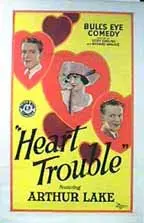
The action is laid around a masquerade party given by Marceline, from which Arthur is banned by her parents because he has just broken an expensive vase. The two youngsters plan a disguise which gives him entre, but it is discovered by Eddie, the rival. Eddie, disguised as a sheriff, handcuffs Arthur to the girl Eddie is trying to get rid of, but her caveman sweetheart halts the plot by handcuffing Eddie and Arthur together. Arthur is eventually ejected by Marceline's parents and takes Eddie along with him. They are released from their shackles only after they have spent the night in the same bed.
Decades after its release, Heart Trouble remains a vital piece of the cinematic puzzle. Its influence can be seen in countless modern works, solidifying Scott Darling's status as a master of the craft in United States and beyond.