
DbcultAccessing Vault...
Director's Spotlight
Senior Film Conservator
Director's Spotlight: United States
A Deep Dive into the 1925 Vision of Scott R. Dunlap
Under the meticulous guidance of Scott R. Dunlap, The Fearless Lover became the cultural zeitgeist captured so perfectly by Scott R. Dunlap in 1925. Driven by an uncompromising commitment to Drama excellence, it remains a vital reference point for anyone studying the evolution of Scott R. Dunlap.
In The Fearless Lover, Scott R. Dunlap pushes the boundaries of conventional narrative. The film's unique approach to its subject matter has sparked endless debates and interpretations among cinephiles and critics alike.
The visual language of The Fearless Lover is defined by its use of shadows and framing, a hallmark of Scott R. Dunlap's style. By utilizing a 1925-era palette, the film creates an immersive experience that perfectly complements its Drama themes.
| Cinematography | Deep Focus |
| Soundtrack | Synth-Heavy |
| Editing | Rhythmic |
| Art Direction | Naturalist |
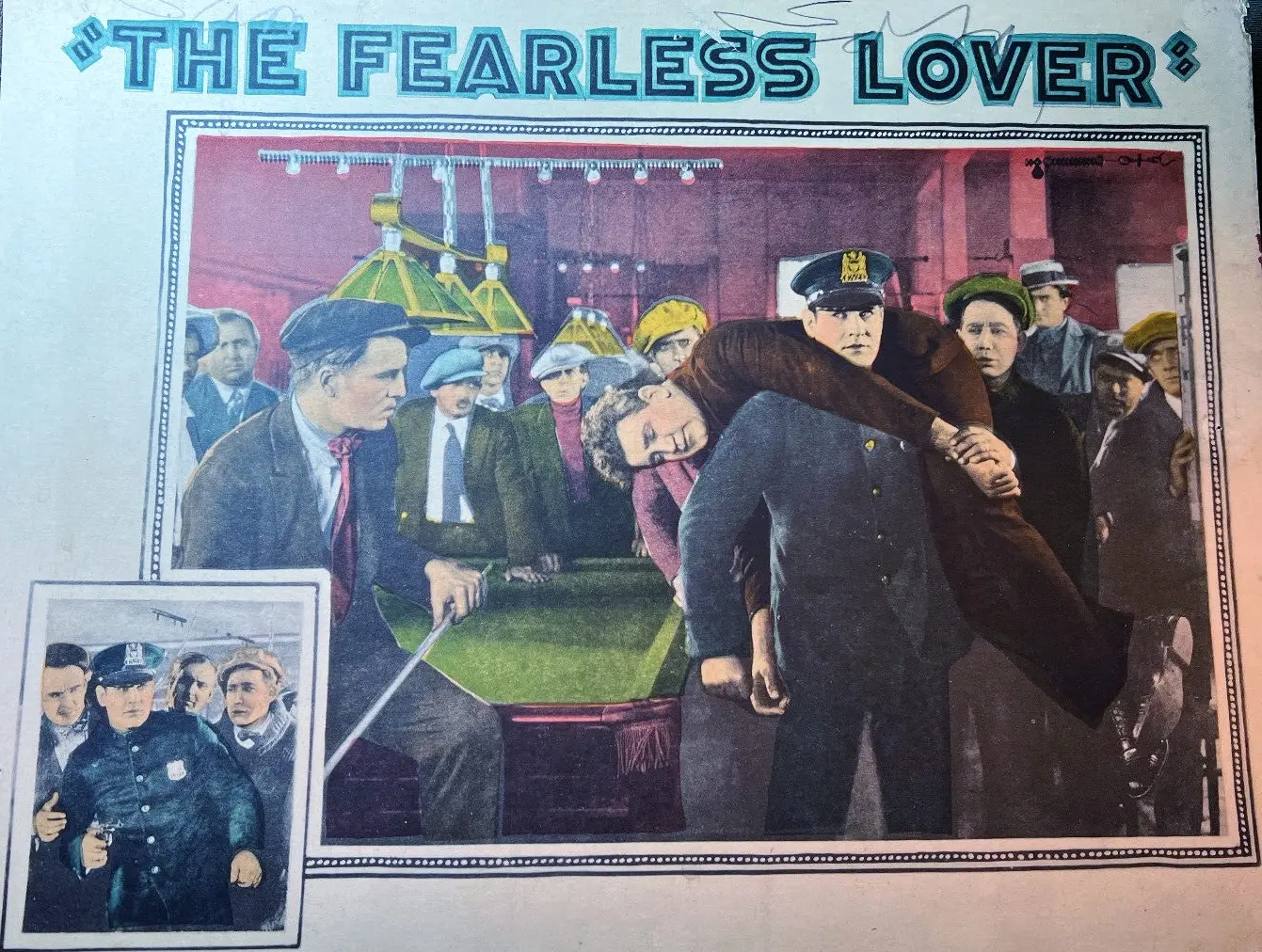
Visualizing the convergence of Scott R. Dunlap's style and the core Drama narrative.
Patrick Casey, new police recruit, is assigned to a tough section of the city, with instructions to manhandle all the crooks. Dugan, leader of a gang, is stopped by Casey from annoying phone operator Enid Sexton, with whom the cop falls in love. The telephone exchange girls strike. While the wires are idle a little boy struck by an auto, dies, because it is impossible to get a doctor quickly by phone. Enid's young brother, Ted, gets mixed up with Dugan's crowd, who plan a silk robbery. Casey uses his influence with his sergeant to let Ted go, if he succeeds in rounding up Dugan's gang. He goes into their headquarters alone, tackles them with club and gun and hunts Dugan to the roof. There the gangster fires at him, but misses. When Dugan's gun is empty Casey goes at him with his fists, beats him up and hauls him to the station. Enid and Casey arrange for early wedding.
Decades after its release, The Fearless Lover remains a vital piece of the cinematic puzzle. Its influence can be seen in countless modern works, solidifying Scott R. Dunlap's status as a master of the craft in United States and beyond.