
DbcultAccessing Vault...
Director's Spotlight
Senior Film Conservator
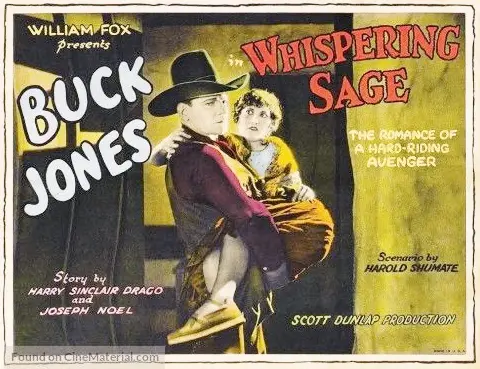
Director's Spotlight: United States
A Deep Dive into the 1927 Vision of Scott R. Dunlap
The evocative power of Whispering Sage stems from the unique collaboration between the bold experimentation that has become synonymous with Scott R. Dunlap. Framed by the hauntingly beautiful landscapes of the production, it echoes the profound changes occurring in United States during that era.
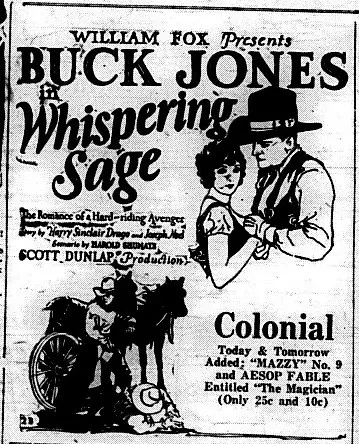
In Whispering Sage, Scott R. Dunlap pushes the boundaries of conventional narrative. The film's unique approach to its subject matter has sparked endless debates and interpretations among cinephiles and critics alike.
| Cinematography | High-Contrast |
| Soundtrack | Orchestral |
| Editing | Slow-Burn |
| Art Direction | Brutalist |
Visualizing the convergence of Scott R. Dunlap's style and the core Western narrative.
Buck Kildare, searching for a killer, encounters a colony of Basques in the desert and saves them from the henchmen of Hugh Acklin, owner of an adjoining ranch, who wants to take over the immigrants' land. Discovering Acklin's duplicity, Buck soon becomes an ally of the Basques and falls in love with Mercedes, the daughter of their leader. In a showdown between the factions, Buck discovers that Acklin's foreman murdered his brother, Tom. Government forces save the Basques at the last minute, and Buck is happily united with the girl.
Decades after its release, Whispering Sage remains a vital piece of the cinematic puzzle. Its influence can be seen in countless modern works, solidifying Scott R. Dunlap's status as a master of the craft in United States and beyond.