
DbcultAccessing Vault...
Director's Spotlight
Senior Film Conservator
Director's Spotlight: United States
A Deep Dive into the 1925 Vision of Scott R. Dunlap
The enduring fascination with Wreckage is a testament to the artistic risks taken by Scott R. Dunlap that eventually paid off. Challenging the viewer to find meaning in the Drama shadows, it reminds us of the fragility and beauty of the 1925s.
In Wreckage, Scott R. Dunlap pushes the boundaries of conventional narrative. The film's unique approach to its subject matter has sparked endless debates and interpretations among cinephiles and critics alike.
To fully appreciate Wreckage, one must consider the cinematic climate of 1925. During this period, United States was undergoing significant artistic shifts, and Scott R. Dunlap was at the forefront of this Drama movement, often challenging established norms.
| Cinematography | Static |
| Soundtrack | Diegetic |
| Editing | Elliptical |
| Art Direction | Expressionist |
Visualizing the convergence of Scott R. Dunlap's style and the core Drama narrative.
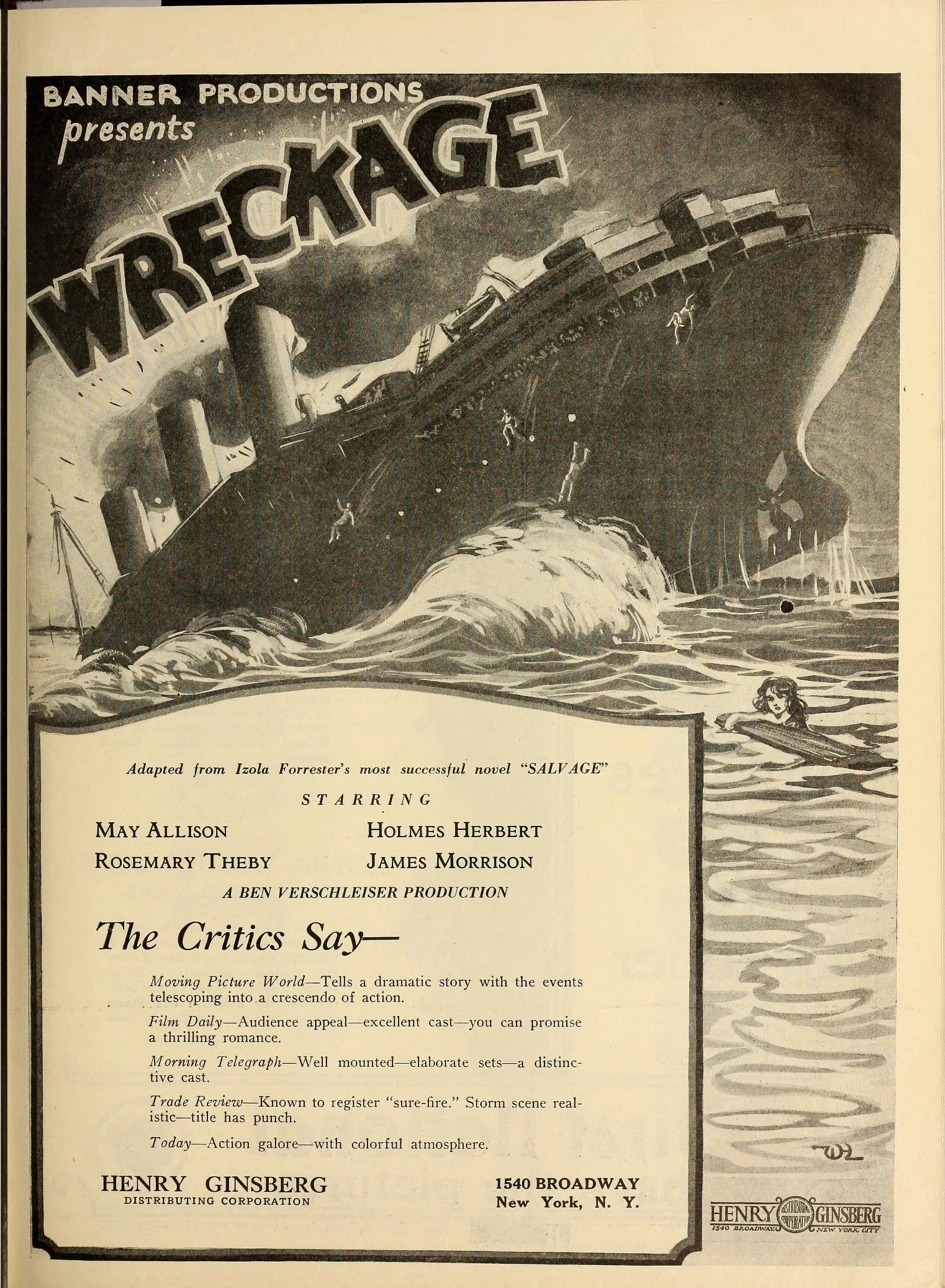
In order to protect Grant Demarest from a siren named Margot, Stuart Ames attempts to disillusion him about the girl. Margot threatens to kill herself; Grant reaches for the gun and is accidentally shot. Blaming himself for his friend's death, Stuart books passage on a liner, where he meets Rene, the daughter of a dishonest dealer in gems. They are shipwrecked, and Rene returns to the United States, becoming the guest of Margot, her childhood friend. Rene is later lured to a wilderness cabin by Dysart (an accomplice of Rene's father who is disguised as a count); he attempts to assault her, and Ames, who has followed them, knocks him over a cliff. Ames and Rene make plans to be married.
Decades after its release, Wreckage remains a vital piece of the cinematic puzzle. Its influence can be seen in countless modern works, solidifying Scott R. Dunlap's status as a master of the craft in United States and beyond.