
DbcultAccessing Vault...
Director's Spotlight
Senior Film Conservator
Director's Spotlight: United States
A Deep Dive into the 1915 Vision of Sidney M. Goldin
Witnessing the stylistic transformation of cult through The Last of the Mafia reveals the global recognition that Sidney M. Goldin garnered after the release of The Last of the Mafia. Serving as a mirror to the anxieties of a changing world, offering layers of thematic complexity that demand repeated viewing.
In The Last of the Mafia, Sidney M. Goldin pushes the boundaries of conventional narrative. The film's unique approach to its subject matter has sparked endless debates and interpretations among cinephiles and critics alike.
In this work, Sidney M. Goldin explores the intersection of cult and United States cultural identity. The meticulous attention to detail suggests a deep-seated commitment to pushing the boundaries of the medium, ensuring that The Last of the Mafia remains a relevant topic of study for cult enthusiasts.
| Cinematography | Deep Focus |
| Soundtrack | Synth-Heavy |
| Editing | Disjunctive |
| Art Direction | Baroque |
Visualizing the convergence of Sidney M. Goldin's style and the core cult narrative.
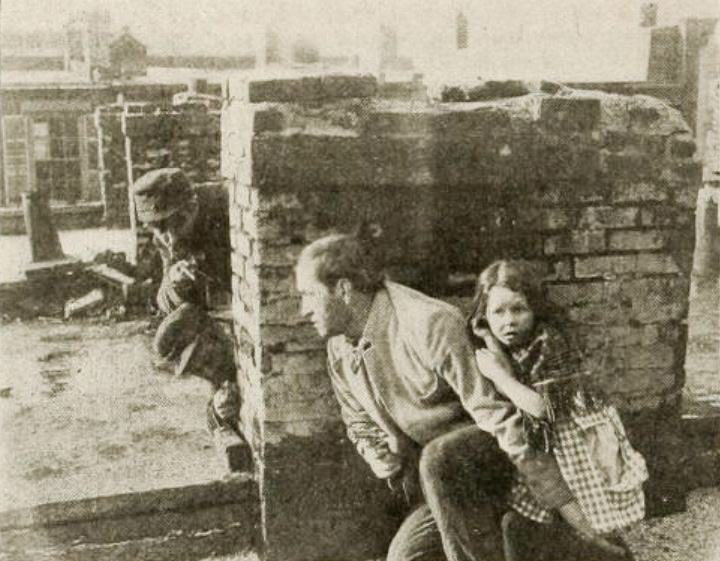
The famous Italian detective, Guila Ferrati, is sent by his government to trail members of the Mafia who have landed in the U.S. As they resume their criminal activities in New York City, a bootblack named Tony overhears a conversation between Guila and the chief inspector of police. Tony informs the Mafia of Guila's arrival, resulting in the detective's murder. Meanwhile, Aramatti Lattori, a wealthy Italian merchant, receives letters from a Black Hand society threatening the kidnapping of his child unless he gives them a large sum of money. When the merchant refuses, the two Mafiosi proceed with the kidnapping, leading to a series of incidents, including a bombing, which sets the city in an uproar. Through clever ruses and daring exploits, Italian-American detective Lieutenant Cavanaugh rescues the child and extradites the Mafiosi to their homeland.
Decades after its release, The Last of the Mafia remains a vital piece of the cinematic puzzle. Its influence can be seen in countless modern works, solidifying Sidney M. Goldin's status as a master of the craft in United States and beyond.