
DbcultAccessing Vault...
Director's Spotlight
Senior Film Conservator
Director's Spotlight: Germany
A Deep Dive into the 1914 Vision of Stellan Rye
As we revisit the 1914 masterpiece Kadra Sâfa, we are struck by the meticulous attention to detail that Stellan Rye applied to every frame. Anchored by a narrative that is both personal and universal, it bridges the gap between traditional cult and contemporary vision.
In Kadra Sâfa, Stellan Rye pushes the boundaries of conventional narrative. The film's unique approach to its subject matter has sparked endless debates and interpretations among cinephiles and critics alike.
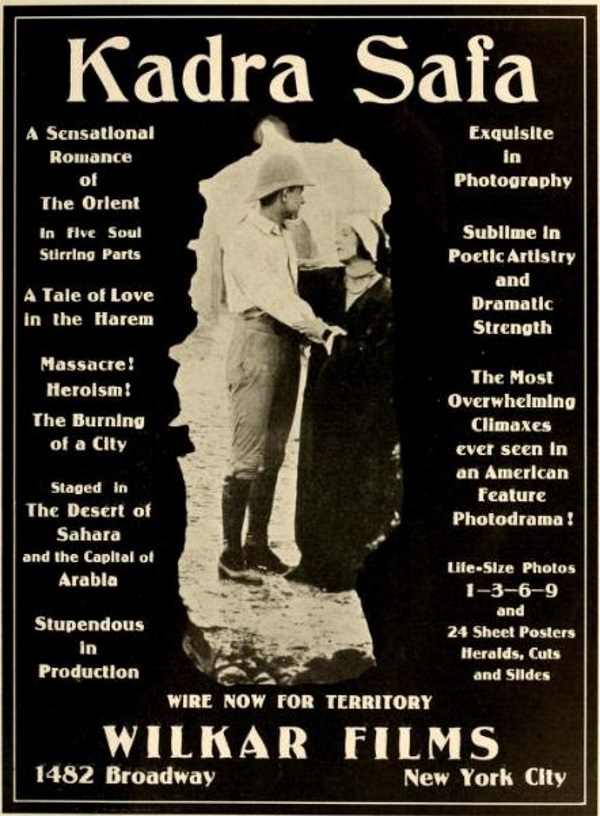
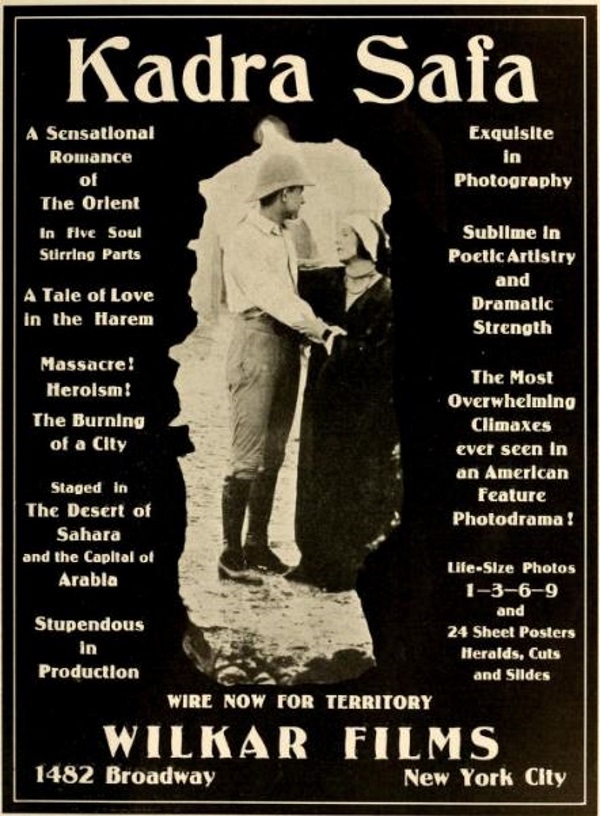
The visual language of Kadra Sâfa is defined by its use of shadows and framing, a hallmark of Stellan Rye's style. By utilizing a 1914-era palette, the film creates an immersive experience that perfectly complements its cult themes.
| Cinematography | Static |
| Soundtrack | Minimalist |
| Editing | Slow-Burn |
| Art Direction | Brutalist |
Visualizing the convergence of Stellan Rye's style and the core cult narrative.
Miss Weisenthal portrays the favorite wife of a sheik, having found favor with him owing to her grace and beauty and her poetry of motion. Being the favorite wife, she is allowed the privileges of the harem, with a retinue of slaves, and she lives like a princess. One day, while taking her daily ride accompanied by several of her slaves, they are set upon by bandits, and Kadra Safa is taken prisoner. She is, however rescued by an American doctor and botanist, who, together with a party of his friends, is exploring the desert. The doctor is surprised and startled to find so beautiful a woman in this far-out-of-the-way place. The doctor accompanies Kadra Safa back to the palace, where he is received as a guest. He is not, however, permitted, according in the Mohammedan custom, to see Kadra Safa. The sheik extends to him the courtesy of the palace, and sets aside slaves to do his bidding. Some time later the doctor and his attendant, wandering through the gardens, suddenly behold a beautiful sight. Kadra Safa is entertaining her lord and master with one of her dances. The doctor is enthralled, and, forgetting himself, tosses her a rose. Love is blind? How would it be possible for this man of culture and refinement to successfully carry off this oriental woman? The way is opened up to them. Kadra Safa feigns illness and the doctor is sent for. He slips her a note, saying that on the morrow at high noon, the day set for the massacre of the Christians, and probably the palace will be thrown into a pandemonium, if Kadra Safa meet the doctor near the great wall they shall escape to civilization. Things go well until the lovers are discovered. Everything is forgotten, even the massacre, to avenge this desecration of the Mohammedan harem. The doctor and Kadra Safa seek refuge in an old well. They are discovered and vengeance is meted out to them. Water is turned in upon them. Kadra Safa and the doctor die like rats in a trap.
Decades after its release, Kadra Sâfa remains a vital piece of the cinematic puzzle. Its influence can be seen in countless modern works, solidifying Stellan Rye's status as a master of the craft in Germany and beyond.