Summary
In a mirage-lashed court where marble breathes amber and fountains whisper secrets to peacocks, Kadra Sâfa—veiled in muslin so fine it could be moonlight cut by scissors—glides through perfumed corridors, her feet spelling erotic couplets on mosaic floors. She is the sheik’s living jewel, permitted to ride beyond the walls, a caravan of silk-clad slaves trailing like comet tails. Bandits erupt from the dunes, their blades sun-flares against indigo sky; the favourite wife is torn from her palanquin, a lotus ripped by sandstorms. Salvation arrives in the guise of a lanky American botanist whose spectacles flash like twin heliographs; he’s cataloguing thorns while she embodies every forbidden blossom. Back at the palace the doctor becomes a ghost in the guest wing, sustained by mint tea and the echo of ankle bells. One dusk, hidden among jasmine trellises, he witnesses Kadra Sâfa’s dance—hips spelling “paradise” in calligraphy of muscle and breath—and hurls a rose, scarlet comet across cultures. Love mutates into conspiracy: feigned sickness, a clandestine note, the promise of flight at the very hour when scimitars will sing for Christian blood. They bolt toward a crumbling parapet, but betrayal drips faster than water clocks; lovers plunge into a disused well, its throat ringed with mossy teeth. The sheik’s men flood the shaft; turquoise water turns tomb, and two hearts drown inches from desert stars.
Synopsis
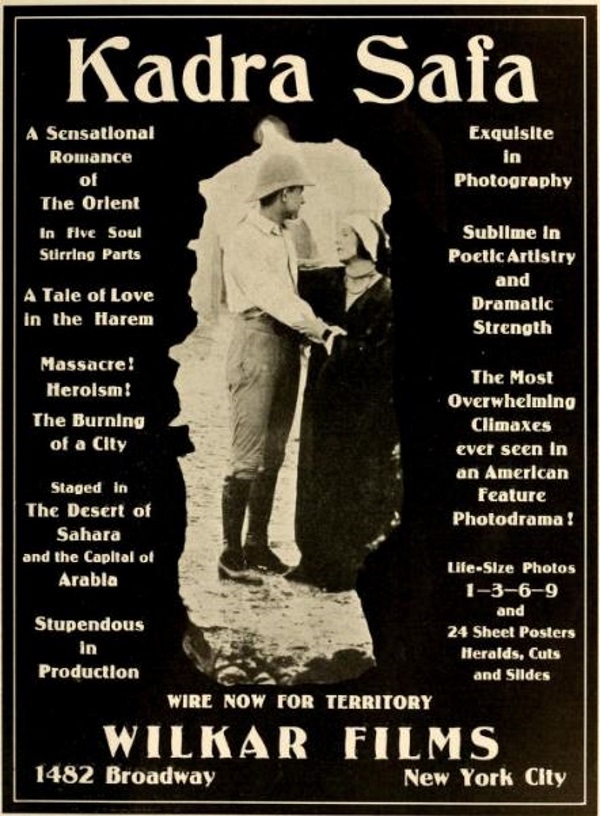
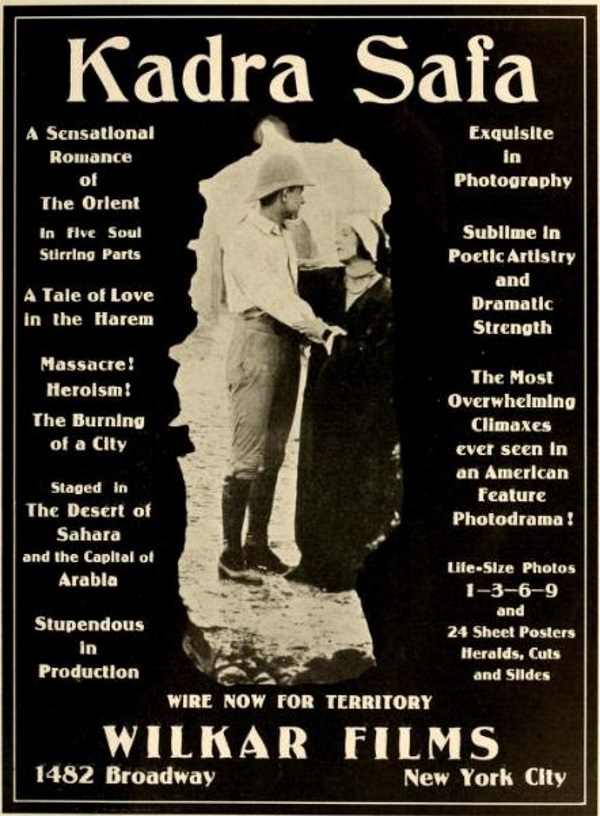
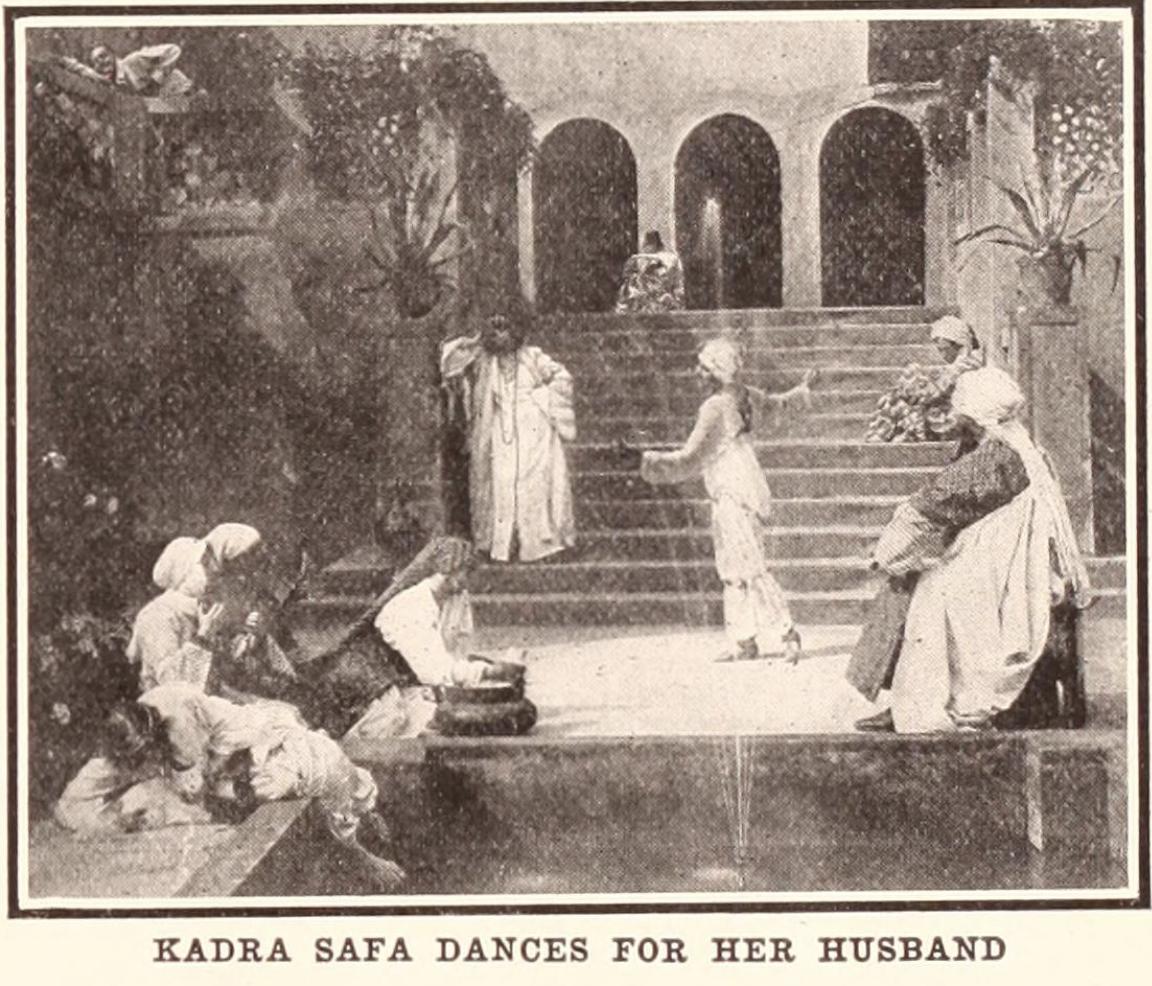
Miss Weisenthal portrays the favorite wife of a sheik, having found favor with him owing to her grace and beauty and her poetry of motion. Being the favorite wife, she is allowed the privileges of the harem, with a retinue of slaves, and she lives like a princess. One day, while taking her daily ride accompanied by several of her slaves, they are set upon by bandits, and Kadra Safa is taken prisoner. She is, however rescued by an American doctor and botanist, who, together with a party of his friends, is exploring the desert. The doctor is surprised and startled to find so beautiful a woman in this far-out-of-the-way place. The doctor accompanies Kadra Safa back to the palace, where he is received as a guest. He is not, however, permitted, according in the Mohammedan custom, to see Kadra Safa. The sheik extends to him the courtesy of the palace, and sets aside slaves to do his bidding. Some time later the doctor and his attendant, wandering through the gardens, suddenly behold a beautiful sight. Kadra Safa is entertaining her lord and master with one of her dances. The doctor is enthralled, and, forgetting himself, tosses her a rose. Love is blind? How would it be possible for this man of culture and refinement to successfully carry off this oriental woman? The way is opened up to them. Kadra Safa feigns illness and the doctor is sent for. He slips her a note, saying that on the morrow at high noon, the day set for the massacre of the Christians, and probably the palace will be thrown into a pandemonium, if Kadra Safa meet the doctor near the great wall they shall escape to civilization. Things go well until the lovers are discovered. Everything is forgotten, even the massacre, to avenge this desecration of the Mohammedan harem. The doctor and Kadra Safa seek refuge in an old well. They are discovered and vengeance is meted out to them. Water is turned in upon them. Kadra Safa and the doctor die like rats in a trap.
Review Excerpt
"
The first thing that strikes you about Kadra Sâfa is its odour: celluloid steeped in attar of rose, gunpowder, and wet limestone. Forgotten for a century, the film drifts back like incense smoke taking on the shape of a corpse. Shot on evaporated sets outside Berlin, draped in North-African drag, it wants to be The Adventures of Kathlyn with twice the opium and half the ethics. Instead it becomes an accidental X-ray of Weimar desires: white bodies dreaming themselves sovereign over dusky flesh..."