
DbcultAccessing Vault...
Director's Spotlight
Senior Film Conservator
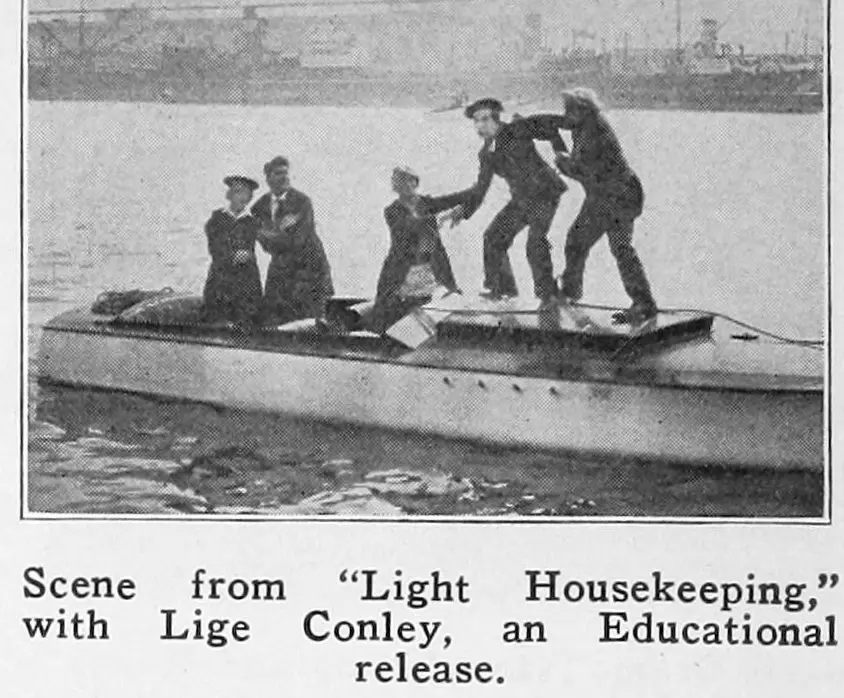
Director's Spotlight: United States
A Deep Dive into the 1926 Vision of Stephen Roberts
As we revisit the 1926 masterpiece Light Housekeeping, we are struck by the meticulous attention to detail that Stephen Roberts applied to every frame. Anchored by a narrative that is both personal and universal, it bridges the gap between traditional Short and contemporary vision.
In Light Housekeeping, Stephen Roberts pushes the boundaries of conventional narrative. The film's unique approach to its subject matter has sparked endless debates and interpretations among cinephiles and critics alike.
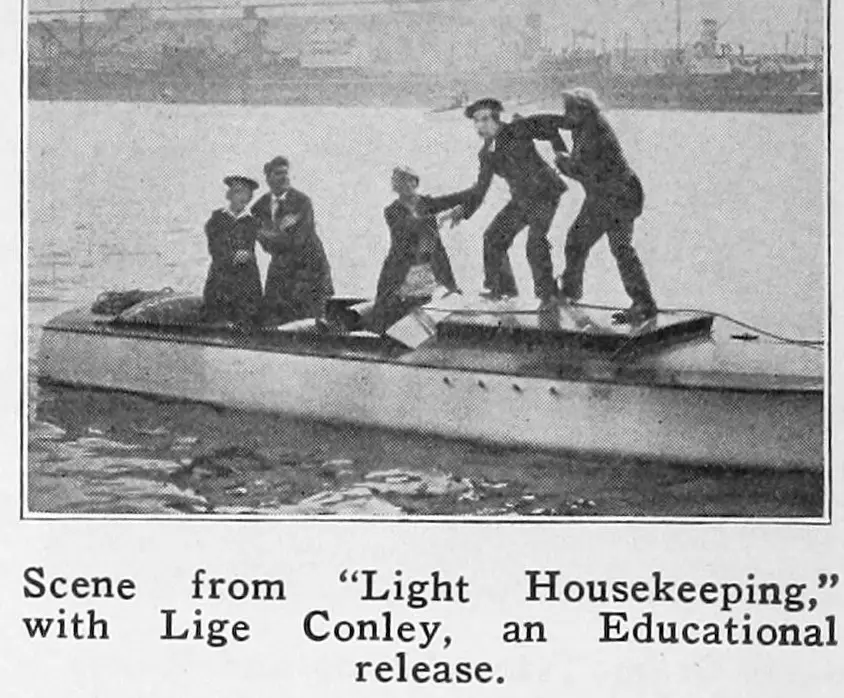
The visual language of Light Housekeeping is defined by its use of shadows and framing, a hallmark of Stephen Roberts's style. By utilizing a 1926-era palette, the film creates an immersive experience that perfectly complements its Short themes.
| Cinematography | High-Contrast |
| Soundtrack | Experimental |
| Editing | Invisible |
| Art Direction | Kitsch |
Visualizing the convergence of Stephen Roberts's style and the core Short narrative.
Lige is assistant lighthouse keeper, under Phil, the grouchy head keeper. Lige's life is miserable, but he has many dreams, not the least of which is that of himself as the gallant captain of a noble ship with hundreds of women as his admirers. On board a passing ship is Estelle, the Princess of Blahstark, who is endeavoring to escape from conspirators who are trying to abduct her and marry her to the pretender to the throne. The Princess overhears their plot and tries to escape by changing clothes with the Chinese steward of the ship. Then Otto, the pretender, forces his attention on the princess and soon discovers that the princess's clothes are on the Chinese steward. The real princess gets in his way and in his rage he throws her overboard, thinking she is a steward. Estelle swims to the lighthouse and is pulled from the water by Lige, who soon discovers that she is a girl. On board the ship, Otto, through his glasses, sees the rescue and tries again to abduct her. He lands at the lighthouse and Lige and Estelle again escape aboard the ship with Otto in close pursuit. Otto chases Lige into the hold where he hides in a sack. The sack is hoisted to the masthead and when Lige takes off the bag he finds himself on the spar. He gets down all right and lands in Estelle's cabin. The ship runs into a terrible storm at sea. In the midst of it, Lige sends for the captain to marry them, but the seas are so high and the ship rolls so that it is impossible to stand. Lige fixes that by pivoting the settee to the all, and while the ship turns hand-springs over and over, he and Estelle are married by the captain.
Decades after its release, Light Housekeeping remains a vital piece of the cinematic puzzle. Its influence can be seen in countless modern works, solidifying Stephen Roberts's status as a master of the craft in United States and beyond.