
DbcultAccessing Vault...
Director's Spotlight
Senior Film Conservator
Director's Spotlight: United States
A Deep Dive into the 1920 Vision of Stuart Paton
As a cultural artifact of the 1920s, Wanted at Headquarters provides the visionary mind of its creator, Stuart Paton. With its avant-garde structure and atmospheric tension, it redefined what audiences could expect from a Crime experience.
In Wanted at Headquarters, Stuart Paton pushes the boundaries of conventional narrative. The film's unique approach to its subject matter has sparked endless debates and interpretations among cinephiles and critics alike.
In this work, Stuart Paton explores the intersection of Crime and United States cultural identity. The meticulous attention to detail suggests a deep-seated commitment to pushing the boundaries of the medium, ensuring that Wanted at Headquarters remains a relevant topic of study for Crime enthusiasts.
| Cinematography | Handheld |
| Soundtrack | Minimalist |
| Editing | Disjunctive |
| Art Direction | Baroque |
Visualizing the convergence of Stuart Paton's style and the core Crime narrative.
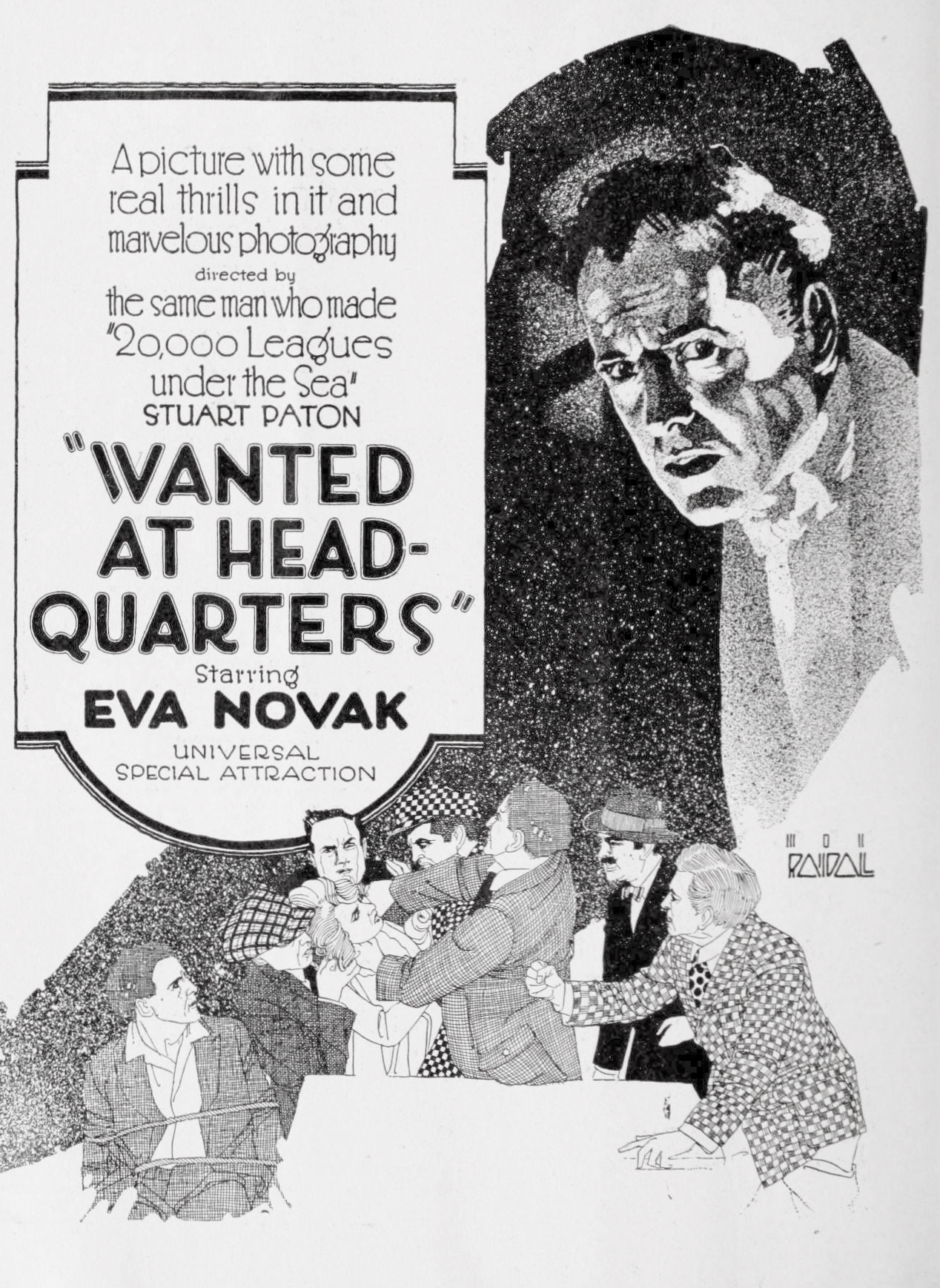
Although she is the mastermind of a gang of crooks, Kate Westhanger's talents are unknown to those outside her circle, thus enabling her to infiltrate George Flanbaugh's gold syndicate. While ostensibly working for Flanbaugh, Kate actually is compiling information on a large gold shipment. One day, while working, Kate meets young criminologist Michael Pretherson, and although finding herself attracted to the sleuth, she laughs at his detective work and challenges him to stop her. He fails, and after successfully robbing the gold shipment Kate is enraged when she learns that the gang has decided to disband. Her actions inflame the crooks, who capture both Kate and Michael and are about to kill their prisoners when the police arrive, igniting a fight in which all the criminals except Kate are killed. Realizing that her love for Michael has extinguished her desire for crime, Kate returns the gold, is exonerated and weds Michael.
Decades after its release, Wanted at Headquarters remains a vital piece of the cinematic puzzle. Its influence can be seen in countless modern works, solidifying Stuart Paton's status as a master of the craft in United States and beyond.