
DbcultAccessing Vault...
Director's Spotlight
Senior Film Conservator
Director's Spotlight: United States
A Deep Dive into the 1917 Vision of Theodore Marston
The 1917 release of Seven Deadly Sins marked a significant moment for the enduring legacy of Theodore Marston's artistic contribution to the genre. By challenging the status quo of 1917 cinema, it has cemented its place in the global cult cinema archive.
In Seven Deadly Sins, Theodore Marston pushes the boundaries of conventional narrative. The film's unique approach to its subject matter has sparked endless debates and interpretations among cinephiles and critics alike.
To fully appreciate Seven Deadly Sins, one must consider the cinematic climate of 1917. During this period, United States was undergoing significant artistic shifts, and Theodore Marston was at the forefront of this cult movement, often challenging established norms.
| Cinematography | Handheld |
| Soundtrack | Experimental |
| Editing | Elliptical |
| Art Direction | Expressionist |
Visualizing the convergence of Theodore Marston's style and the core cult narrative.
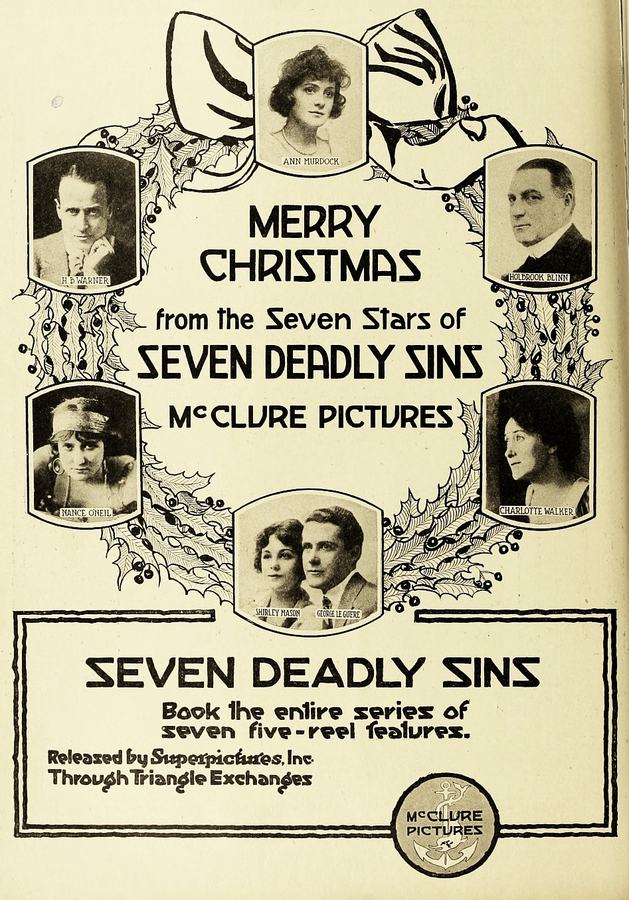
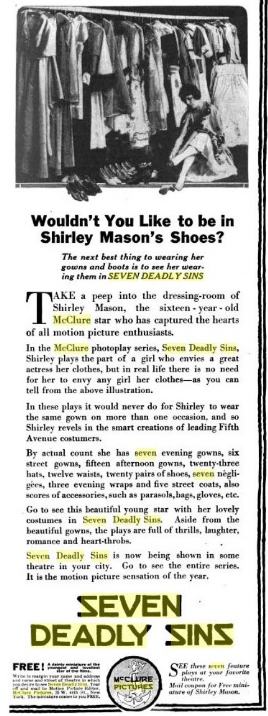
A series of seven 5-reel features (q.v.), based on stories published in The Ladies World, a McClure publication, depicting each of the Seven Deadly Sins: (1) Envy (1917), (2) Pride (1917), (3) Greed (1917), (4) Sloth (1917), (5) Passion (1917), (6) Wrath (1917), and (7) The Seventh Sin (1917). The characters of Adam and Eve, portrayed by George Le Guere and Shirley Mason, were represented in some capacity within each story. The films were cut to two reels and re-released in 1918.
Decades after its release, Seven Deadly Sins remains a vital piece of the cinematic puzzle. Its influence can be seen in countless modern works, solidifying Theodore Marston's status as a master of the craft in United States and beyond.