
DbcultAccessing Vault...
Director's Spotlight
Senior Film Conservator
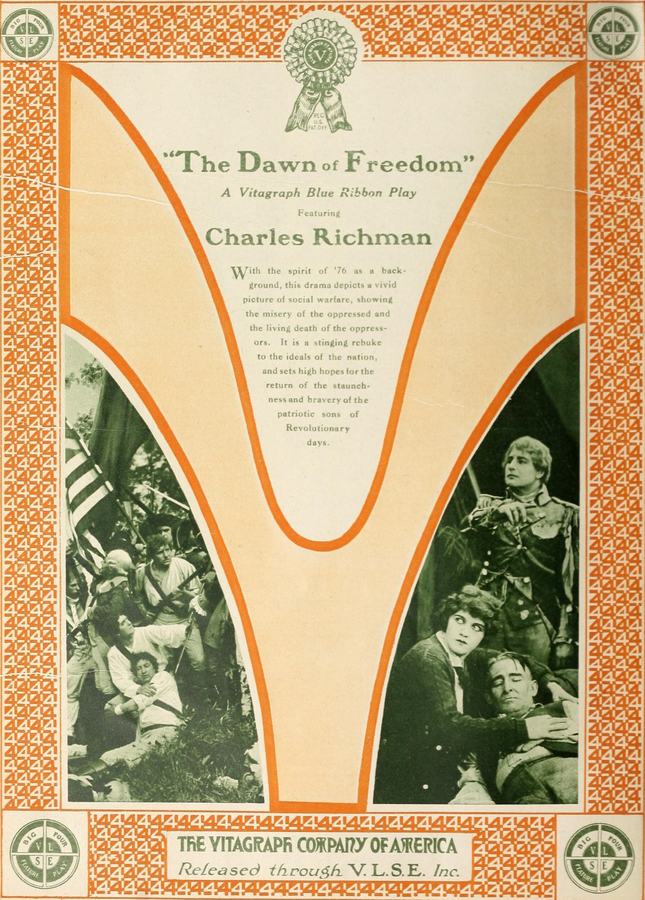
Director's Spotlight: United States
A Deep Dive into the 1916 Vision of Theodore Marston
The thematic gravity of The Dawn of Freedom (1916) is rooted in the historical context that Theodore Marston weaves into the cult fabric. Synthesizing the best elements of United States and international cinema, it highlights the importance of independent voices in United States.
In The Dawn of Freedom, Theodore Marston pushes the boundaries of conventional narrative. The film's unique approach to its subject matter has sparked endless debates and interpretations among cinephiles and critics alike.
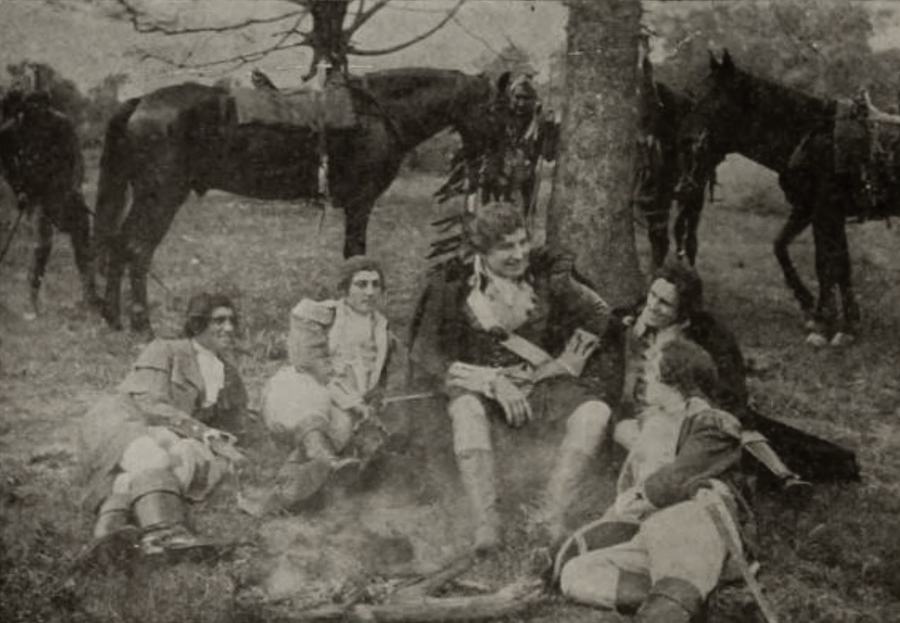
The visual language of The Dawn of Freedom is defined by its use of shadows and framing, a hallmark of Theodore Marston's style. By utilizing a 1916-era palette, the film creates an immersive experience that perfectly complements its cult themes.
| Cinematography | Noir-Inspired |
| Soundtrack | Diegetic |
| Editing | Elliptical |
| Art Direction | Expressionist |
Visualizing the convergence of Theodore Marston's style and the core cult narrative.
"The Dawn of Freedom" is a stinging satire on the death of those ideals that prompted the founders of the United States. It contrasts in bold outline the spirit of '76, when every American worked for the welfare of the new-born country, with the attitude of the modern-day American who looks only to his personal gain with no thought of his country. Richard Cartwright, a revolutionary patriot, like hundreds of others, was granted a plot of land in the Alleghenies. Cartwright was engaged to wed Elizabeth Bradbury, and in company with a small party, he left for his plot of land, promising to return in the fall. Arriving at the land, he was captured by Indians. Later he was rescued by Ambrose, a missionary, who had spent many years in India. Ambrose's efforts to save Cartwright came to naught. Ambrose was versed in Eastern hypnotism, so he decided that rather than to have Cartwright tortured and probably burned at the stake, he would put him in a trance and have him buried, after which he would exhume him and bring him out of the trance. But after the burial, Ambrose himself was killed. Before being put under the spell Cartwright wrote his will, giving his land half to his brother and half to his fiancée. One hundred and thirty-nine years afterward we find Cartwright's little plot of land is made up of coal mines worth millions, with a descendant of Philip Cartwright, brother of Richard, in sole control and with Elizabeth McLean, great granddaughter of Elizabeth Bradbury, the daughter of one of the miners, dependent upon the scant wages of a miner. In his grasp for power Cartwright has frozen McLean out of what was his half of the property and the latter is now living in poverty. The miners go out on strike. Cartwright refusing both demands, violence is resorted to and one of the coal mines is blown up. In the terrific explosion, the aluminum casket holding the body of Richard Cartwright is blown to the surface, where its top is blown off. Dick, son of the coal baron, encounters the casket just as Cartwright, delivered from his trance by the impact of the explosion, steps out of it. He is emaciated and has much the same appearance as a butterfly emerging from its chrysalis. The patriot is taken to Dick's home, where is witnessed the insidious inroads of a war, not the Revolutionary War, but a war of a social kind, where each individual is engaged in waling on the necks of his brethren. He learns from Dick of the rapid growth of the United States and of the marvelous inventions. These are He also learns that McLean, whose ancestors owned half of the property, now is poverty-stricken. Confronted by the patriot and by the rioting strikers, Cartwright dies of heart failure and the patriot, attempting to quiet the strikers, is mortally wounded, but his courage and spirit, that of '76, is transfused to Dick, the son, and everything ends happily for the workers.
Decades after its release, The Dawn of Freedom remains a vital piece of the cinematic puzzle. Its influence can be seen in countless modern works, solidifying Theodore Marston's status as a master of the craft in United States and beyond.