Summary
In a searing, allegorical critique of America's ideological drift, "The Dawn of Freedom" resurrects the very spirit of 1776 to confront the venality of the early 20th century. Richard Cartwright, a Revolutionary War patriot, is granted a tract of Appalachian land, only to be ambushed by Indigenous people. Rescued by Ambrose, a missionary adept in Eastern hypnotism, Cartwright is placed in a deep trance and buried to avert a brutal demise, with the intention of later revival. Fate intervenes, however, as Ambrose perishes, leaving Cartwright entombed for nearly a century and a half. His will, dividing the land between his brother and fiancée, becomes a forgotten testament. Fast forward 139 years, and Cartwright's modest plot has metamorphosed into a colossal, multi-million-dollar coal empire. A descendant of his brother, now a ruthless industrialist, has seized absolute control, callously dispossessing Elizabeth McLean, a great-granddaughter of Cartwright’s fiancée, reducing her to poverty and dependence on meager mining wages. The simmering resentment of the exploited miners erupts into a violent strike, escalating to the dramatic sabotage of a mine. This cataclysmic explosion serves as a literal and symbolic re-awakening: Cartwright's aluminum casket is violently ejected to the surface, its lid blown off, liberating the emaciated patriot from his protracted slumber. He emerges, a spectral echo of a bygone era, into a world defined not by collective liberty, but by cutthroat individualistic avarice, a 'social war' where exploitation reigns supreme. Guided by Dick, the coal baron’s more empathetic son, Cartwright grapples with the dizzying advancements of the United States while confronting the stark moral decay embodied by McLean's destitution. His spectral presence and the raw fury of the striking laborers prove too much for the avaricious baron, who succumbs to heart failure. In a poignant, final act of selfless heroism, Cartwright attempts to quell the rioters, receiving a mortal wound, but not before his indomitable spirit and the ideals of '76 are symbolically transmuted into Dick, paving the way for a more equitable future for the workers.
Synopsis
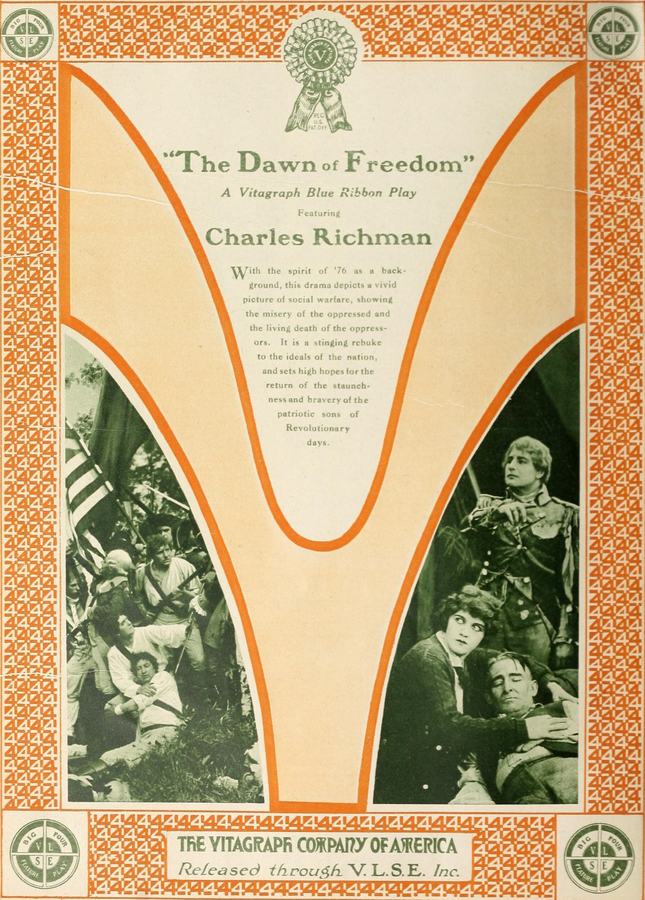
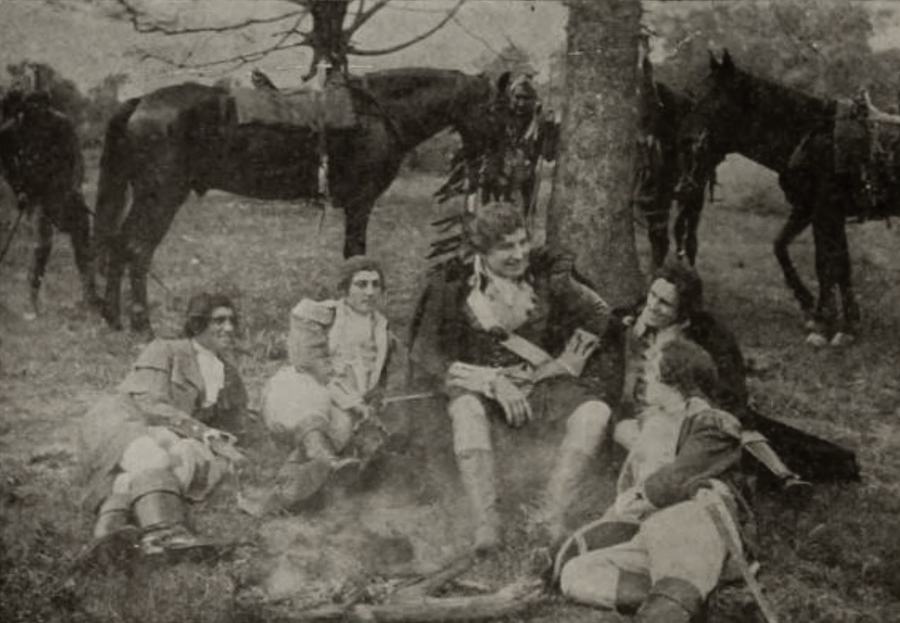
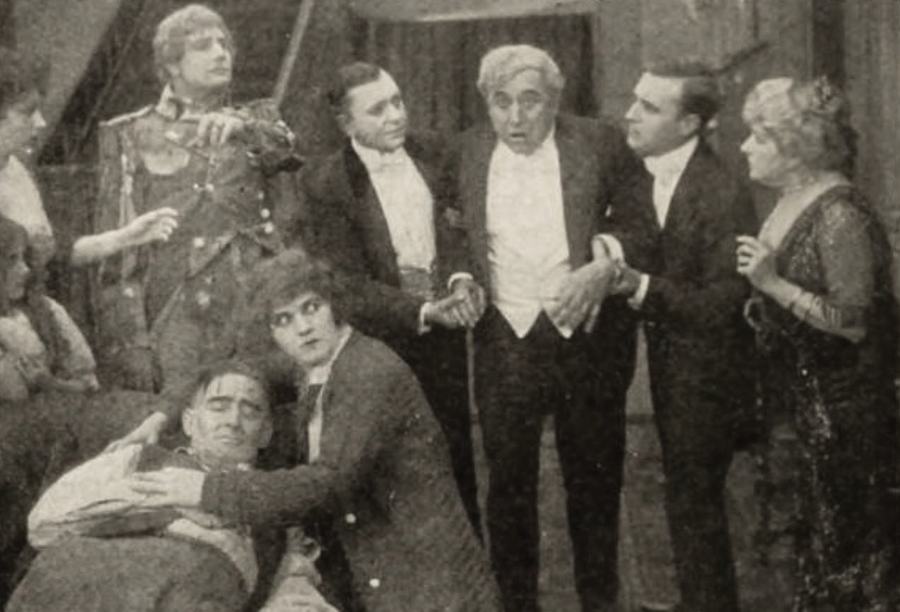
"The Dawn of Freedom" is a stinging satire on the death of those ideals that prompted the founders of the United States. It contrasts in bold outline the spirit of '76, when every American worked for the welfare of the new-born country, with the attitude of the modern-day American who looks only to his personal gain with no thought of his country. Richard Cartwright, a revolutionary patriot, like hundreds of others, was granted a plot of land in the Alleghenies. Cartwright was engaged to wed Elizabeth Bradbury, and in company with a small party, he left for his plot of land, promising to return in the fall. Arriving at the land, he was captured by Indians. Later he was rescued by Ambrose, a missionary, who had spent many years in India. Ambrose's efforts to save Cartwright came to naught. Ambrose was versed in Eastern hypnotism, so he decided that rather than to have Cartwright tortured and probably burned at the stake, he would put him in a trance and have him buried, after which he would exhume him and bring him out of the trance. But after the burial, Ambrose himself was killed. Before being put under the spell Cartwright wrote his will, giving his land half to his brother and half to his fiancée. One hundred and thirty-nine years afterward we find Cartwright's little plot of land is made up of coal mines worth millions, with a descendant of Philip Cartwright, brother of Richard, in sole control and with Elizabeth McLean, great granddaughter of Elizabeth Bradbury, the daughter of one of the miners, dependent upon the scant wages of a miner. In his grasp for power Cartwright has frozen McLean out of what was his half of the property and the latter is now living in poverty. The miners go out on strike. Cartwright refusing both demands, violence is resorted to and one of the coal mines is blown up. In the terrific explosion, the aluminum casket holding the body of Richard Cartwright is blown to the surface, where its top is blown off. Dick, son of the coal baron, encounters the casket just as Cartwright, delivered from his trance by the impact of the explosion, steps out of it. He is emaciated and has much the same appearance as a butterfly emerging from its chrysalis. The patriot is taken to Dick's home, where is witnessed the insidious inroads of a war, not the Revolutionary War, but a war of a social kind, where each individual is engaged in waling on the necks of his brethren. He learns from Dick of the rapid growth of the United States and of the marvelous inventions. These are He also learns that McLean, whose ancestors owned half of the property, now is poverty-stricken. Confronted by the patriot and by the rioting strikers, Cartwright dies of heart failure and the patriot, attempting to quiet the strikers, is mortally wounded, but his courage and spirit, that of '76, is transfused to Dick, the son, and everything ends happily for the workers.
Review Excerpt
"
A Resurrected Republic: Unpacking the Potent Satire of 'The Dawn of Freedom' (1916)
In the annals of early American cinema, few films possess the audacious thematic ambition and stinging social commentary of 'The Dawn of Freedom'. Released in 1916, at a time when the nation was grappling with the profound socio-economic shifts wrought by industrialization and burgeoning wealth disparities, this silent film stands as a remarkably prescient and potent critique. It's not merely a..."