
DbcultAccessing Vault...
Director's Spotlight
Senior Film Conservator
Director's Spotlight: United States
A Deep Dive into the 1918 Vision of Thomas N. Heffron
Analyzing Madame Sphinx (1918) requires a deep dive into the unique directorial voice that Thomas N. Heffron brought to the screen. By challenging the status quo of 1918 cinema, it continues to spark endless debates among critics and cinephiles alike.
In Madame Sphinx, Thomas N. Heffron pushes the boundaries of conventional narrative. The film's unique approach to its subject matter has sparked endless debates and interpretations among cinephiles and critics alike.
To fully appreciate Madame Sphinx, one must consider the cinematic climate of 1918. During this period, United States was undergoing significant artistic shifts, and Thomas N. Heffron was at the forefront of this cult movement, often challenging established norms.
| Cinematography | High-Contrast |
| Soundtrack | Orchestral |
| Editing | Invisible |
| Art Direction | Kitsch |
Visualizing the convergence of Thomas N. Heffron's style and the core cult narrative.
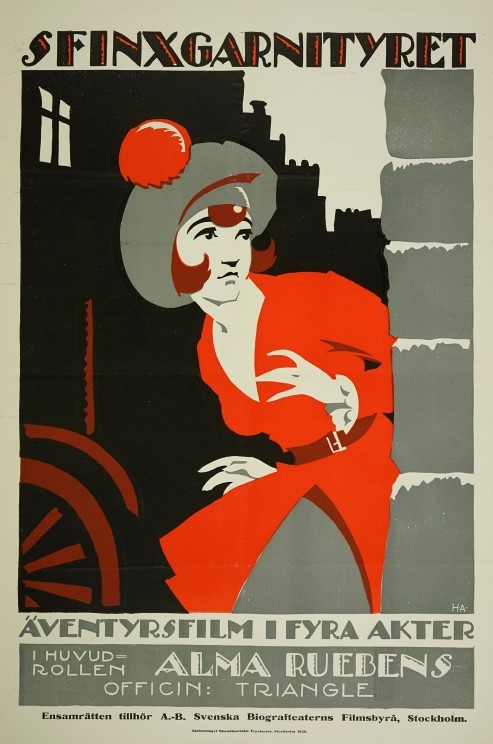
Disgusted when the police department fails to apprehend the murderer of her guardian, Henri Du Bois, Celeste decides to track down the criminal herself. Her only clue is a cuff link dropped near the scene of the crime on which a sphinx is engraved, and with it, she wanders through Paris' tough Moulin Noir district. When she notices a young man wearing a tie pin of identical design, she cultivates his acquaintance and eventually asks him to visit her in her home. His suspicious behavior there convinces Celeste that he is the guilty party, and although she has fallen in love with him, she has him arrested, whereupon she learns that he is Du Bois' missing son, Andre. Further detective work reveals that the real murderer is Celeste's rejected suitor, Raoul Laverne. Upon his confession, Andre is released and eventually marries Celeste.
Decades after its release, Madame Sphinx remains a vital piece of the cinematic puzzle. Its influence can be seen in countless modern works, solidifying Thomas N. Heffron's status as a master of the craft in United States and beyond.