
DbcultAccessing Vault...
Director's Spotlight
Senior Film Conservator
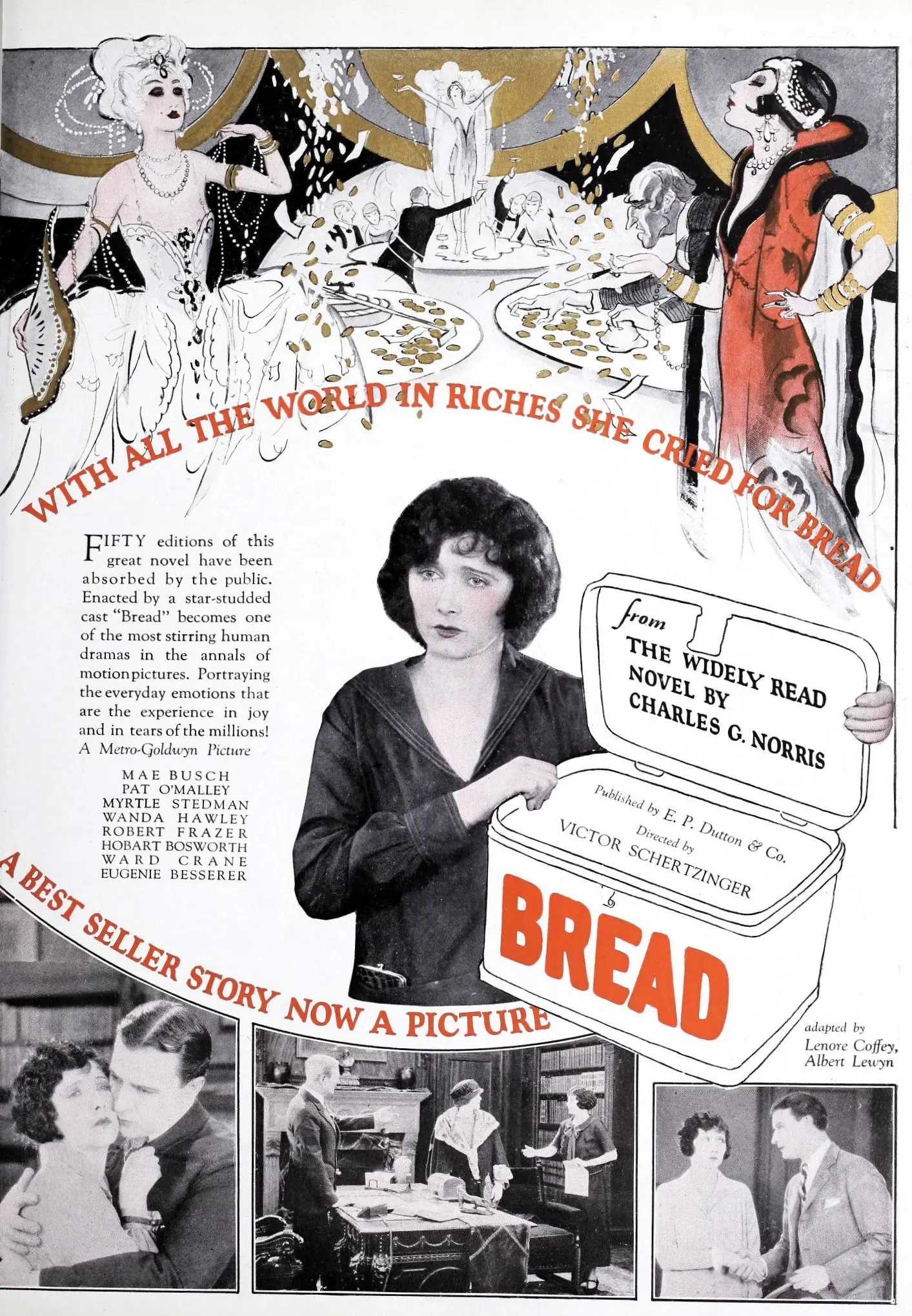
Director's Spotlight: United States
A Deep Dive into the 1924 Vision of Victor Schertzinger
Witnessing the stylistic transformation of Drama through Bread reveals the global recognition that Victor Schertzinger garnered after the release of Bread. Serving as a mirror to the anxieties of a changing world, offering layers of thematic complexity that demand repeated viewing.

In Bread, Victor Schertzinger pushes the boundaries of conventional narrative. The film's unique approach to its subject matter has sparked endless debates and interpretations among cinephiles and critics alike.
| Cinematography | Handheld |
| Soundtrack | Minimalist |
| Editing | Slow-Burn |
| Art Direction | Brutalist |
Visualizing the convergence of Victor Schertzinger's style and the core Drama narrative.
To relieve the burden placed on their mother, Alice Sturgis (Wanda Hawley) marries and has several children, while her independent sister, Jeanette (Mae Busch), goes to work as a stenographer. Eventually, she is forced to marry a persistent salesman to avoid a scandal. Becoming disillusioned with married life, Jeanette leaves the salesman, but after 3 years' separation she realizes her need for a family and returns to him.
Decades after its release, Bread remains a vital piece of the cinematic puzzle. Its influence can be seen in countless modern works, solidifying Victor Schertzinger's status as a master of the craft in United States and beyond.