
DbcultAccessing Vault...
Director's Spotlight
Senior Film Conservator
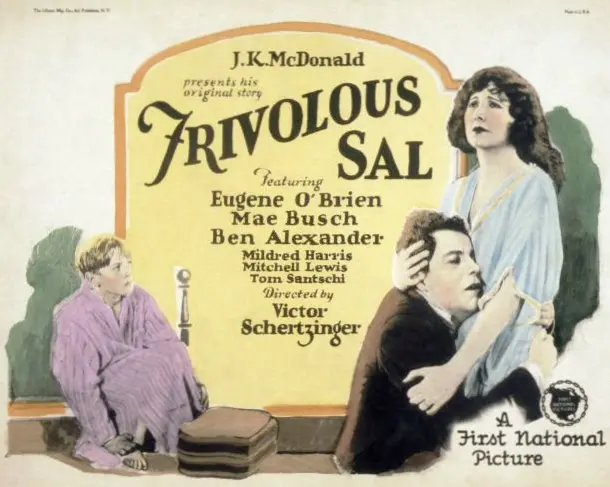
Director's Spotlight: United States
A Deep Dive into the 1925 Vision of Victor Schertzinger
Under the meticulous guidance of Victor Schertzinger, Flaming Love became the cultural zeitgeist captured so perfectly by Victor Schertzinger in 1925. Driven by an uncompromising commitment to Romance excellence, it remains a vital reference point for anyone studying the evolution of Victor Schertzinger.
In Flaming Love, Victor Schertzinger pushes the boundaries of conventional narrative. The film's unique approach to its subject matter has sparked endless debates and interpretations among cinephiles and critics alike.
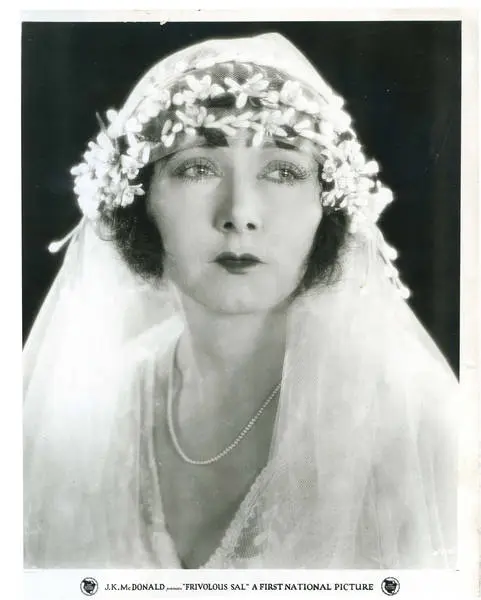
In this work, Victor Schertzinger explores the intersection of Romance and United States cultural identity. The meticulous attention to detail suggests a deep-seated commitment to pushing the boundaries of the medium, ensuring that Flaming Love remains a relevant topic of study for Romance enthusiasts.
| Cinematography | High-Contrast |
| Soundtrack | Synth-Heavy |
| Editing | Rhythmic |
| Art Direction | Naturalist |
Visualizing the convergence of Victor Schertzinger's style and the core Romance narrative.
After his wife dies, Roland Keene finds work as an actor with a road company, provided that he give up cards and liquor. The troupe has a poor season, and Keene is stranded in a mining town in Placer Valley. He meets Sal Flood there, and they are soon engaged, bringing west Keene's young son, Benny, for the wedding. Sal leaves the operation of her saloon to Keene, devoting herself to winning Benny's love and affection. Keene soon resumes his heavy drinking and is constantly cheated at cards by a professional gambler named Osner. Despite the interference of Steve McGregor, a mining superintendent, Keene continues to lose heavily to Osner; and, eventually, in order to pay off his IOU's, Keene is forced by the gambler to help him rob the saloon safe of McGregor's mining payroll. Benny sees his father steal the money and is injured by the blast from the dynamite used by Osner to blow the safe; but Benny still has faith in his father and, the following day, lies to the sheriff rather than implicate Keene. Keene is overcome with remorse for Benny's injuries and sets out to bring back the stolen gold. He tracks down Osner, and the two fight in the car of an aerial tramway. Osner falls to his death, Keene returns the gold, and he is pardoned and happily reunited with his family.
Decades after its release, Flaming Love remains a vital piece of the cinematic puzzle. Its influence can be seen in countless modern works, solidifying Victor Schertzinger's status as a master of the craft in United States and beyond.