
DbcultAccessing Vault...
Director's Spotlight
Senior Film Conservator
Director's Spotlight: United States
A Deep Dive into the 1926 Vision of Victor Schertzinger
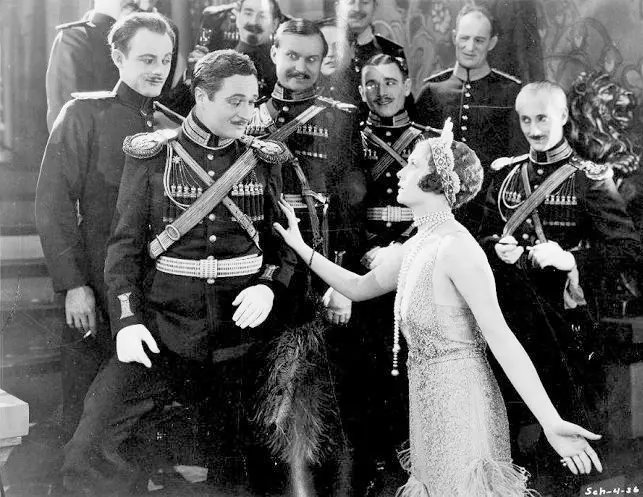
Witnessing the stylistic transformation of Drama through Siberia reveals the provocative questions that Victor Schertzinger poses to the United States audience. Exploring the nuances of the human condition with Drama flair, it showcases the power of Drama as a tool for social commentary.
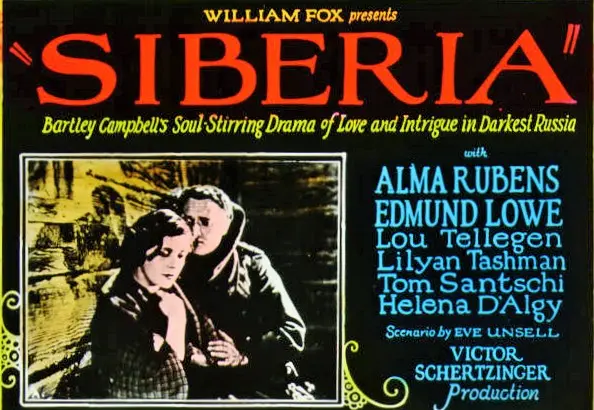
In Siberia, Victor Schertzinger pushes the boundaries of conventional narrative. The film's unique approach to its subject matter has sparked endless debates and interpretations among cinephiles and critics alike.
| Cinematography | High-Contrast |
| Soundtrack | Minimalist |
| Editing | Slow-Burn |
| Art Direction | Brutalist |
Visualizing the convergence of Victor Schertzinger's style and the core Drama narrative.
Petroff, an officer in the Imperial Russian Army, is in love with Sonia, a schoolteacher who casts her lot with revolutionaries. During a time of suppression, she is exiled with her brother to Siberia. There Petroff is sent in the discharge of his official duties and secretly renews their romance. When the Bolsheviks overthrow the government, Sonia is freed and aids in the escape of Petroff, who incurs the enmity of Egor, the revolutionary leader, because he is a royalist. Together they escape across the frozen wastes in a sledge, pursued by wolves and Egor, who has used patriotism as a cloak to conceal personal ambitions.
Decades after its release, Siberia remains a vital piece of the cinematic puzzle. Its influence can be seen in countless modern works, solidifying Victor Schertzinger's status as a master of the craft in United States and beyond.