
DbcultAccessing Vault...
Director's Spotlight
Senior Film Conservator
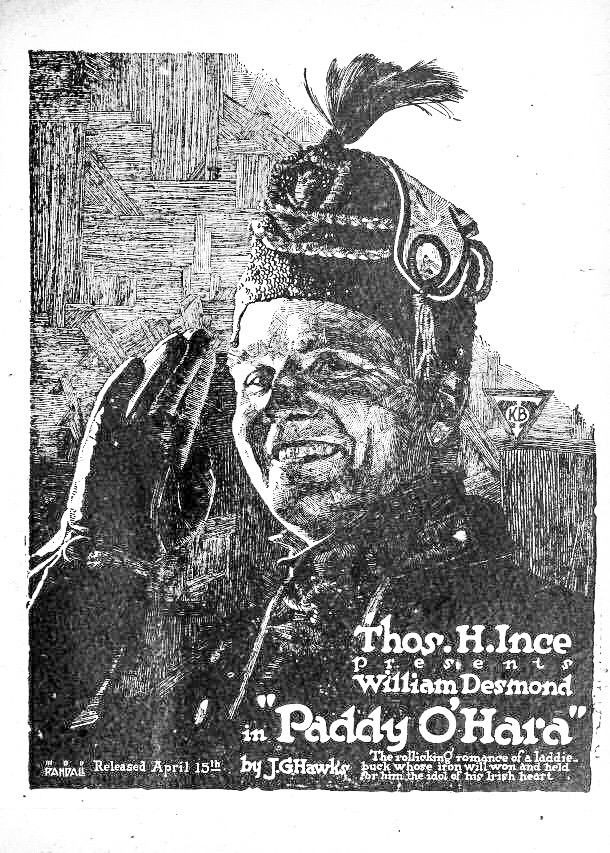
Director's Spotlight: United States
A Deep Dive into the 1917 Vision of Walter Edwards
The 1917 release of Paddy O'Hara marked a significant moment for the enduring legacy of Walter Edwards's artistic contribution to the genre. By challenging the status quo of 1917 cinema, it has cemented its place in the global cult cinema archive.
In Paddy O'Hara, Walter Edwards pushes the boundaries of conventional narrative. The film's unique approach to its subject matter has sparked endless debates and interpretations among cinephiles and critics alike.
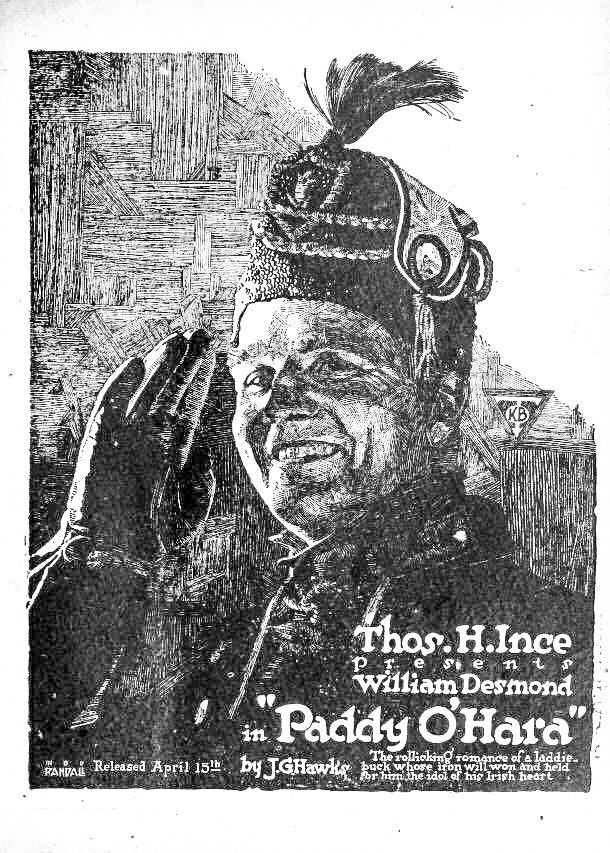
To fully appreciate Paddy O'Hara, one must consider the cinematic climate of 1917. During this period, United States was undergoing significant artistic shifts, and Walter Edwards was at the forefront of this cult movement, often challenging established norms.
| Cinematography | Noir-Inspired |
| Soundtrack | Synth-Heavy |
| Editing | Disjunctive |
| Art Direction | Baroque |
Visualizing the convergence of Walter Edwards's style and the core cult narrative.
Paddy O'Hara is the star reporter on the London Blade. Rumors of impending warfare between two Balkan principalities reach London, and Paddy is dispatched to the seat of action. Before leaving he comes across the photograph of a military officer. Count Ivan of Darbaya, and his niece, the Lady Maryska. Two weeks later Paddy reaches Tarozza, the seaport capital of Ideria, and finds that the army there is preparing to invade Darbaya. While waiting at Tarozza he forms the acquaintance of a Captain Raoul du Plessis, of the Iderian Huzzars. Raoul is charged with an important mission to Darbaya, and carries on his person documents to be delivered at headquarters. In order to obtain these and delay the Captain's departure, a spy insults him and forces a duel. Du Plessis, who chooses Paddy secretly transfer the documents to Paddy, who leave Tarozza disguised in the uniform of Captain Raoul. Although the spies are hot on his trail, Paddy reaches a castle perched high on the cliffs of Darbaya. The castle is deserted, as its men folk are fighting in the valley and its women have been sent away to a place of safety. One inmate alone is left, the Lady Maryska, the girl of his dreams. Maryska sees in Paddy an intruder in the hated uniform of Ideria and treats him with scorn. At the time of the meeting the Iderians are sweeping all before them, and Colonel Ivan retreats to the castle. The Colonel's one anxiety is to get his niece away from the danger zone. As the castle is about to fall into the hands of the enemy, the only way to escape is to place her in the care of Paddy. By a slight alteration, the passport is made to read Patrick O'Hara and wife. Circumstances make it imperative for Paddy to go through the marriage ceremony with Maryska, who only consents on the condition that she is to be freed from the marital yoke as soon as they reach safety. Passing through innumerable adventures and hardships the couple at last gain the frontier. Paddy sends his dispatch to the Blade and while dictating to the operator leaves Maryska asleep under shelter. The message sent, he returns just in time to see Maryska seized and borne away in an aeroplane by emissaries of the enemy. Paddy returns to London. When all hope is lost, he receives a summons to a foreign embassy, where a proposition is made to him to relinquish his wife in order that she may wed a great personage. He is assured that a divorce can easily be arranged and is offered a handsome monetary bribe and other considerations. O'Hara refuses the proposition, and his refusal is overheard by Maryska, who is hiding in the council chamber. Maryska has learned to love the gallant Irishman during the stormy days of battle and flight, and convinces him that the hurried wedding in the Balkans will stand good for all time.
Decades after its release, Paddy O'Hara remains a vital piece of the cinematic puzzle. Its influence can be seen in countless modern works, solidifying Walter Edwards's status as a master of the craft in United States and beyond.