
DbcultAccessing Vault...
Director's Spotlight
Senior Film Conservator
Director's Spotlight: United States
A Deep Dive into the 1917 Vision of Walter Edwards
The cult DNA of The Crab is a reflection of United States's the subversive storytelling techniques employed by Walter Edwards in 1917. Breaking the traditional rules of cult engagement, it leaves an indelible mark on the soul of the viewer.

In The Crab, Walter Edwards pushes the boundaries of conventional narrative. The film's unique approach to its subject matter has sparked endless debates and interpretations among cinephiles and critics alike.
| Cinematography | Static |
| Soundtrack | Minimalist |
| Editing | Disjunctive |
| Art Direction | Baroque |
Visualizing the convergence of Walter Edwards's style and the core cult narrative.
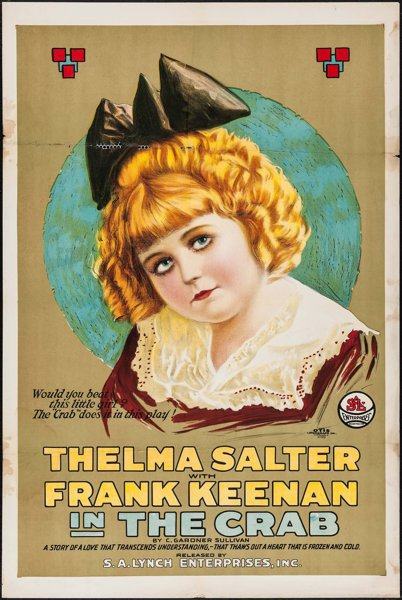
Foster Borrum is the wealthiest man in the town of Norwalk. He practically owns everything. He has won his position by merciless grinding and is regarded by the villagers with fear and contempt. A stern man, with only one softening influence in his life, his wife, whom he idolizes. The wife dies and Borrum turns on the world with added bitterness and hatred. He is living a life of dreary isolation when one day a visitor steps off the train at the station, a little girl; also alone in the world; who has been tagged to her destination in the search of a relative who has long since disappeared. The villagers are too poor to adopt the child. In a cynical mood Borrum takes possession of the girl. Ivy Marten, and installs her in his home. Ivy, aching for sympathy, meets with no response from the austere man, whose treatment of her borders on brutality. Exaggerated reports of this reach the authorities, and Borrum is haled before them. Ivy, who loves the old man in spite of his coldness, is the prime witness for the defense and her loyal support of her guardian wins the day. A change comes over the attitude of Borrum towards the child and the world in general and with a softened heart he strives to make life happier for the orphan and for the hitherto despised inhabitants of the poverty stricken village.
Decades after its release, The Crab remains a vital piece of the cinematic puzzle. Its influence can be seen in countless modern works, solidifying Walter Edwards's status as a master of the craft in United States and beyond.