
DbcultAccessing Vault...
Director's Spotlight
Senior Film Conservator
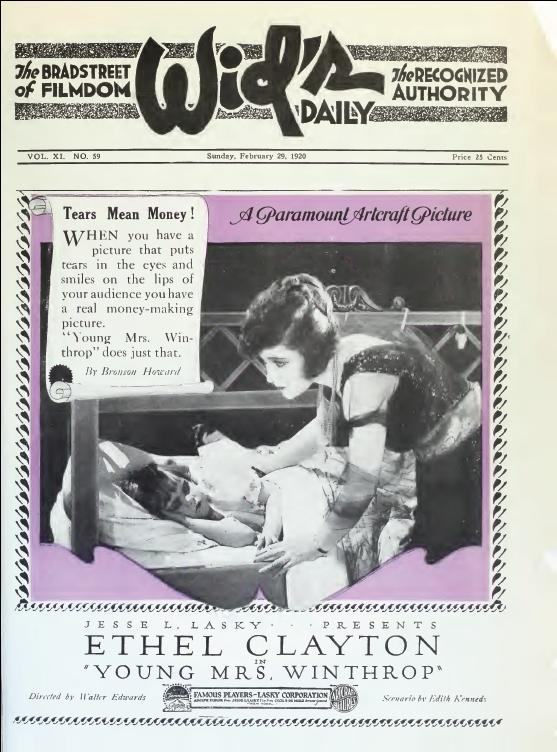
Director's Spotlight: United States
A Deep Dive into the 1920 Vision of Walter Edwards
As we revisit the 1920 masterpiece Young Mrs. Winthrop, we are struck by the atmospheric immersion that Walter Edwards achieves throughout Young Mrs. Winthrop. Exploring the nuances of the human condition with Drama flair, it solidifies Walter Edwards's reputation as a master of the craft.
In Young Mrs. Winthrop, Walter Edwards pushes the boundaries of conventional narrative. The film's unique approach to its subject matter has sparked endless debates and interpretations among cinephiles and critics alike.
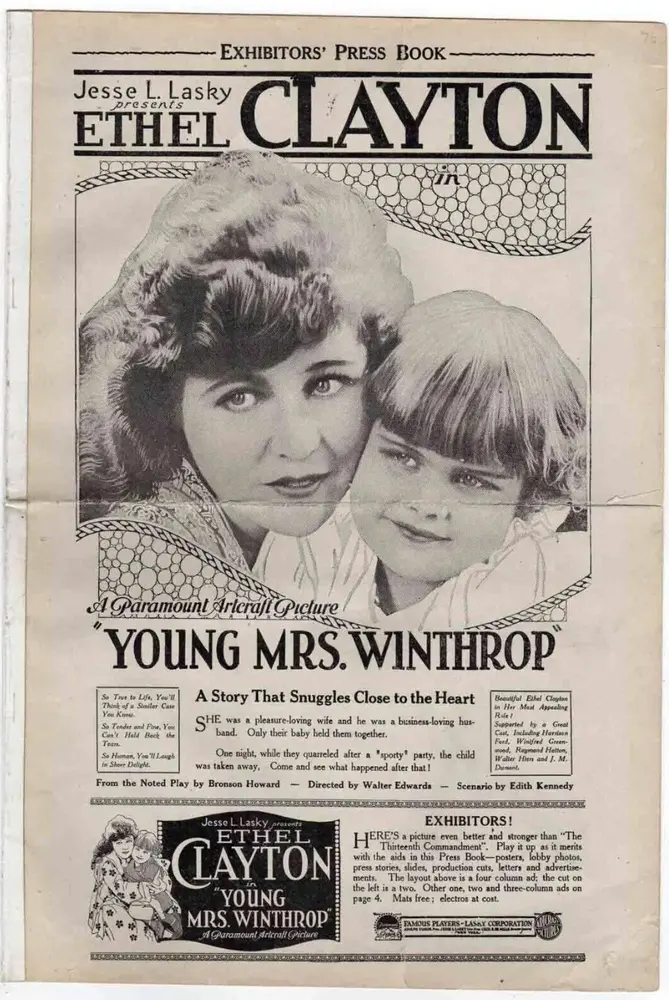
While deeply rooted in United States, Young Mrs. Winthrop has achieved a global reach, influencing directors from various backgrounds. Its ability to translate Drama tropes into a universal cinematic language is why it remains a cult staple decades after its 1920 release.
| Cinematography | Noir-Inspired |
| Soundtrack | Experimental |
| Editing | Invisible |
| Art Direction | Kitsch |
Visualizing the convergence of Walter Edwards's style and the core Drama narrative.
The Winthrops have been drifting apart gradually, Douglas devoted to his business and Constance to her social life. For the sake of their small daughter Rosie, they decide to make reparations; Douglas agrees to spend more time at home, and Constance gives up her socializing. Mrs. Dunbar, a widow with a grudge against Constance, decides to thwart the couple's reconciliation. Overhearing Constance phoning her regrets for a party, Mrs. Dunbar calls Douglas and, pretending that she is his wife, tells him not to come home as she is going to the party. Douglas is deeply hurt and accepts Mrs. Dunbar's dinner invitation. When Constance learns of his betrayal, the couple are further estranged. After the death of Rosie, their last remaining bond, the Winthrops decide to separate until an old friend intervenes and recalls the love and happiness they once shared, thus healing the breach between husband and wife.
Decades after its release, Young Mrs. Winthrop remains a vital piece of the cinematic puzzle. Its influence can be seen in countless modern works, solidifying Walter Edwards's status as a master of the craft in United States and beyond.