
DbcultAccessing Vault...
Director's Spotlight
Senior Film Conservator
Director's Spotlight: United States
A Deep Dive into the 1916 Vision of Walter MacNamara
Witnessing the stylistic transformation of cult through Human Cargoes reveals the global recognition that Walter MacNamara garnered after the release of Human Cargoes. Serving as a mirror to the anxieties of a changing world, offering layers of thematic complexity that demand repeated viewing.
In Human Cargoes, Walter MacNamara pushes the boundaries of conventional narrative. The film's unique approach to its subject matter has sparked endless debates and interpretations among cinephiles and critics alike.
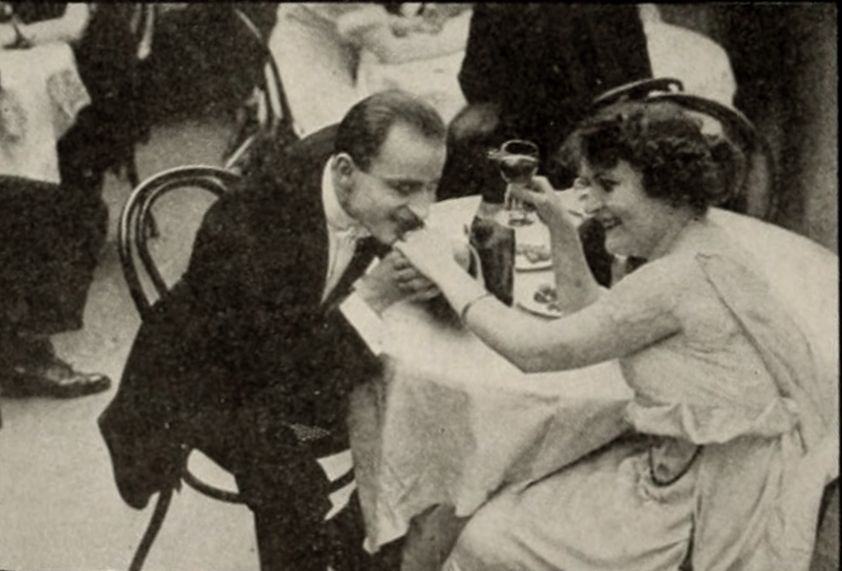
In this work, Walter MacNamara explores the intersection of cult and United States cultural identity. The meticulous attention to detail suggests a deep-seated commitment to pushing the boundaries of the medium, ensuring that Human Cargoes remains a relevant topic of study for cult enthusiasts.
| Cinematography | Deep Focus |
| Soundtrack | Diegetic |
| Editing | Rhythmic |
| Art Direction | Naturalist |
Visualizing the convergence of Walter MacNamara's style and the core cult narrative.
In each of the three homes of three distinct classes of modern life a child is born. A boy is born to a poor working man, John Madden, in his East Side home. A daughter is born to the city editor of one of the daily papers, Eustace Miles, and a son is born to John Brown, a wealthy but unscrupulous politician. The children are next shown at nine years of age in their respective schools. The plot of the story begins when the three have grown into young manhood and womanhood and are working out their lives in their particular class. Bill Madden, the poor man's son, is now foreman in a construction work, with great ambitions to become a lawyer. Mary Miles, the editor's daughter, has become a beautiful young woman. The politician's son, a product of his class, is vicious and degenerate. Mary Madden, Bill's sister, working in a department store, attracts the attention of Victor Brown, the wealthy young renegade. She repels all his advances. To show he is the stronger and for revenge, he kidnaps her, drugs and takes her to an undesirable house, where she is saved by a previous victim of the degenerate. In the meantime, Bill Madden has obtained an education in law and gets his degree. He frustrates the efforts of a heroin peddler to sell his obnoxious drug to children, and is thus brought into touch with Mary Miles, who thanks him for what he has done for humanity. He upholds his class in their fight against environment, corruption and the high cost of living, which bears so heavily upon them. This incites the hatred of the politician, John Brown, who instructs a gunman to shoot him. Victor Brown meets Mary Miles, is attracted by her beauty, and forces his attention upon her. Bill sees him and interferes, and the gunman, hired to kill Bill Madden, shoots Victor accidentally, and escapes unseen. Bill is arrested for the murder. In the courtroom the gratitude of a poor woman whom the young lawyer had defended, and who witnessed the actual murder, reveals to the court the real circumstances. When John Brown finds that he is the instigator of his own son's death, he dies from a stroke of apoplexy. Bill, now a hero, receives the nomination for the representative of his district. He also wins the editor's daughter for his wife. This moral story is worthy of mention.
Decades after its release, Human Cargoes remains a vital piece of the cinematic puzzle. Its influence can be seen in countless modern works, solidifying Walter MacNamara's status as a master of the craft in United States and beyond.