
DbcultAccessing Vault...
Director's Spotlight
Senior Film Conservator
Director's Spotlight: United States
A Deep Dive into the 1921 Vision of Ward Hayes
The thematic gravity of All at Sea (1921) is rooted in the historical context that Ward Hayes weaves into the Short fabric. Synthesizing the best elements of United States and international cinema, it highlights the importance of independent voices in United States.
In All at Sea, Ward Hayes pushes the boundaries of conventional narrative. The film's unique approach to its subject matter has sparked endless debates and interpretations among cinephiles and critics alike.
To fully appreciate All at Sea, one must consider the cinematic climate of 1921. During this period, United States was undergoing significant artistic shifts, and Ward Hayes was at the forefront of this Short movement, often challenging established norms.
| Cinematography | Deep Focus |
| Soundtrack | Orchestral |
| Editing | Slow-Burn |
| Art Direction | Brutalist |
Visualizing the convergence of Ward Hayes's style and the core Short narrative.
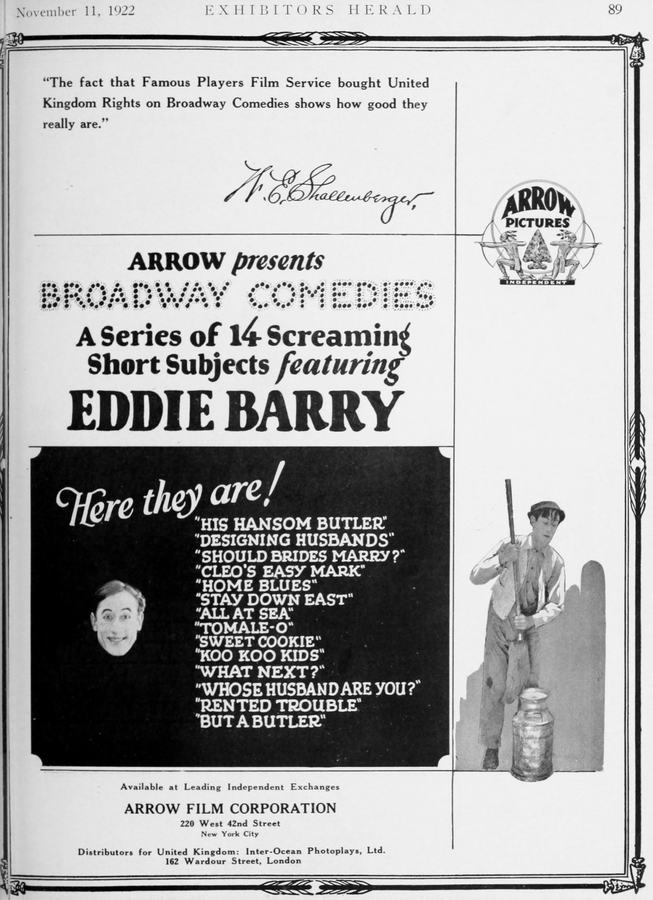
The course of true love does not run smoothly in the lives of Eddie Barry and Vera Reynolds. Vera's father orders the girl to take a sea voyage and Eddie follows but only with difficulty gets aboard; and losing all his money is remitted to the steerage. But by a lucky trade in hootch gains access to the first cabin accommodations of the steamer. His girl is in the clutches of a crook who robs her of her jewelry. Eddie unmasks the crook; throws off his own disguise as a waiter; reveals himself to Vera, and so they are made happy.
Decades after its release, All at Sea remains a vital piece of the cinematic puzzle. Its influence can be seen in countless modern works, solidifying Ward Hayes's status as a master of the craft in United States and beyond.