
DbcultAccessing Vault...
Director's Spotlight
Senior Film Conservator
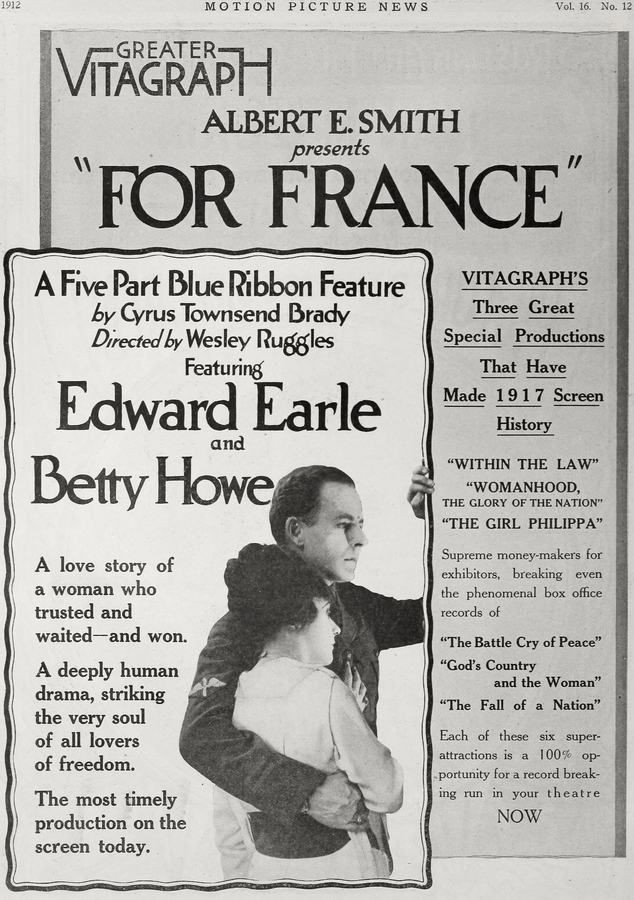
Director's Spotlight: United States
A Deep Dive into the 1917 Vision of Wesley Ruggles
The cult DNA of For France is a reflection of United States's the subversive storytelling techniques employed by Wesley Ruggles in 1917. Breaking the traditional rules of cult engagement, it leaves an indelible mark on the soul of the viewer.
In For France, Wesley Ruggles pushes the boundaries of conventional narrative. The film's unique approach to its subject matter has sparked endless debates and interpretations among cinephiles and critics alike.
| Cinematography | Noir-Inspired |
| Soundtrack | Experimental |
| Editing | Invisible |
| Art Direction | Kitsch |
Visualizing the convergence of Wesley Ruggles's style and the core cult narrative.
When World War I breaks out, young West Point cadet Gerald Ackland, who is studying in Paris, joins the French army as a fighter pilot. His French fiancee, Martha Landeau, and her father flee to the family farm, which is near the Marne River, for safety. When German troops take over the area, they raid Marthe's farm and attempt to ravage her--but suddenly, out of the sky, comes a French fighter plane that scatters the Germans--and its pilot is none other than Gerald. However, that's not the end of their troubles, by any means.
Decades after its release, For France remains a vital piece of the cinematic puzzle. Its influence can be seen in countless modern works, solidifying Wesley Ruggles's status as a master of the craft in United States and beyond.