
DbcultAccessing Vault...
Director's Spotlight
Senior Film Conservator
Director's Spotlight: United States
A Deep Dive into the 1925 Vision of William A. Crinley
The artistic breakthrough represented by The Rustlin' Kid in 1925 highlights the philosophical inquiries that William A. Crinley embeds within the narrative. Framed by the hauntingly beautiful landscapes of the production, it leaves an indelible mark on the soul of the viewer.
In The Rustlin' Kid, William A. Crinley pushes the boundaries of conventional narrative. The film's unique approach to its subject matter has sparked endless debates and interpretations among cinephiles and critics alike.
To fully appreciate The Rustlin' Kid, one must consider the cinematic climate of 1925. During this period, United States was undergoing significant artistic shifts, and William A. Crinley was at the forefront of this Western movement, often challenging established norms.
| Cinematography | Noir-Inspired |
| Soundtrack | Orchestral |
| Editing | Slow-Burn |
| Art Direction | Brutalist |
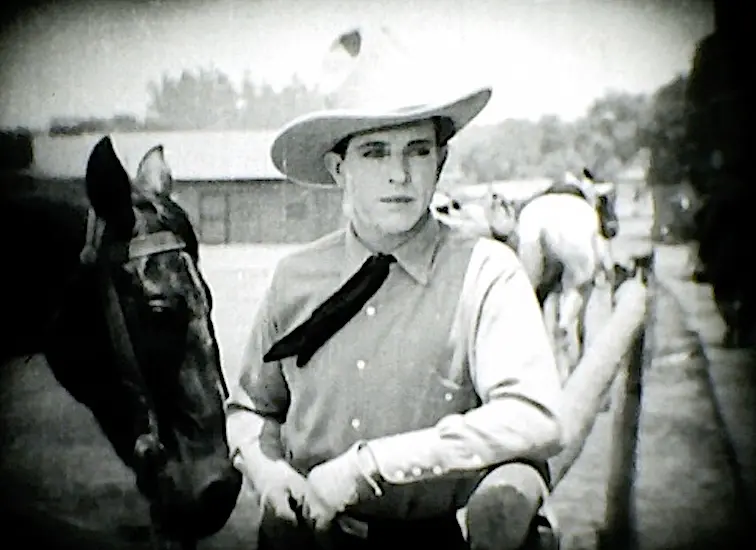
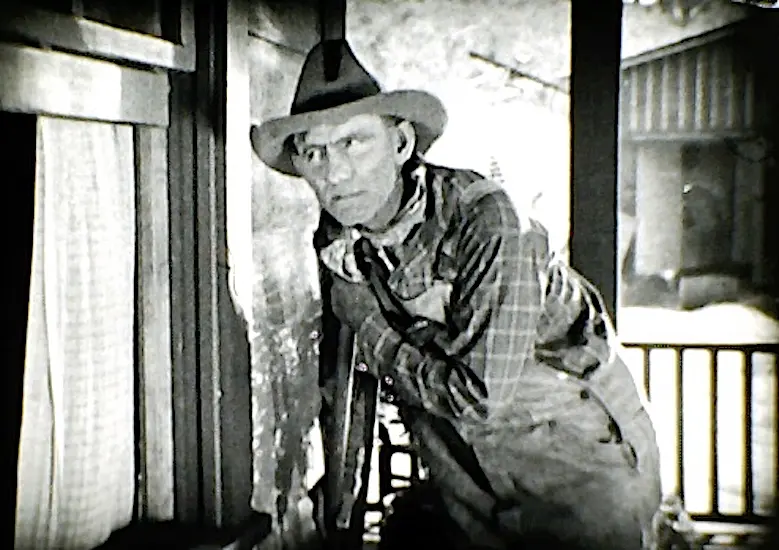
Visualizing the convergence of William A. Crinley's style and the core Western narrative.
Ted Hilton, out of work and broke, goes to Mesaville to hear the reading of his uncle's will which provides him with a fortune on condition that he marry Jane Bond, daughter of an old friend. Picturing a parchment skinned spinster, Ted revolts and tells the lawyer to let the money go to charity. He strides outside where he saves a child from the hoofs of a runaway buckboard, driven by attractive Jane Bond. She thanks him for his heroic act and they drift into conversation. He confides his dilemma and she agrees with him that Jane Bond is an awful cluck, introducing herself as Jane's friend, Suzie Smith. Ted is offered a slice of loot by an outlaw crew, headed by Jane's faithless foreman, Joe Sage, if he will steal from Jane Bond a large sum of money which she has on hand for a cattle deal. He knocks out Sage and escapes from them, riding to warn Jane Bond and meeting "her friend Suzie Smith" who has just hidden the money behind a picture. He is not sorry to have to wait for Jane in the agreeable company of the beautiful Suzie, but his bliss is ended when Sage comes in and accuses him of coming to steal the money. Jane looks behind the picture and the money is missing. Ted escapes but is overtaken by the gang, who find no money on him and assume that he has led them away on a ruse. A faithful deaf mute ranch hand reveals to Jane that he took the money when he saw the stranger coming. Sage returns and demands the money. The deaf mute is overcome. Ted breaks in and his flying fists turn the tables. The deaf mute shows detective credentials and speaks for the first time, arresting Sage and the gang.
Decades after its release, The Rustlin' Kid remains a vital piece of the cinematic puzzle. Its influence can be seen in countless modern works, solidifying William A. Crinley's status as a master of the craft in United States and beyond.