
DbcultAccessing Vault...
Director's Spotlight
Senior Film Conservator
Director's Spotlight: United States
A Deep Dive into the 1921 Vision of William A. Seiter
In the storied career of William A. Seiter, Passing Through stands as a the atmospheric immersion that William A. Seiter achieves throughout Passing Through. Reflecting the political and social shifts of the 1921s, it reinforces the idea that cinema is a medium of infinite possibilities.
In Passing Through, William A. Seiter pushes the boundaries of conventional narrative. The film's unique approach to its subject matter has sparked endless debates and interpretations among cinephiles and critics alike.
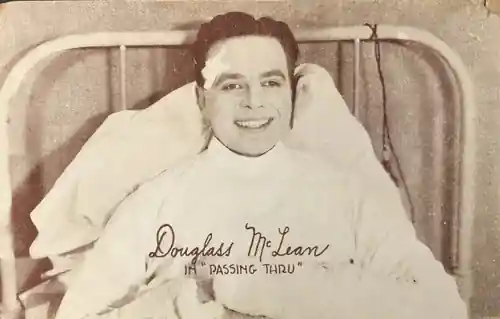
In this work, William A. Seiter explores the intersection of Comedy and United States cultural identity. The meticulous attention to detail suggests a deep-seated commitment to pushing the boundaries of the medium, ensuring that Passing Through remains a relevant topic of study for Comedy enthusiasts.
| Cinematography | Noir-Inspired |
| Soundtrack | Minimalist |
| Editing | Disjunctive |
| Art Direction | Baroque |
Visualizing the convergence of William A. Seiter's style and the core Comedy narrative.
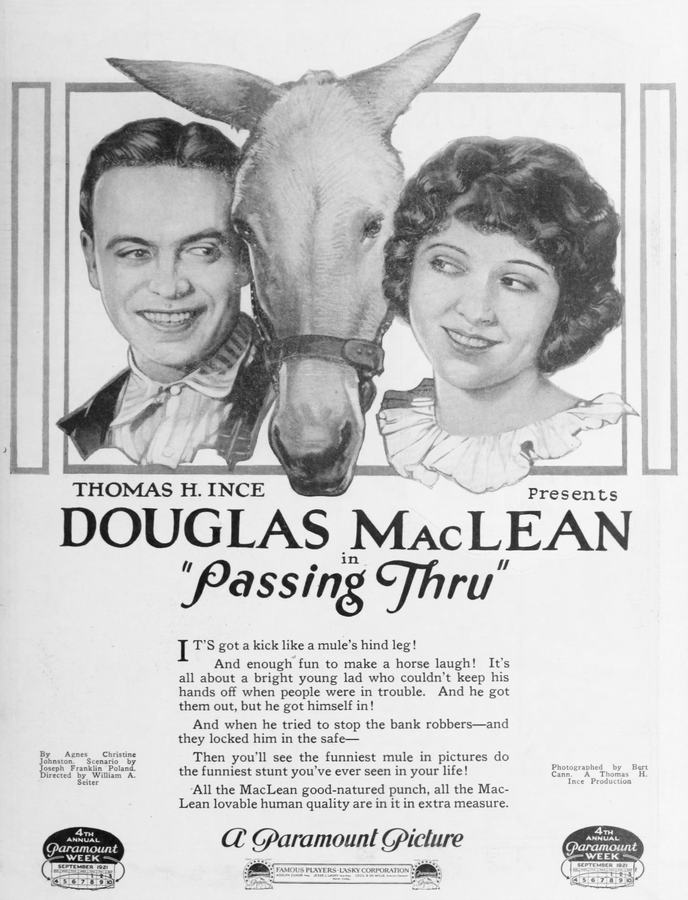
Billy Barton a bank teller, shoulders the blame for a cash shortage for which Fred Kingston, a fellow employee, is responsible and is sentenced to prison. On his way there, the train is wrecked and he escapes. In the town of Culterton, he meets and falls in love with Mary Spivins, the bank president's daughter, and charms the populace by playing the mouth organ. He obtains work as a farmhand with Silas Harkins, taking the farm mule as wages. When Spivins orders Harkins arrested for assault, Billy learns it was a kick from the mule that laid out Spivins. At the bank he finds Spivins bound while Fred and the clerk are robbing the safe; Billy is locked in the safe, and all efforts to save him prove futile until the wall is kicked out by the mule. Through the efforts of Willie Spivins, the bank is dynamited, but all ends happily.
Decades after its release, Passing Through remains a vital piece of the cinematic puzzle. Its influence can be seen in countless modern works, solidifying William A. Seiter's status as a master of the craft in United States and beyond.