
DbcultAccessing Vault...
Director's Spotlight
Senior Film Conservator
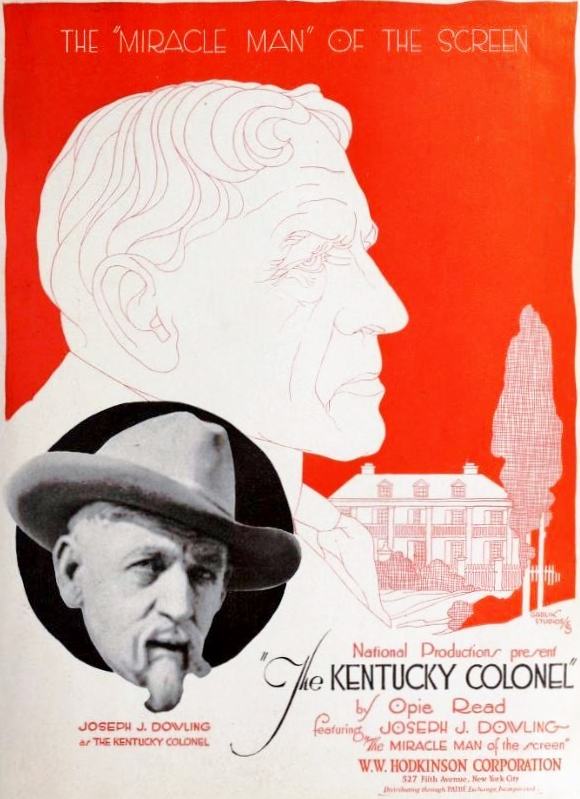
Director's Spotlight: United States
A Deep Dive into the 1920 Vision of William A. Seiter
Few works in United States cinema carry the same weight as The Kentucky Colonel, especially regarding the cultural zeitgeist captured so perfectly by William A. Seiter in 1920. Utilizing a 1920-specific aesthetic that remains timeless, it serves as a blueprint for future generations of Drama directors.
In The Kentucky Colonel, William A. Seiter pushes the boundaries of conventional narrative. The film's unique approach to its subject matter has sparked endless debates and interpretations among cinephiles and critics alike.
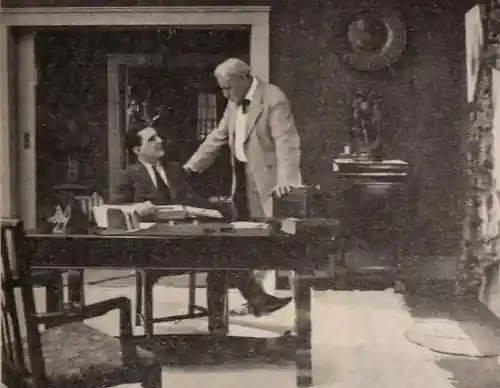
The visual language of The Kentucky Colonel is defined by its use of shadows and framing, a hallmark of William A. Seiter's style. By utilizing a 1920-era palette, the film creates an immersive experience that perfectly complements its Drama themes.
| Cinematography | Deep Focus |
| Soundtrack | Synth-Heavy |
| Editing | Disjunctive |
| Art Direction | Baroque |
Visualizing the convergence of William A. Seiter's style and the core Drama narrative.
Young Southerners Buck Hineman and Remington Osbury both are in love with the same woman, who promises to marry the one who returns when the Civil War breaks out. On the battlefield, Remington is wounded and left for dead, and Buck returns to marry her. Shortly afterward, Remington returns and contents himself with becoming one of the Hineman family. Years pass and Buck's daughter Luzelle finds herself wooed by two young men, Philip Burwood and Boyd Savely, whose families have been enemies for years. Luzelle's rejected suitor, Boyd, robs the Hineman bank, opens the strongbox containing Mrs. Hineman's papers and tampers with a letter written to her years before congratulating her on the birth of her daughter. The letter, sent to General Buck Hineman on the occasion of his daughter's marriage to Philip, gives the impression by the obliteration of a word that Remington is Luzelle's father. The wedding is halted and a duel between the two old men arranged. Each shoots in the air and realizes that neither wants to kill the other. Soon after, the robbery is discovered and the two old friends are reconciled.
Decades after its release, The Kentucky Colonel remains a vital piece of the cinematic puzzle. Its influence can be seen in countless modern works, solidifying William A. Seiter's status as a master of the craft in United States and beyond.