
DbcultAccessing Vault...
Director's Spotlight
Senior Film Conservator
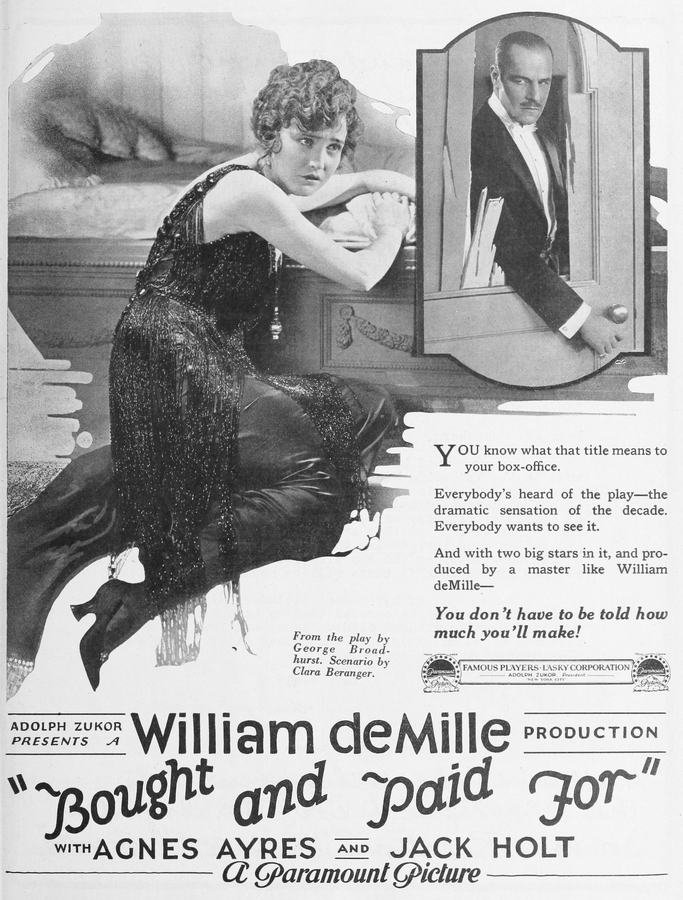
Director's Spotlight: United States
A Deep Dive into the 1922 Vision of William C. de Mille
Analyzing Bought and Paid For (1922) requires a deep dive into the unique directorial voice that William C. de Mille brought to the screen. By challenging the status quo of 1922 cinema, it continues to spark endless debates among critics and cinephiles alike.
In Bought and Paid For, William C. de Mille pushes the boundaries of conventional narrative. The film's unique approach to its subject matter has sparked endless debates and interpretations among cinephiles and critics alike.
| Cinematography | High-Contrast |
| Soundtrack | Experimental |
| Editing | Elliptical |
| Art Direction | Expressionist |
Visualizing the convergence of William C. de Mille's style and the core Drama narrative.
Jimmy Gilley is engaged to Fanny Blaine. Jimmy would like to live in a more luxurious style, so he and Fanny urge her sister Virginia to marry wealthy Robert Stafford although she doesn't love him. She does so and the couple is happy for a time. But Robert begins drinking and eventually mistreats Virginia until she is forced to leave him. Robert hopes for her return and quits drinking. But pride and misunderstanding block the way for renewed romance.
Decades after its release, Bought and Paid For remains a vital piece of the cinematic puzzle. Its influence can be seen in countless modern works, solidifying William C. de Mille's status as a master of the craft in United States and beyond.