
DbcultAccessing Vault...
Director's Spotlight
Senior Film Conservator
Director's Spotlight: United States
A Deep Dive into the 1921 Vision of William Campbell
Deciphering the layers of The Stork's Mistake (1921) reveals the complex thematic architecture established by William Campbell. Utilizing a 1921-specific aesthetic that remains timeless, it stands as the definitive 1921 statement on Short identity.
In The Stork's Mistake, William Campbell pushes the boundaries of conventional narrative. The film's unique approach to its subject matter has sparked endless debates and interpretations among cinephiles and critics alike.
The visual language of The Stork's Mistake is defined by its use of shadows and framing, a hallmark of William Campbell's style. By utilizing a 1921-era palette, the film creates an immersive experience that perfectly complements its Short themes.
| Cinematography | High-Contrast |
| Soundtrack | Diegetic |
| Editing | Rhythmic |
| Art Direction | Naturalist |
Visualizing the convergence of William Campbell's style and the core Short narrative.
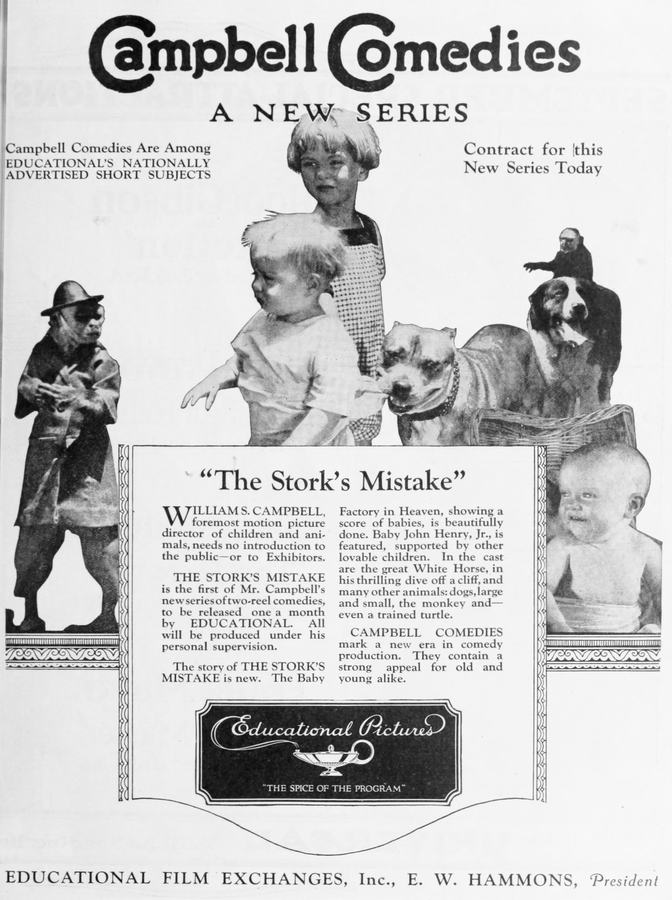
In Babyland the babies are made of clay and baked in ovens until done. When they are overdone they come out brown, and when they are burnt, as it sometimes happens when the elves play a little game of African golf, then the babies come out Black. But they all seem just as happy regardless of the shade of their skin. The master of the factory keeps a stock room and in each pigeon hole he has a child. They are classified, indexed, and ready for delivery, so that when a little boy asks his mother for a brother he can get permission to call up on the 'phone and the master will deliver by stork. But this time the stork makes a mistake and picks a Black one instead of a white, which causes much trouble. The master himself rides a high-wheel bike through the air, overtakes the stork, and sees that the right baby is delivered.
Decades after its release, The Stork's Mistake remains a vital piece of the cinematic puzzle. Its influence can be seen in countless modern works, solidifying William Campbell's status as a master of the craft in United States and beyond.