
DbcultAccessing Vault...
Director's Spotlight
Senior Film Conservator
Director's Spotlight: United States
A Deep Dive into the 1917 Vision of William Desmond Taylor
The artistic breakthrough represented by Tom Sawyer in 1917 highlights the philosophical inquiries that William Desmond Taylor embeds within the narrative. Framed by the hauntingly beautiful landscapes of the production, it leaves an indelible mark on the soul of the viewer.
In Tom Sawyer, William Desmond Taylor pushes the boundaries of conventional narrative. The film's unique approach to its subject matter has sparked endless debates and interpretations among cinephiles and critics alike.

To fully appreciate Tom Sawyer, one must consider the cinematic climate of 1917. During this period, United States was undergoing significant artistic shifts, and William Desmond Taylor was at the forefront of this cult movement, often challenging established norms.
| Cinematography | Handheld |
| Soundtrack | Synth-Heavy |
| Editing | Rhythmic |
| Art Direction | Naturalist |
Visualizing the convergence of William Desmond Taylor's style and the core cult narrative.
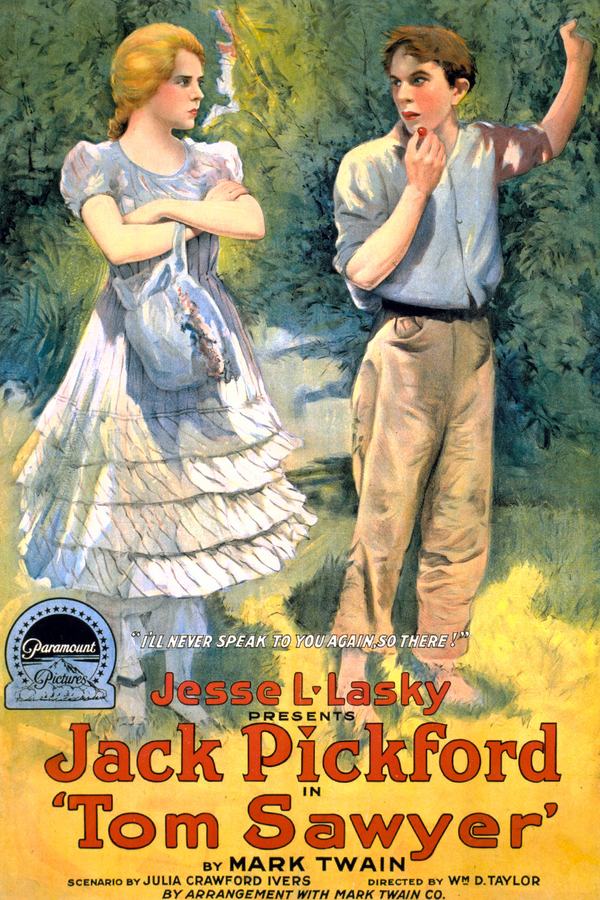
Tom, the rambunctious member of the Sawyer clan, takes it upon himself to teach the goody-goody boy of Hannibal, Missouri a lesson and, as Huckleberry Finn, his free-spirited best friend watches, pummels his foe to defeat. At school clever Tom makes mischief a regular practice, but as long as the punishment lands him next to his beloved Becky Thatcher, he remains carefree. After he is unfairly accused of his brother Sid's misdeed, Tom runs away with Huck and Joe Harper. Disguised as pirates, the trio builds a raft and sails down the Mississippi to a deserted island. Back at home, Tom's frantic Aunt Polly calls for a search, and cannons are fired into the river. When the search yields nothing, the boys are declared dead and a funeral is planned. At first tempted to reveal himself, Tom decides later to partake in his own memorial service, and as the townspeople mourn, he and his friends appear in the back of the church. Overcome with relief, Becky and Aunt Polly embrace Tom, forgetting to scold him for his mischief.
Decades after its release, Tom Sawyer remains a vital piece of the cinematic puzzle. Its influence can be seen in countless modern works, solidifying William Desmond Taylor's status as a master of the craft in United States and beyond.