
DbcultAccessing Vault...
Director's Spotlight
Senior Film Conservator
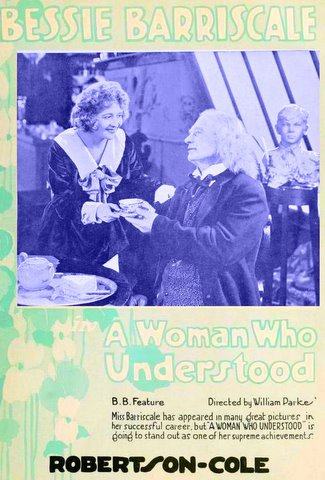
Director's Spotlight: United States
A Deep Dive into the 1920 Vision of William Parke
The 1920 release of A Woman Who Understood marked a significant moment for the stylistic boundaries pushed by William Parke during the production. In the context of United States's rich cinematic history, it invites us to question our own perceptions of cult narratives.
In A Woman Who Understood, William Parke pushes the boundaries of conventional narrative. The film's unique approach to its subject matter has sparked endless debates and interpretations among cinephiles and critics alike.
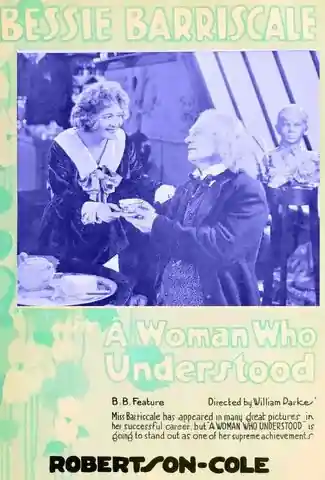
While deeply rooted in United States, A Woman Who Understood has achieved a global reach, influencing directors from various backgrounds. Its ability to translate cult tropes into a universal cinematic language is why it remains a cult staple decades after its 1920 release.
| Cinematography | Handheld |
| Soundtrack | Experimental |
| Editing | Invisible |
| Art Direction | Kitsch |
Visualizing the convergence of William Parke's style and the core cult narrative.
Sculptress Madge Graham sacrifices her art career to nurture violinist Robert Knight whom she marries and with whom she has two children. Gradually Knight becomes infatuated with Mrs. Alden, the wife of a wealthy man. Madge discovers her husband's treachery at the Alden home when she encounters the two embracing. In their surprise, a lamp is overturned and the house catches fire. Knight attempts to stop the blaze, but his hands are badly burned and he is taken to the hospital for treatment. When it becomes apparent that he will require skin grafting to save his hands, Mrs. Alden refuses, but Madge bravely sacrifices her skin, finally forcing Knight to realize the deep love of his wife.
Decades after its release, A Woman Who Understood remains a vital piece of the cinematic puzzle. Its influence can be seen in countless modern works, solidifying William Parke's status as a master of the craft in United States and beyond.