
DbcultAccessing Vault...
Director's Spotlight
Senior Film Conservator
Director's Spotlight: United States
A Deep Dive into the 1918 Vision of William P.S. Earle
The thematic gravity of Little Miss No-Account (1918) is rooted in the historical context that William P.S. Earle weaves into the cult fabric. Synthesizing the best elements of United States and international cinema, it highlights the importance of independent voices in United States.
In Little Miss No-Account, William P.S. Earle pushes the boundaries of conventional narrative. The film's unique approach to its subject matter has sparked endless debates and interpretations among cinephiles and critics alike.
| Cinematography | Handheld |
| Soundtrack | Orchestral |
| Editing | Invisible |
| Art Direction | Kitsch |
Visualizing the convergence of William P.S. Earle's style and the core cult narrative.
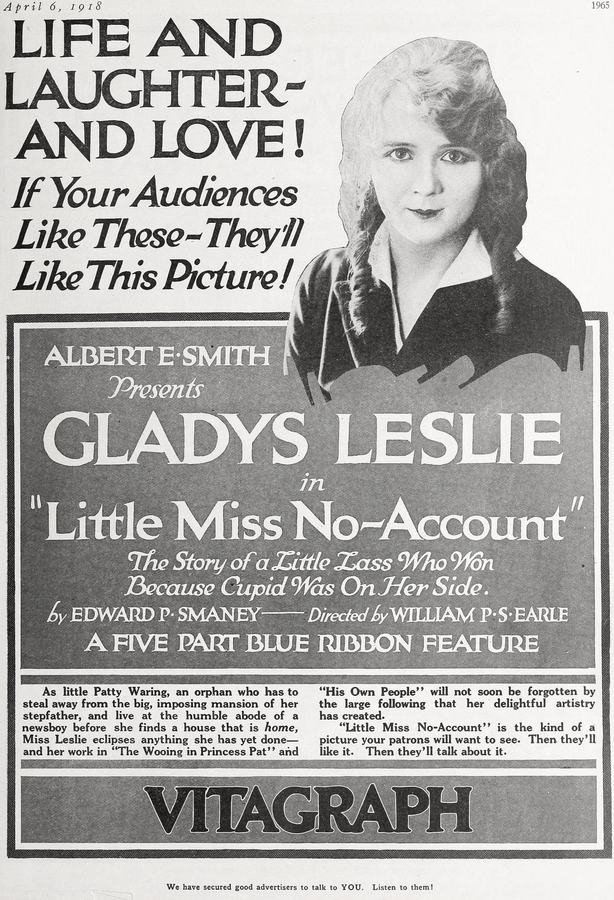
Patty Baring will lose the fine old Washington Square house she is to inherit if her scheming stepfather Josiah Wheeler's plan to acquire it for himself is successful. Cruelly abused by Wheeler, a gambling hall owner, Patty runs away to live with a newsboy named Bobby and his grandfather Herman. There, in spite of her shabby dress and humble companions, she arouses the admiration of Edwin Sayer, the district attorney. Ned, a soft-spoken gambler, desires to possess Patty, and at the instigation of her stepfather, lures her into a gambling den that Edwin has been planning to raid. Patty is arrested, but Edwin secures her release and places her in the charge of his mother. Ned and Josiah are imprisoned, leaving Patty free to claim her inheritance and wed Edwin.
Decades after its release, Little Miss No-Account remains a vital piece of the cinematic puzzle. Its influence can be seen in countless modern works, solidifying William P.S. Earle's status as a master of the craft in United States and beyond.