
DbcultAccessing Vault...
Director's Spotlight
Senior Film Conservator
Director's Spotlight: United States
A Deep Dive into the 1918 Vision of William P.S. Earle
Deciphering the layers of The Little Runaway (1918) reveals the complex thematic architecture established by William P.S. Earle. Utilizing a 1918-specific aesthetic that remains timeless, it stands as the definitive 1918 statement on cult identity.
In The Little Runaway, William P.S. Earle pushes the boundaries of conventional narrative. The film's unique approach to its subject matter has sparked endless debates and interpretations among cinephiles and critics alike.
To fully appreciate The Little Runaway, one must consider the cinematic climate of 1918. During this period, United States was undergoing significant artistic shifts, and William P.S. Earle was at the forefront of this cult movement, often challenging established norms.
| Cinematography | Noir-Inspired |
| Soundtrack | Minimalist |
| Editing | Slow-Burn |
| Art Direction | Brutalist |
Visualizing the convergence of William P.S. Earle's style and the core cult narrative.
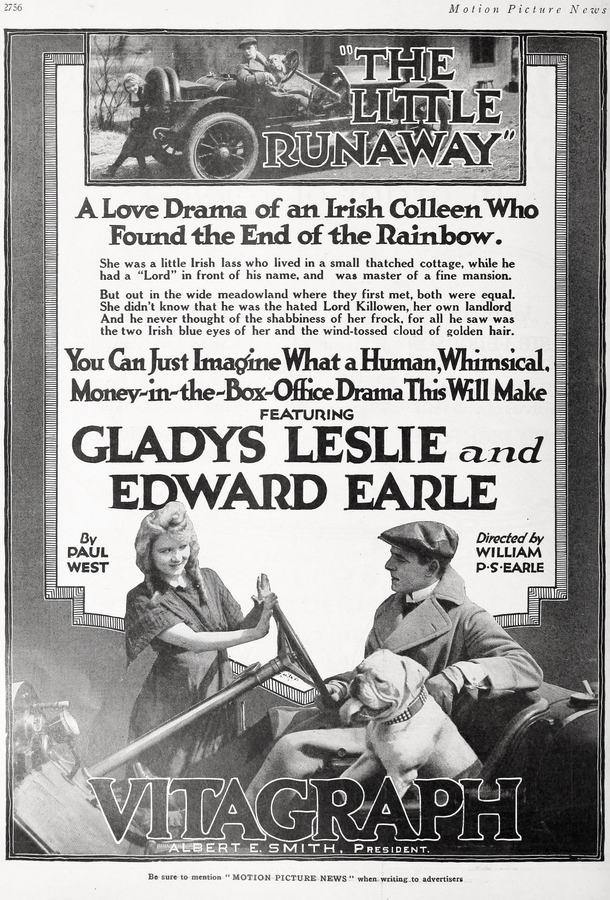
Lord Killowen, the landlord of a little village in Ireland, employs Harvey Dowd and his worthless son, Peter, to collect the rents. When Peter arrives at the modest home of Ann, a young lace maker who lives with her aunt and blind grandmother, he makes improper advances towards her, but Killowen, who is motoring through the area, rescues her. Without leaving her a receipt, Peter absconds with the rent money to America, and Ann's family is evicted. Determined to recover her money, Ann follows Peter to New York, where she is befriended by a policeman, who informs her that Killowen has come to America to court the wealthy Eileen Murtagh. Lord Killowen takes Ann to Eileen's home, but the latter, in a fit of jealousy, orders the girl to leave. When Ann returns during Eileen's engagement party, Killowen realizes that he prefers the little lace maker and proposes to her.
Decades after its release, The Little Runaway remains a vital piece of the cinematic puzzle. Its influence can be seen in countless modern works, solidifying William P.S. Earle's status as a master of the craft in United States and beyond.