
DbcultAccessing Vault...
Director's Spotlight
Senior Film Conservator
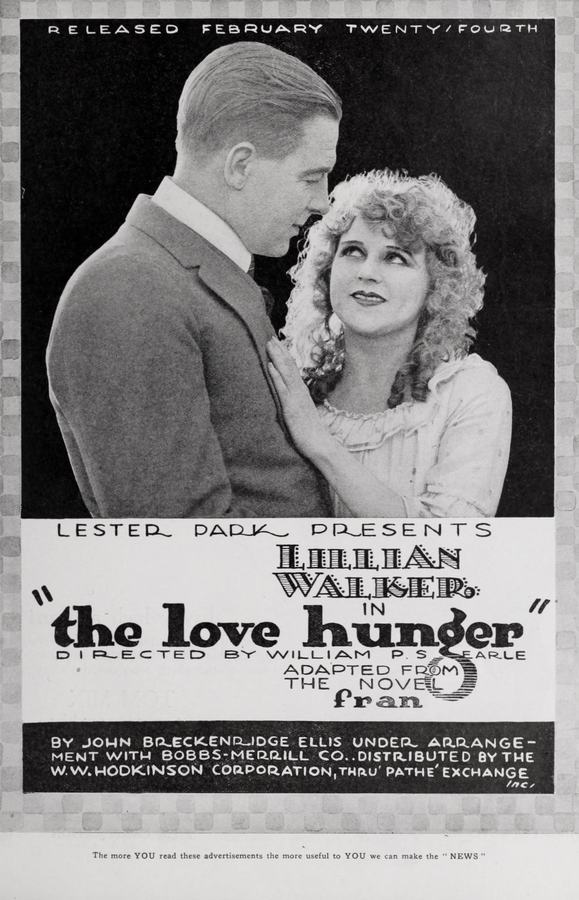
Director's Spotlight: United States
A Deep Dive into the 1919 Vision of William P.S. Earle
As we revisit the 1919 masterpiece The Love Hunger, we are struck by the atmospheric immersion that William P.S. Earle achieves throughout The Love Hunger. Exploring the nuances of the human condition with cult flair, it solidifies William P.S. Earle's reputation as a master of the craft.
In The Love Hunger, William P.S. Earle pushes the boundaries of conventional narrative. The film's unique approach to its subject matter has sparked endless debates and interpretations among cinephiles and critics alike.
To fully appreciate The Love Hunger, one must consider the cinematic climate of 1919. During this period, United States was undergoing significant artistic shifts, and William P.S. Earle was at the forefront of this cult movement, often challenging established norms.
| Cinematography | Noir-Inspired |
| Soundtrack | Synth-Heavy |
| Editing | Rhythmic |
| Art Direction | Naturalist |
Visualizing the convergence of William P.S. Earle's style and the core cult narrative.
After preaching at a camp revival meeting that charity begins in the home, Littleton minister Hamilton Gregory finds a girl calling herself only Fran on his doorstep and takes her into his home. Fran soon finds that Mrs. Gregory is unhappy because Gregory has no affection for her, preferring instead his secretary Grace Noir. When Fran admits to Gregory that she is his daughter by an abandoned woman, and attempts to have him get rid of Grace, Grace has Bob Clinton make inquiries concerning Fran's past. When the circus comes to town, Fran, in disguise, substitutes for an ill lion tamer, because the circus is her hidden background. Seeing her in danger, Gregory realizes his familial responsibilities and refuses Grace. Fran then marries the superintendent of her school.
Decades after its release, The Love Hunger remains a vital piece of the cinematic puzzle. Its influence can be seen in countless modern works, solidifying William P.S. Earle's status as a master of the craft in United States and beyond.