
DbcultAccessing Vault...
Director's Spotlight
Senior Film Conservator
Director's Spotlight: United States
A Deep Dive into the 1916 Vision of William S. Hart
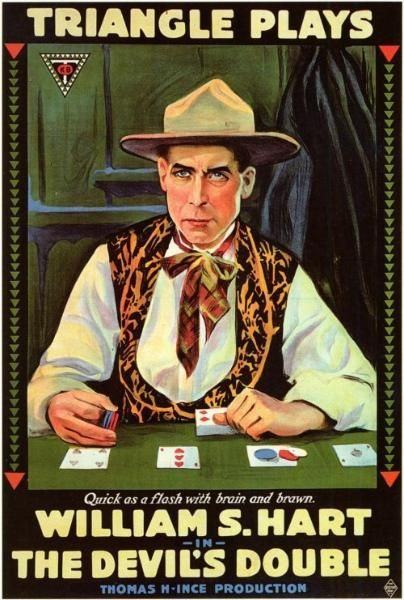
The cult DNA of The Devil's Double is a reflection of United States's the subversive storytelling techniques employed by William S. Hart in 1916. Breaking the traditional rules of cult engagement, it leaves an indelible mark on the soul of the viewer.
In The Devil's Double, William S. Hart pushes the boundaries of conventional narrative. The film's unique approach to its subject matter has sparked endless debates and interpretations among cinephiles and critics alike.
| Cinematography | High-Contrast |
| Soundtrack | Minimalist |
| Editing | Disjunctive |
| Art Direction | Baroque |
Visualizing the convergence of William S. Hart's style and the core cult narrative.
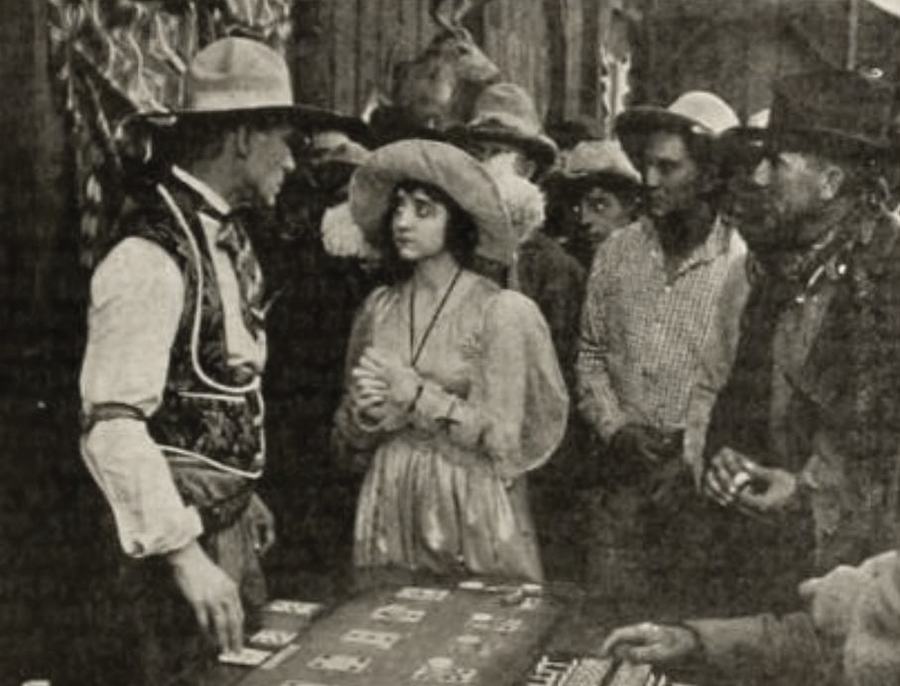
Van Dyke Tarleton is an artist. He is absorbed body and soul in his latest creation, "Lucifer, Son of the Morning," but lacks a model to depict the brooding evil, the smoldering, sardonic sin that he has visualized in the spirit's face. Naomi Tarleton, his wife, is a beautiful and gentle creature. Tarleton has an attack which necessitates a sojourn in the desert, and he, with his wife, arrive in Tophet, an Arizona border town, where "Bowie Blake," bad man, witnesses their arrival. Tarleton recognizes in Blake a Lucifer in the flesh, and insists that "Bowie" become his model. His demand is refused. Later Blake becomes enthralled when he sees Naomi. Tarleton witnesses the meeting from a window and determines that his wife shall accomplish what he has failed to do. He sends her to the gambler, telling her to beg Blake to come. She does this, and Blake becomes the model. Tarleton insults his wife continually in Blake's presence to prevent the brooding evil, sardonic hardness, and the grim deadliness in the eyes and face of his model from disappearing. One day Tarleton faints at the canvas and the doctor advises that he be taken to the mountains. The three find an ideal camp, and the painting goes on, Tarleton insulting his wife more and more, until Blake decides to leave them, as he can stand it no more. He hesitates on the road, not willing to leave Naomi alone with Tarleton, and eventually returns to find that "Red" Gleason and Jose Ramirez, two outlaws, have killed the painter and are drawing cards to see who shall possess the woman. He kills them both, and takes Naomi to a cave farther in the mountains. Through an injury, Naomi loses her mind. Blake treats her as a child, until her mind becomes clear. He then tells her that he intends to have her as his own. Naomi exerts her influence, and he fights his battle, and wins over himself, upon which he agrees to take her back to town. They stand where the trail leads to the desert town. She holds her hand out to him: "What can I say?" she cries plaintively; "What is there for you and me to say to each other?" Bowie remarks: "I'm sayin' just this: some day I'm comin' after you." She looks at him and answers softly: "Yes, I think you will do that, but I make no promise, there are things to be done, that time and striving will do. It is in your hands, Bowie." "That's all I ask," he answers. "I'm takin' that chance."
Decades after its release, The Devil's Double remains a vital piece of the cinematic puzzle. Its influence can be seen in countless modern works, solidifying William S. Hart's status as a master of the craft in United States and beyond.