
DbcultAccessing Vault...
Director's Spotlight
Senior Film Conservator
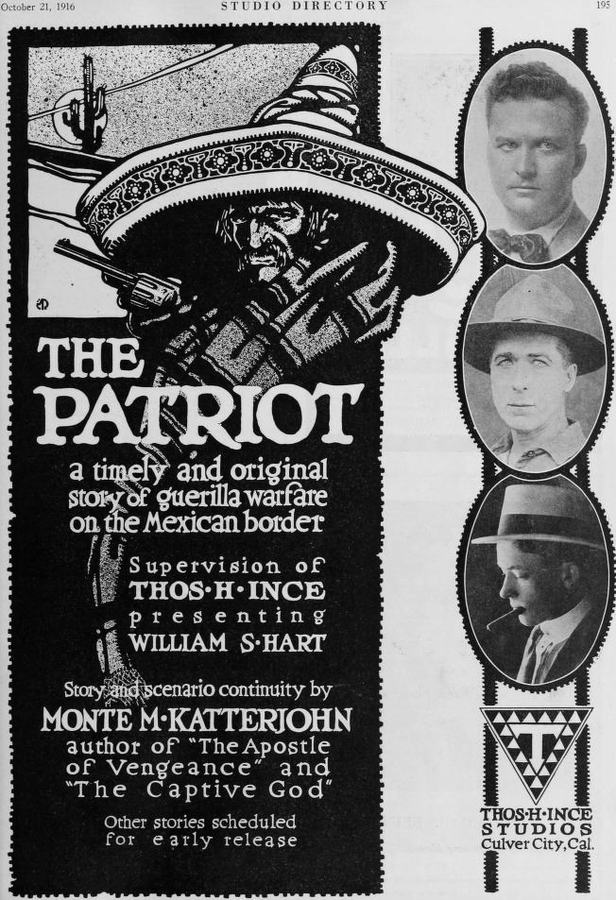
Director's Spotlight: United States
A Deep Dive into the 1916 Vision of William S. Hart
In the grand tapestry of cult cinema, The Patriot serves as a bridge between the philosophical inquiries that William S. Hart embeds within the narrative. Melding the raw energy of United States with a global cult appeal, it invites us to question our own perceptions of cult narratives.
In The Patriot, William S. Hart pushes the boundaries of conventional narrative. The film's unique approach to its subject matter has sparked endless debates and interpretations among cinephiles and critics alike.
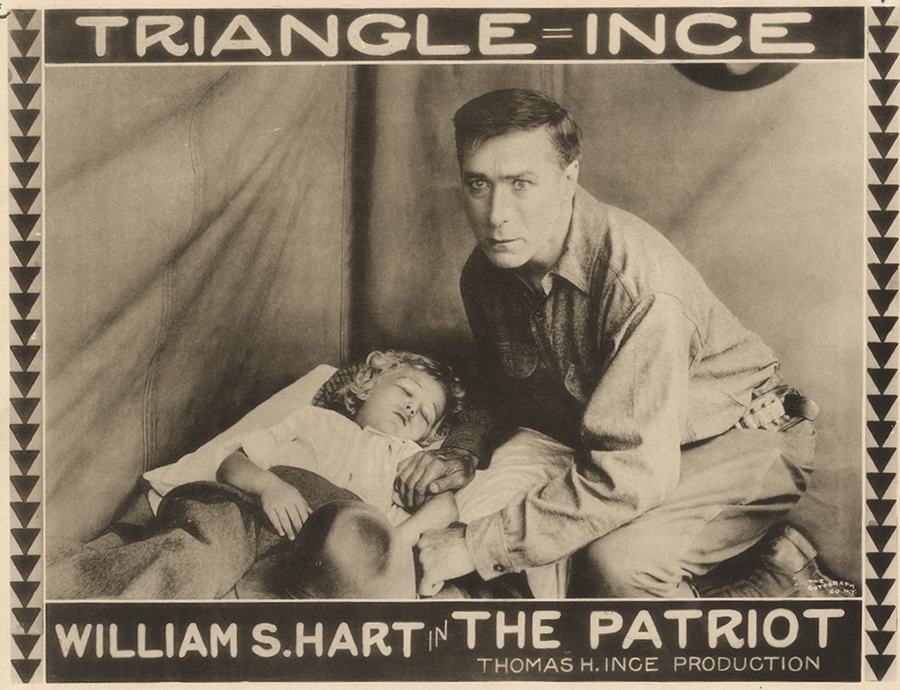
While deeply rooted in United States, The Patriot has achieved a global reach, influencing directors from various backgrounds. Its ability to translate cult tropes into a universal cinematic language is why it remains a cult staple decades after its 1916 release.
| Cinematography | High-Contrast |
| Soundtrack | Orchestral |
| Editing | Slow-Burn |
| Art Direction | Brutalist |
Visualizing the convergence of William S. Hart's style and the core cult narrative.
Bob Wiley had staked out a homestead in New Mexico, five miles from the border town of Lawton's Ridge. Wiley was a pioneer, a veteran of the Spanish-American War, and a devout believer in the superiority of his country to any other land on the face of the globe. He lived in a whitewashed cabin, over which the Stars and Stripes forever waved, with his little son, Bobby, and a faithful Indian, Joe Good-Boy. Wiley had lost his wife in the rough pioneer days. When his boy was yet a baby, he chanced on gold in the bed of a stream that ran through his clearing which gave him another incentive to save all he could and make his boy a rich man. While, however, he was drawing out more gold daily and his bank account in Lawton Ridge was growing steadily, a pair of corrupt local politicians, attracted by the wealth of the find, conspired to rob him of his homestead on a technicality. In this they succeeded and Bob Wiley finds himself dispossessed by the agents of a government he has served in its hour of need. He goes to Washington to prove his claim, gets no redress, and returns to find his land preempted and his little boy dead. His heart is filled with bitterness against his own country and he seeks revenge by joining the bandit forces of Pancho Zapilla who is preparing to raid Lawton's Ridge. Entering the village as a spy he tells the colonel in command of the American troops that Zapilla contemplates a raid on a town several miles distant. This information sends the troops off on a false scent and leaves Lawton's Ridge open to an attack by the bandits. But Wiley gradually awakens to the enormity of his offense and by courage and devotion he saves the town, thwarts the bandits, pledges his allegiance to the flag, and becomes once again a loyal, patriotic American.
Decades after its release, The Patriot remains a vital piece of the cinematic puzzle. Its influence can be seen in countless modern works, solidifying William S. Hart's status as a master of the craft in United States and beyond.