
DbcultAccessing Vault...
Director's Spotlight
Senior Film Conservator
Director's Spotlight: United States
A Deep Dive into the 1926 Vision of William Watson
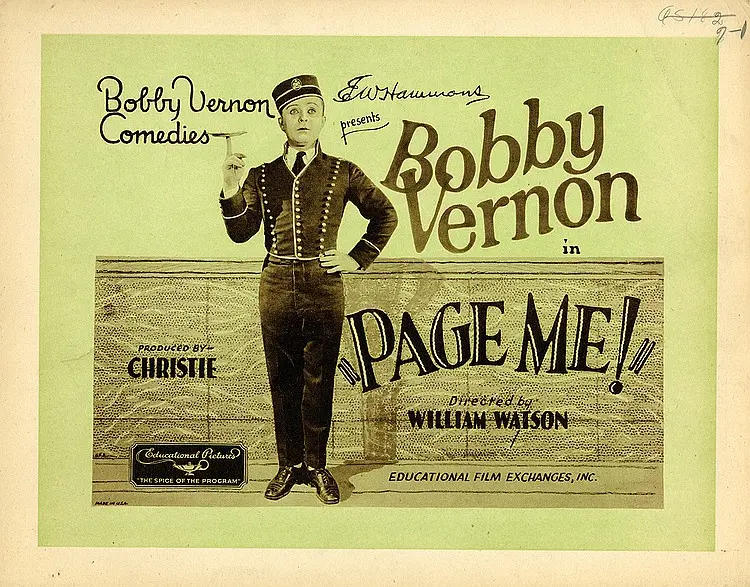
The 1926 release of Page Me marked a significant moment for the stylistic boundaries pushed by William Watson during the production. In the context of United States's rich cinematic history, it invites us to question our own perceptions of Comedy narratives.
In Page Me, William Watson pushes the boundaries of conventional narrative. The film's unique approach to its subject matter has sparked endless debates and interpretations among cinephiles and critics alike.
| Cinematography | High-Contrast |
| Soundtrack | Synth-Heavy |
| Editing | Rhythmic |
| Art Direction | Naturalist |
Visualizing the convergence of William Watson's style and the core Comedy narrative.
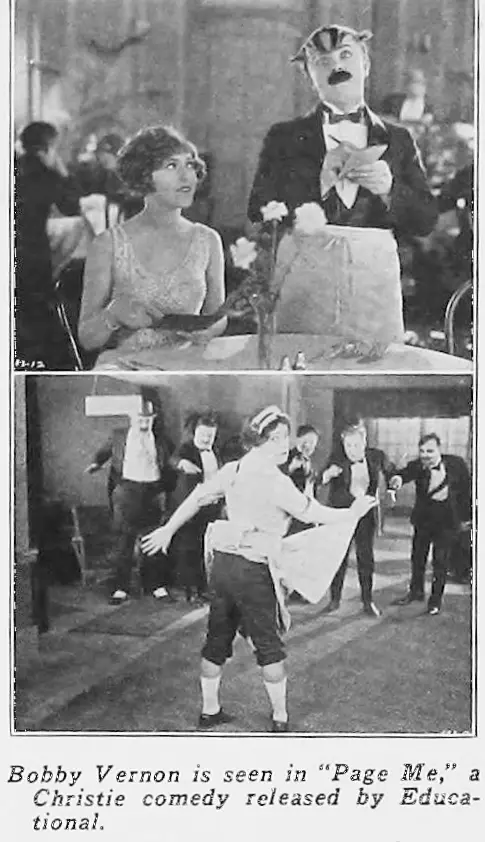
Bobby gets a note from the hotel management that if he doesn't pay his hotel bill he will have to go to jail. He tries to make his getaway down the fire escape with his trunk and bags but is caught by the manager and the house detective who force him to work out his bill working as a bellboy. While he is on duty the manager orders him to take a pitcher of ice-water to his sweetheart, Sally's, room. He does so, but disguises himself so that she will not recognize him. As he leaves her room he picks up a paper and starts to read it. There are big headlines about a famous scientist who has just arrived in town with a new invention, laughing gas, to be used in future wars. The victims laugh themselves helpless. The scientist has arrived at the hotel and engaged rooms. He has with him two men, agents of a foreign government, As Bobby passes the room he sees smoke coming out of the door. He immediately thinks the hotel is afire and starts a general alarm. The manager, detective, and several of the hotel employees rush to the scene and Bobby starts chopping down the door. As he does so, the gas comes rushing out and the management and some of the guests are overcome and all start laughing. Bobby is also a victim and staggers to the window and climbs to the ledge. Looking down ten stories to the street below he thinks it is a huge joke and becomes hysterical. The house detective is after him but Bobby escapes and disguises himself as a woman only to be discovered. He pulls off his disguise and makes a dive for the hotel desk. In the mail box is a letter for him with a check for $5,000. The manager comes up furiously and Bobby hands him the check, asking him to cash it, but upon examination it is found to be made out to Mrs. Bobby. There is also a note from his uncle stating he had made it out to his future wife that Bobby will marry and settle down. Immediately Bobby thinks of Sally and rush to her room, followed by the manager and detective. After much difficulty the couple are married.
Decades after its release, Page Me remains a vital piece of the cinematic puzzle. Its influence can be seen in countless modern works, solidifying William Watson's status as a master of the craft in United States and beyond.